Home / Service Areas / Davidson
Commercial Roofing in Davidson, NC
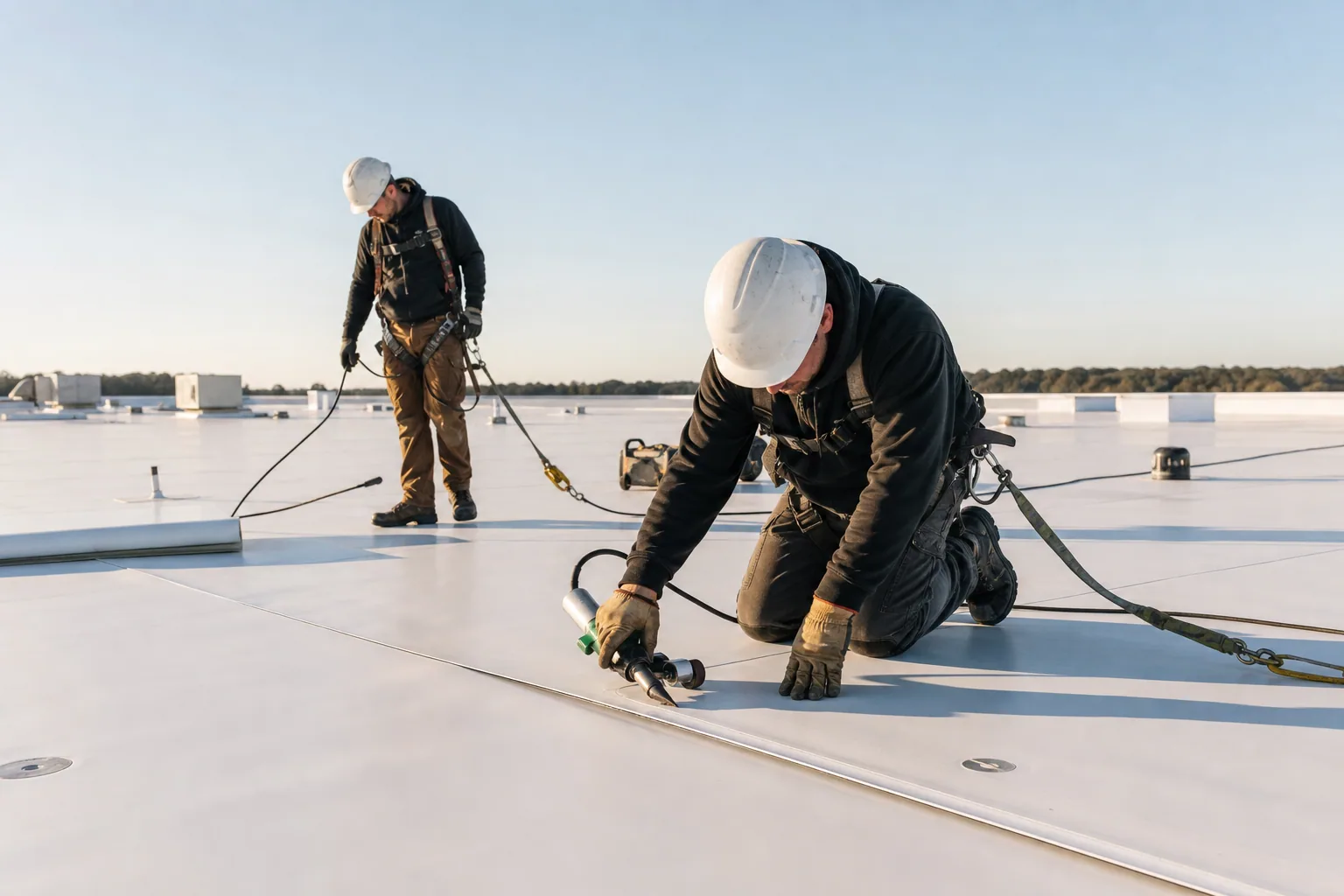
Commercial roof repair and replacement in Davidson, NC start with the occupied space, drainage path, access plan, and condition of the existing assembly.
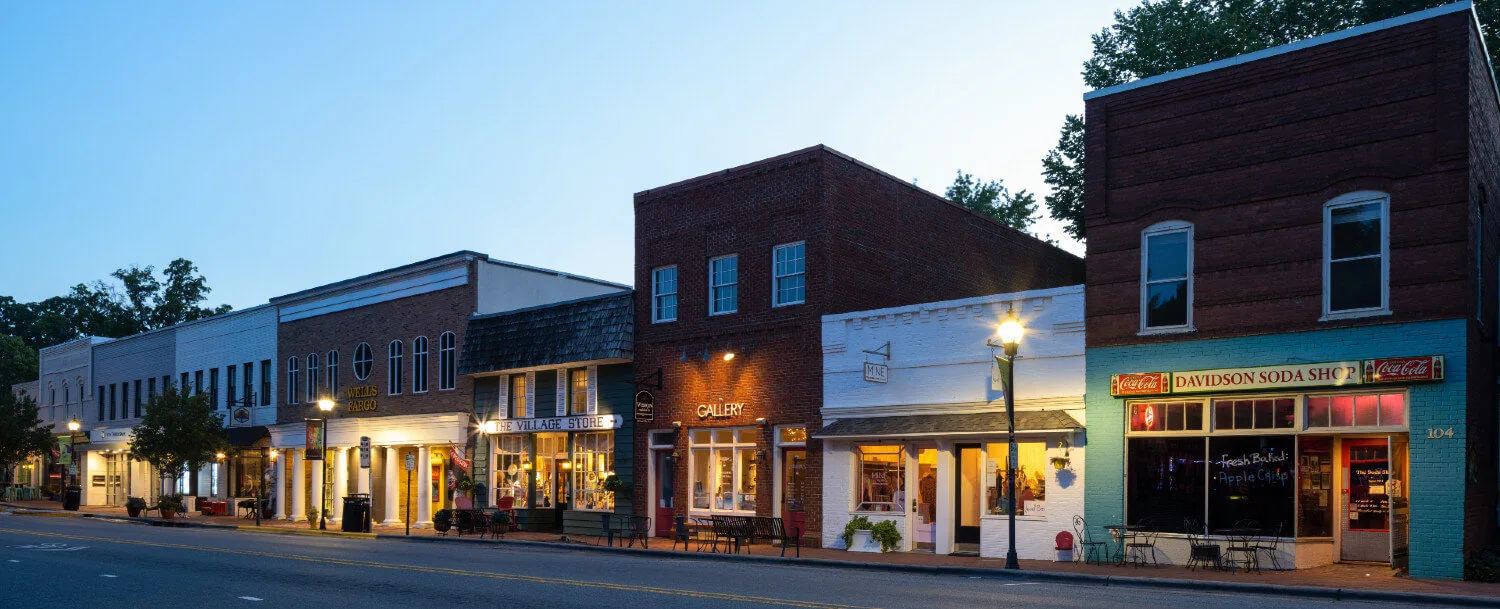
A dining room cannot wait for a roof decision to catch up with a leak. In Davidson, NC, we first protect the room, locate the water path, and identify which roof detail is involved. Downtown restaurants and specialty shops give the town a mix of occupied commercial uses, while Davidson College sits on Main Street. Those facts help frame the operating context, but they do not tell us a particular building's roof type. We inspect the assembly in place and set the repair around what failed.
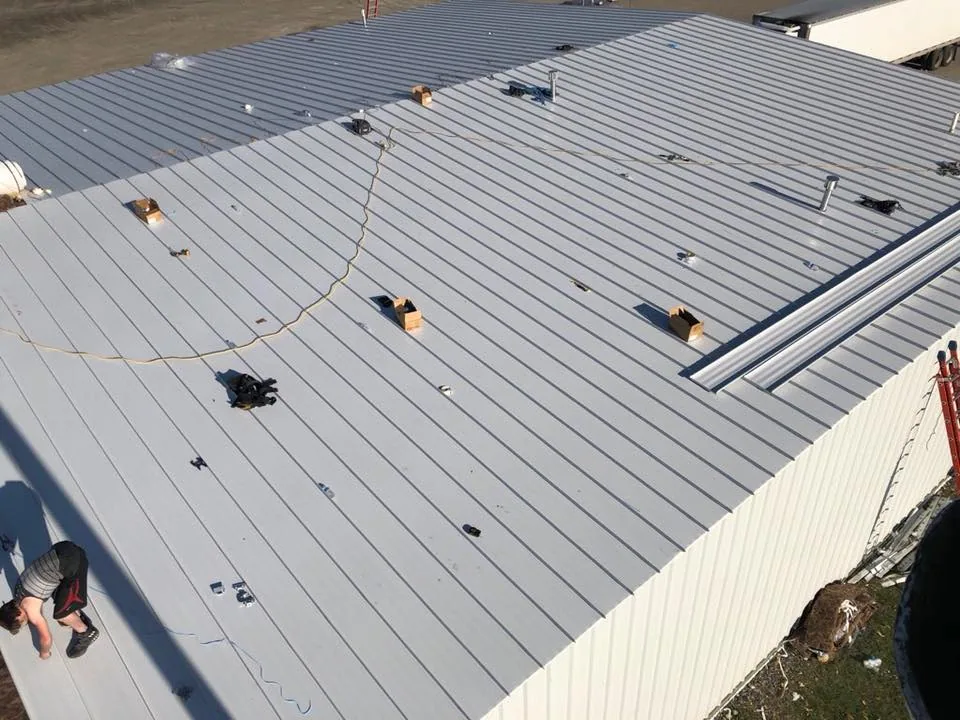
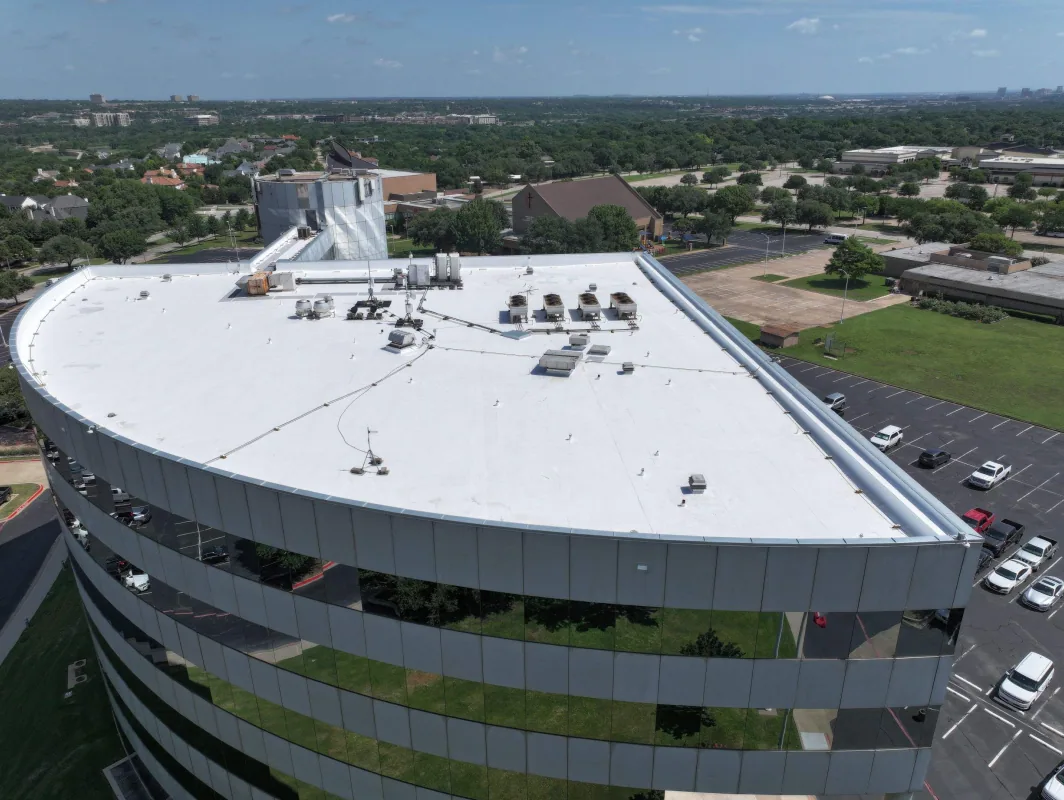
I-77 serves Davidson at Griffith Street, and NC 115 runs as Main Street. Our commercial work includes leak repair, replacement, recovery, maintenance, coatings, and inspections for low-slope and metal systems. A commercial roof repair should protect the space below and correct the condition above, not merely hide a ceiling mark.
Start where water appears
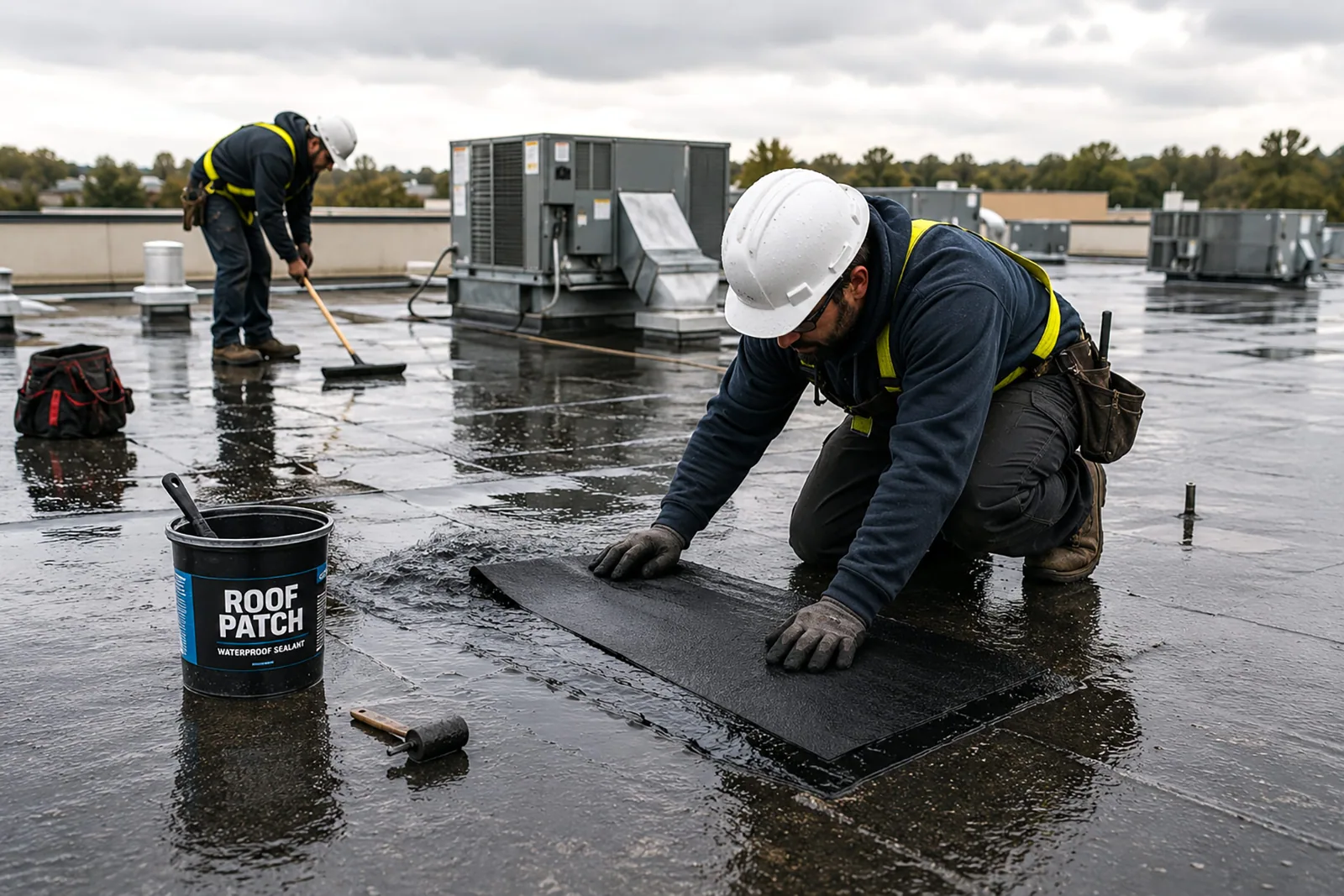
Water can move across a deck or insulation before it shows indoors. We compare the reported room with seams, curb flashings, wall transitions, drains, and edge details above. We look for disturbed membrane, loose laps, failed sealant, trapped water, and prior patches that may have changed the route. The finding sets the repair limit, and photographs show why that limit includes the surrounding detail.
When an occupied room sits beneath the work, protection comes before a roof cut. We cover contents, agree on access below, and keep the opening small enough to close safely if weather changes. Davidson's downtown restaurants and shops have customer areas that owners need to keep usable. We schedule noisy work and material movement with that daily rhythm in mind. A roof inspection with photographs can also help distinguish a single entry point from a pattern that reaches multiple details.
Decide what stays
Repair, recover, and replacement are different scopes. If a membrane seam has released but the adjoining field and insulation remain sound, a defined repair may be appropriate. If water has moved below the surface or repeated patches overlap, we check the extent before approving another surface fix. Where removal is needed, we inspect the deck and insulation as they are exposed.
For downtown properties, a closure plan can matter as much as the material choice. We identify which entrance, service area, or occupied room could be affected by staging, noise, or overhead work. A recover can limit removal when the existing assembly, drainage, and code path support it. Replacement offers a chance to address the assembly more broadly, but brings different sequencing and weather protection needs. Owners can compare a replacement scope with a roof recover after we document the condition.
Keep water moving
A roof that holds water around a drain deserves a closer look at slope, outlet, and surrounding membrane. We clear the path enough to inspect it, then check the drain bowl, seams, and nearby penetrations. A slow outlet can leave a repair exposed longer and can burden a weak detail. If a drain or scupper is damaged, the correction must restore water movement without creating a new opening at the membrane or edge.
NC 115 is Main Street in Davidson, and I-77 reaches the town at Griffith Street. These routes orient the service area, while roof drainage is evaluated building by building. We look for water marks, debris dams, displaced strainers, and low points that remain after ordinary rainfall. A drain correction may be separate from a membrane repair, so we write the work boundary clearly. When a drain or scupper repair is warranted, we check its connection and the adjoining waterproofing before closing the detail.
Plan around the workday
Before mobilizing, we confirm where materials can be delivered, who can open the building, and how the crew reaches the roof safely. Downtown activity can make a short staging conversation useful, especially where restaurant service or shop traffic continues during the day. Those details help us keep the work area controlled without treating a town-wide pattern as a rule for every property.
On the roof, we mark fragile surfaces and avoid unnecessary foot traffic. Near rooftop equipment, we allow room to inspect curb flashing and make a repair without interfering with service access. Inside, the owner can identify a room that needs extra covering or notice. A plan for reroofing an occupied building should state what happens at each work zone and when an entrance or room may be affected. We can separate areas where the assembly and schedule allow it.
Fit the correction to the roof
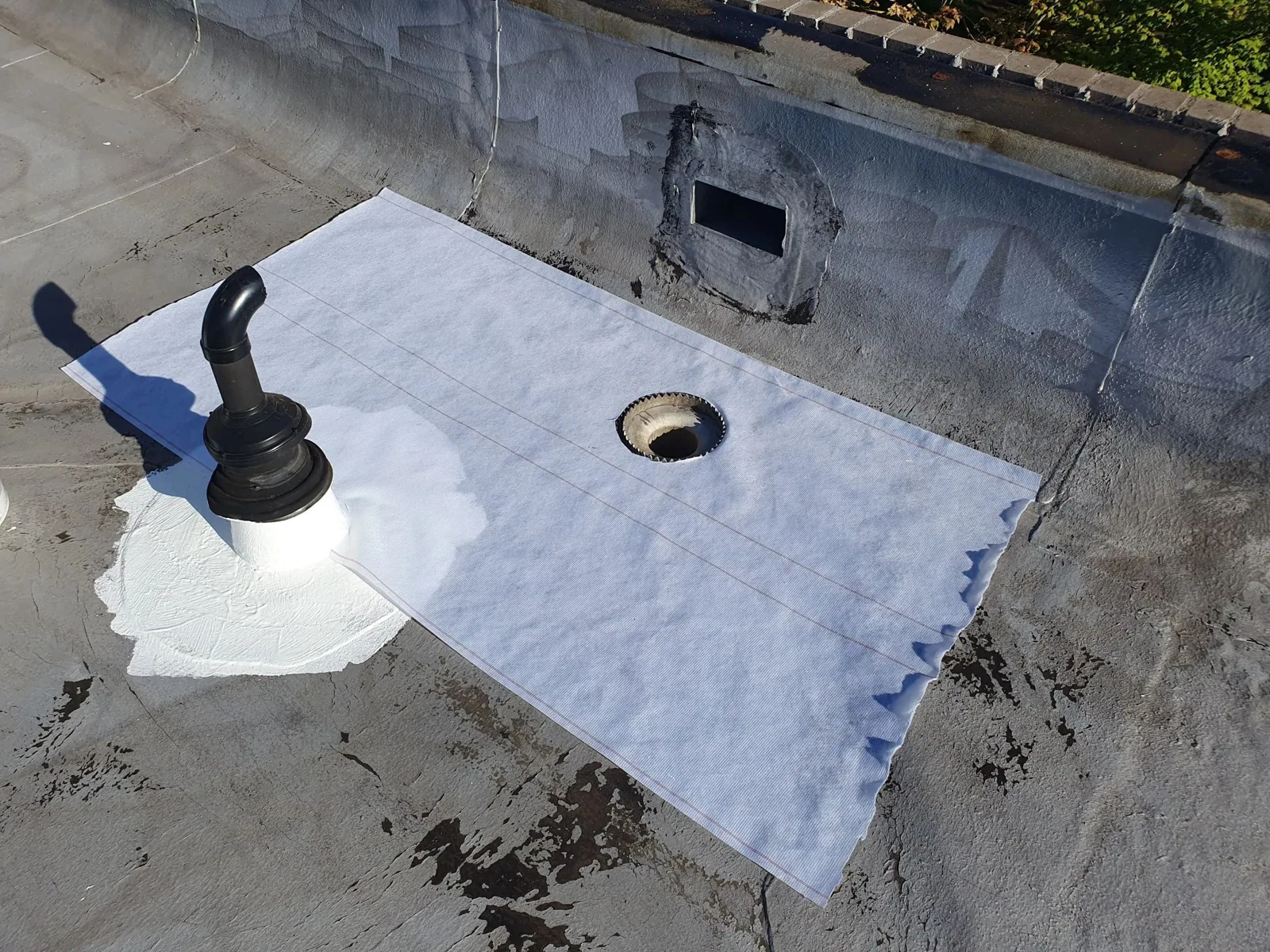
Material compatibility controls the repair at a seam or curb. We identify the installed assembly, prepare its surface, and choose a patch or flashing treatment that can tie into sound existing layers. A surface coating may extend a serviceable system, but it will not replace wet insulation or correct a drain that cannot carry water. At a transition, the new material must meet sound existing material with a secure, watertight detail.
If the roof has several layers or repairs from different dates, we check how they meet before deciding what to retain. A targeted infrared moisture survey may help locate areas that deserve confirmation, while a coating restoration is considered only when the surface and assembly can support it. Any concealed condition that changes the scope should be explained before work expands.
Set the right work window
Timing follows access, roof condition, weather, and how much material has to come out. A repair at one curb may fit a short visit; a replacement through drains and wall transitions needs a larger sequence. We identify temporary protection, coordinate the space below, and note when the roof must close at the end of a shift.
Code review belongs in the schedule for replacement or recovery. For a reroof permit, the state still identifies its 2018 building, existing-building, and energy standards as governing while it moves toward the next code series. An owner can ask to use the 2024 edition as an alternate method before that change takes effect. We confirm the applicable edition during permitting rather than guessing from an earlier project. A maintenance plan can also schedule inspection of drains and flashing before a small defect affects an occupied room.
Bring the useful details
Before a visit, note which room showed water, when it appeared, and whether the mark grew after rain. Tell us about prior repairs, roof access, equipment that needs service, and any customer or staff schedule that cannot shift. Plans and photographs help us prepare, but the roof still has to be inspected. We will identify what the visit can confirm and what would require a test opening. That keeps the next decision tied to observed conditions instead of assumptions.
Call for emergency response while water is entering and point out the affected room plus the safest access. Tell us which operation must stay open. We can secure the opening, then schedule permanent correction when the roof and weather permit. For planned work, a written condition report can compare repair, recover, and replacement by roof area. The same access questions apply at properties in Cornelius and Huntersville when coordinating a regional roof program. Each building still receives its own access and roof assessment.
Commercial Roofing Questions
Can a roof leak show up far from the opening?
Yes. Water can track over the deck or insulation before reaching a ceiling. We compare the symptom with nearby seams, penetrations, drains, walls, and past repairs.
How do you protect a restaurant or shop during repair?
We cover the affected interior, coordinate access and staging, and agree on work timing with the owner. The roof opening is closed or temporarily protected if weather changes.
Can the repair be limited to one roof area?
It can when adjacent membrane and insulation are sound. We inspect the surrounding details and set the boundary from the observed failure, not the ceiling stain alone.
What makes a replacement schedule longer than a repair visit?
Removal, deck review, insulation, edge details, drainage, code review, and weather protection add steps. We list the sequence and affected spaces before scheduling.
What should a Davidson owner provide before inspection?
Share the affected room, rain timing, previous repair records, roof access instructions, and any service or customer hours that should shape the visit.
Arrange a roof assessment
Describe the affected space, roof access, and the decision you need to make. We will inspect the relevant area and outline a repair or project scope.