Home / Industries We Serve / Public Agencies
Commercial Roofing for Public Agencies in Concord, NC
Assess roofing for Concord public agencies with visitor access and scope review understood. We examine roof condition, correction and wider renewal needs.
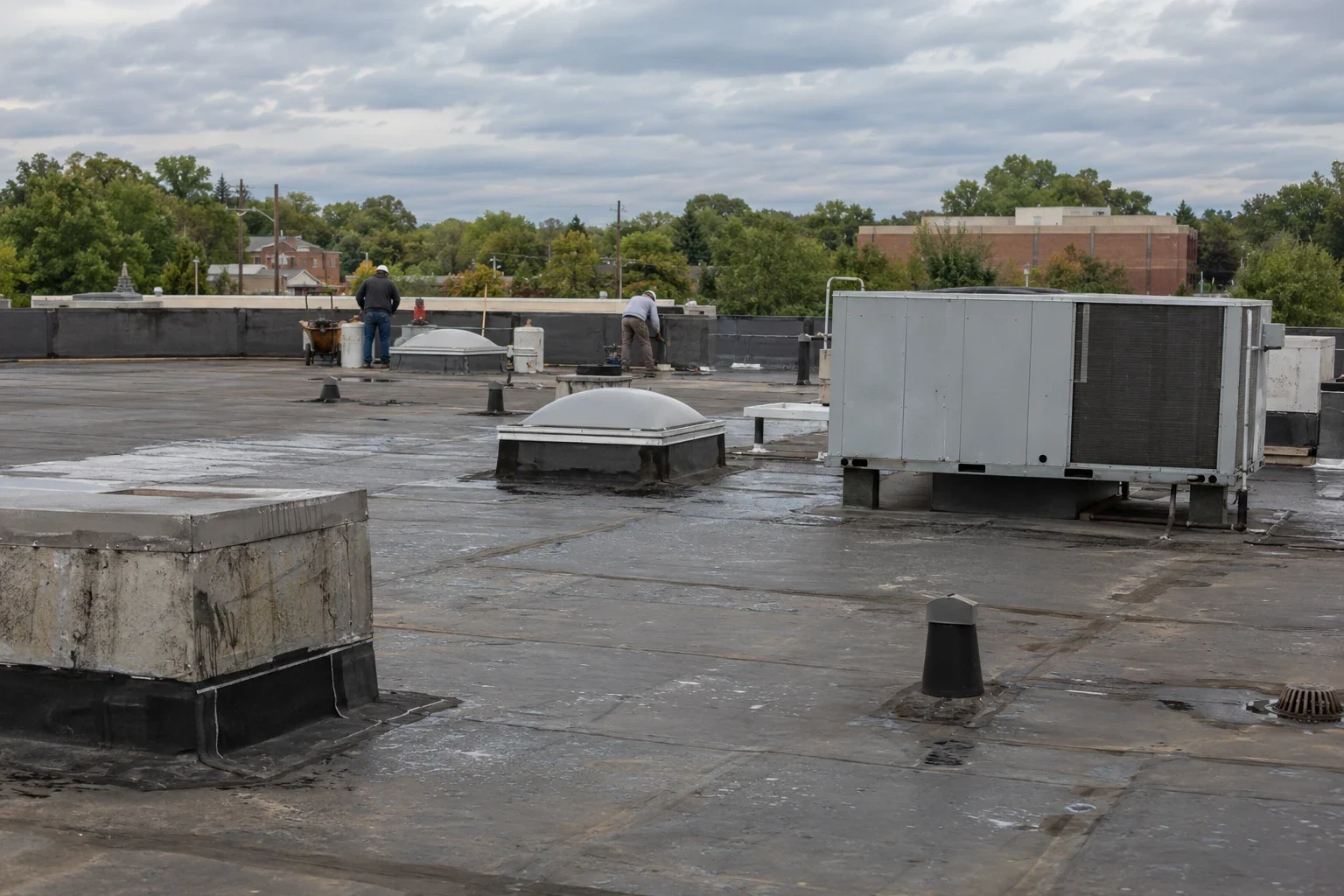
Water spilling above a municipal doorway complicates visitor movement. Its correction may involve an outlet rather than the main covering. We assess commercial roofing for public agencies in Concord, NC. The agency contact identifies the affected access point and occupied service space. We examine the accessible roof and discharge connections. An indoor or exterior symptom should lead to a specific physical investigation. The proposed task needs enough detail for the agency to review reconstruction and participating work. Public access arrangements should reflect that task.
Downtown Concord uses a municipal service district to guide redevelopment. Mount Pleasant updated its Comprehensive Plan on June 10, 2025. That plan connects land-use intensity with utility infrastructure. Those local planning contexts involve varied existing and future building decisions. A agency property roof examination establishes the particular property's current condition. The participant should identify reported symptoms and related alterations. We explain the useful repair or further investigation. The agency's approval and access arrangements need confirmation for the proposed scope.
Describe the connection that the project will correct
A proposal should identify the existing defect and reconstructed boundary. A failed seam can need suitable preparation across neighboring material. Damaged backing or wet insulation can extend the opening beneath it. A collector joint needs a different task from an obstructed strainer. We inspect the relevant accessible area before selecting correction. The agency should understand which layers or details will be addressed. A covering description alone would leave those important project distinctions unresolved. Useful further examination should remain explicit where concealed condition affects the task.
Public property roof findings should connect observations with the proposed physical work. The agency may need to review a localized connection against a wider renewal approach. We explain the assembly condition supporting each useful option. Equipment clearance or another trade's reconstruction may be necessary. Interior restoration can remain separate from stopping exterior entry. Those boundaries belong in the work description. The participant should not have to infer them from a material name. An understandable scope helps review which necessary task is included and which related work requires another arrangement.
Applicable construction and permit requirements should be confirmed for the project. The authority should establish governing requirements for the intended removal, retained layers and reconstructed details. We explain the proposed removal, insulation and detail changes during that review. The agency establishes its own project participation and approval arrangement. The resulting requirements should inform the reconstruction selected. They should not be assumed solely from the public use of the building or the appearance of its existing covering.
Assign the service interface before the roof opening
Equipment changes can introduce a new penetration or support position. The responsible service participant should identify its intended layout. We review material compatibility and the available surface for flashing. A crowded pipe group may need a different clearance arrangement. Installed equipment can also obstruct an existing termination requiring repair. Complete reconstruction may depend on lifting or disconnection. The agency should understand that task before the sequence is set. Another finish beside the component would leave a different boundary from rebuilding beneath it.
Contractor coordination of public building alterations should identify the roofing connection before another opening is made. Changed insulation heights can affect wall, curb or outlet details. We explain the reconstruction required at those interfaces. The agency participant coordinates the appropriate trades and authorization. A component's installation should not leave its flashing outside the completed scope. Known alterations deserve discussion before renewal. Later service visits need to preserve those details or receive suitable roof work where they disturb the installed assembly. The participating boundaries should remain understandable at handoff.
Review the visitor and handling zones together
Deliveries, lifting and removed roofing may affect a public entrance. We discuss the intended method with the agency contact before materials arrive. The work zone can extend beyond the vehicle's immediate position. The agency should identify required exits within the proposed entrance arrangement. The agency identifies any service or visitor route requiring adjustment. An open parking position is useful only when it fits the handling method. The roof approach and ground zone should be reviewed together. Those access decisions need to support an achievable reconstruction boundary.
At a property around Mount Pleasant, we review the actual entrance and useful delivery approach. Identify any planned equipment or utility alteration that affects the roof connection. If a project includes school district roof work, the agency should identify room-use windows beneath each proposed opening. A shared delivery plan still needs access appropriate to the affected school. Weather or concealed damage can alter the daily work area. We explain that adjustment before exposure advances. Temporary protection remains distinct from the completed permanent connection.
An interior report may require access to a service room during examination. The responsible participant establishes that arrangement. Safe observations can help locate the symptom without proving the roof opening lies overhead. Another building system may need its own assessment. We inspect useful roof details and explain further investigation where necessary. The corrective task should follow the findings obtained. The agency can then coordinate public service use and continuing room work with the exterior reconstruction understood.
Compare complete correction and continuing roof care
Recurring defects can justify reviewing a larger assembly. Moisture, attachment and supporting material influence what can remain. We identify useful selected exposure and the corresponding closure task. Public agency reroofing evaluation should explain removal and reconstructed-detail boundaries. Added insulation may require related changes around equipment or walls. Outlet correction can also belong in the project. The proposal should connect those tasks with current condition. Similar covering descriptions do not establish that two scopes address the same deterioration or include the same participating reconstruction.
Cabarrus County's weather includes warm-season thunderstorms. The agency should report where actual runoff backs up or affects a building approach. Public facility discharge assessment can identify a useful outlet task. Debris clearance and joint rebuilding address different findings. Piping questions may need appropriate separate review. The completed water route should allow later inspection and cleaning. Service activity should not leave material in its collection positions. Continuing care supports the corrected connection beyond the immediate project, with suitable access arranged through the responsible participant.
Completion information should identify repaired roofing and any remaining interior or equipment task. Future building alterations may need coordinated flashing or support work. A fresh water report should provide its location and useful timing. We use those observations to examine the relevant roof condition again. The agency should retain an understandable view of the installed assembly and reconstruction boundary. That information helps coordinate later service without treating every new symptom as the previous defect. The completed scope remains specific to the actual property assessed.
Commercial Roofing Questions
What should a public agency roofing scope identify beyond material selection?
Explain the defect, removal boundary and reconstructed connections. Retained layers, equipment clearance and drainage work can affect the complete task. We identify the findings supporting the proposed scope. Any useful further investigation should be clear. The agency can then review the physical correction and participating responsibilities rather than infer the entire project from a covering name.
How should roof work be arranged beside an active public entrance?
Review the entrance and proposed handling zone with the agency contact. We explain delivery, lifting and removal needs. Identify how the agreed work zone affects exits and the surrounding visitor route. The agency establishes any visitor or service adjustment. Weather or changed roof findings can alter the working boundary, so access should remain suitable as the reconstruction task advances.
Who confirms the requirements for a public agency roof project?
The relevant authority should establish the governing provisions for the scope involved. We explain proposed assembly and detail changes for that review. The agency coordinates its responsible participants and approval arrangement. Added insulation or changed equipment interfaces can introduce related tasks. Public building use alone does not determine every construction requirement applying to the roofing project.
Why discuss new equipment before public building roof renewal?
The intended support or pipe layout may disturb the covering and change detail requirements. We review usable material and necessary reconstruction before openings are made. The equipment participant identifies its service arrangement. The agency should coordinate those tasks with renewal. A completed component installation does not establish that its surrounding roof termination was prepared or flashed appropriately.
Review the agency's physical roof scope
Arrange a Concord public agency roof assessment. Identify the affected service space, building contact and visitor access requirements so we can examine the task.