Home / Property Types We Roof / Commercial Cold Storage Roofing
Commercial Cold Storage Roofing in Concord, NC
Investigate cold storage roof moisture in Concord through covering and envelope connections. We coordinate repairs with temperature control and occupied use.
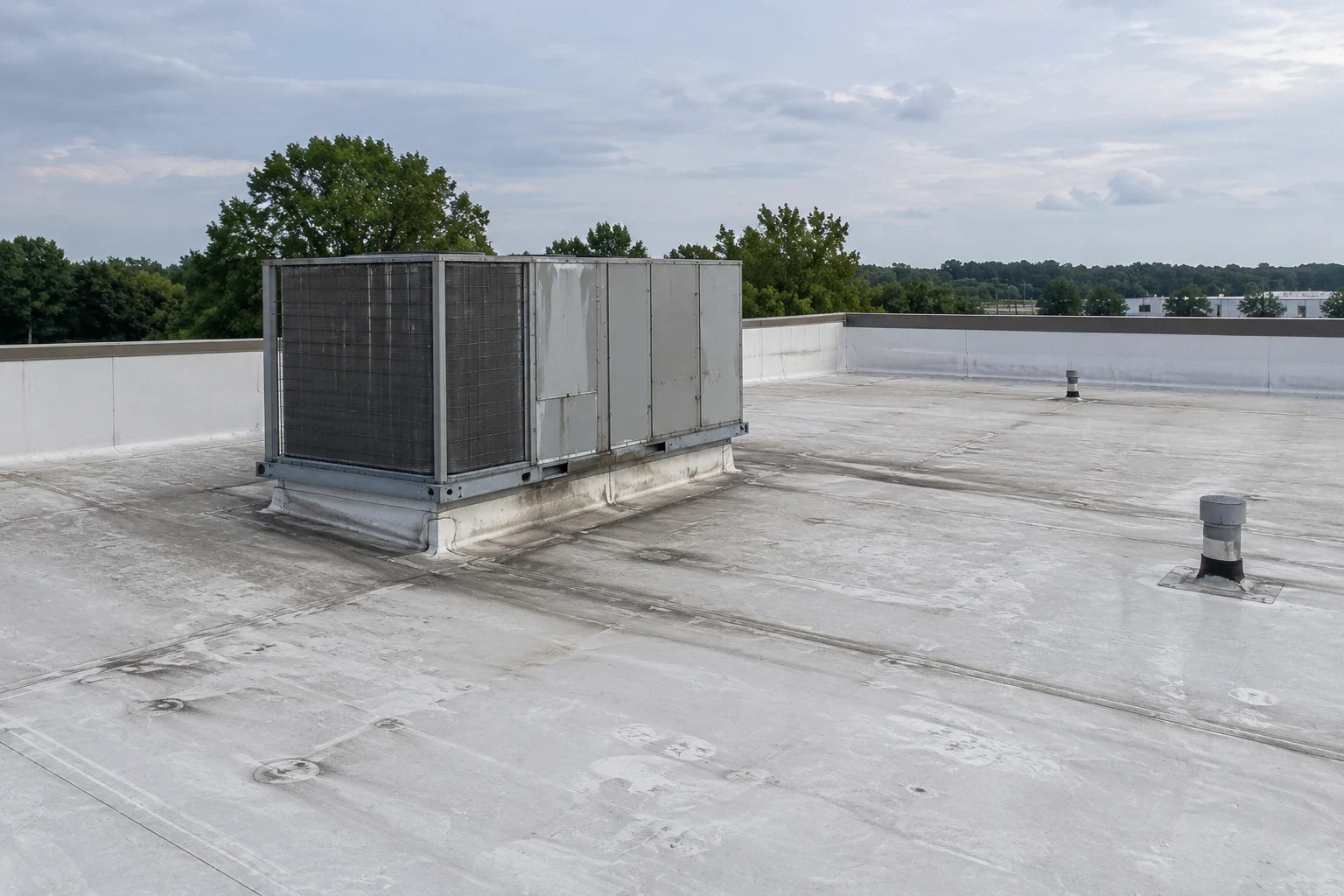
Ice or moisture above chilled goods can leave a storage area difficult to use. The problem may involve the roof covering or the enclosure beneath it. We assess cold storage roofing in Concord, NC. Temperature differences make insulation and vapor control important parts of that examination. The permanent response needs to address the supported condition. We discuss the affected space with the operator before proposing openings or removal. Suitable roof work must preserve the necessary enclosure arrangement while correction proceeds.
I-85 provides immediate access to the city's business parks. Kannapolis lists Gordon Food Service among its major employers. Those regional commercial settings make storage and delivery activity useful operating context. We establish the actual chilled-space requirements at the property involved. A cold storage roof assessment needs available assembly information and suitable access. The examination should distinguish exposed roofing defects from enclosure questions. The operator's actual temperature-control needs guide the permitted work arrangement.
Separate rain entry from condensation
Warm air reaching a cold surface can produce moisture without a roof opening. Air leakage at an enclosure connection may therefore require investigation. Rain-related water entry presents a different roof question. We discuss timing and accessible symptoms with the operator. The roof covering and relevant connections still need physical examination. An enclosure specialist may need to assess concealed air or vapor paths. We identify those responsibilities rather than assume every droplet needs a membrane patch.
The indoor symptom can change when temperature or operation changes. That information helps direct the examination without establishing the cause alone. Tell us whether moisture appears during dry weather or after rain. Existing enclosure information can help identify intended control layers. We assess the roofing interfaces involved and explain remaining uncertainty. A rain-entry investigation should follow the connected roof details. Another participant may need to address refrigeration or enclosure performance. The permanent scope should reflect those separate findings.
Preserve continuity at the roof boundary
A cold storage enclosure relies on connected control layers around its surfaces. The roof interface needs consideration where it meets walls and equipment. Removing roofing may expose more than the external weather protection. We discuss the intended arrangement with the responsible design and operating participants. The reconstruction must suit the approved assembly. A surface patch cannot restore every concealed enclosure discontinuity. The proposal should identify the boundary actually addressed by roofing work.
Penetrations can interrupt both the covering and underlying control layers. Pipes or units may require specialized detailing beyond the exposed flashing. We identify available access and the responsible participants. Another trade may need to provide clearance before complete reconstruction. Roof penetration correction should connect with the specified enclosure detail where required. The owner should understand which task remains outside that roofing scope. Unknown concealed arrangements need further information rather than an improvised assumption. The complete boundary should be defined before opening the assembly.
Assess insulation as part of the whole assembly
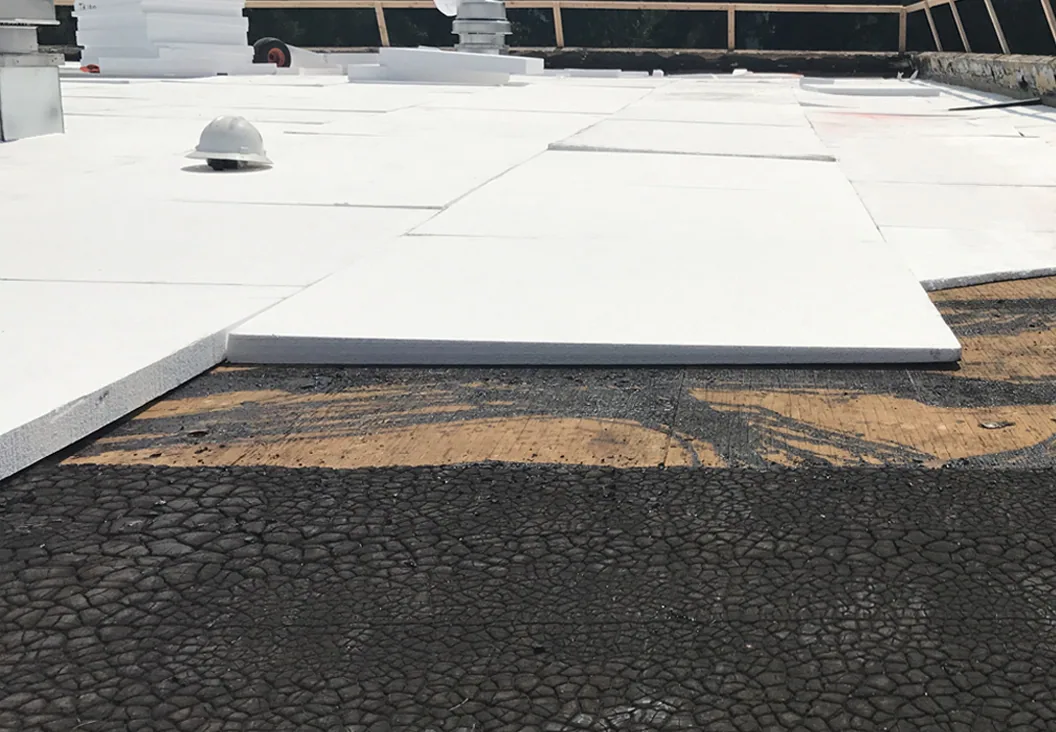
Wet or deteriorated insulation can change both roofing and thermal conditions. The material needs assessment before retention is proposed. Selected examination may help establish its condition at relevant areas. An opening must be arranged to suit the occupied cold space. We discuss that task and suitable reconstruction beforehand. The removal boundary should follow supported findings. A clean exposed covering does not establish that the insulation beneath remains suitable.
Roof insulation work should suit the approved thermal and control-layer design. Required thickness and material selection need appropriate project review. Before insulation is changed, project review should establish the governing energy and assembly requirements. North Carolina is transitioning its code series. The permitting authority can identify which provisions apply to the proposed work. A material choice should not be presented as a complete temperature-control solution by itself. The owner should understand the roof scope alongside enclosure and refrigeration responsibilities. Those tasks need coordination at their shared boundaries.
Arrange openings around the chilled-space requirement
Roof removal can affect the enclosure above an occupied cold room. The operator should identify permissible conditions and required protection. Stored goods may need relocation or another operating arrangement. We explain the proposed opening and work sequence for that decision. Some tasks may need a specific service window. Temporary protection must suit the roof exposure and agreed enclosure requirements. The work should not proceed on an assumption that ordinary room protection is sufficient.
Weather can change the appropriate daily opening boundary. Cabarrus County's hot summers and warm-season thunderstorms matter to exposed roof tasks. We review actual conditions alongside the planned reconstruction method. The operator should understand how a necessary adjustment affects the space below. Occupied-space reroofing coordination can identify those affected areas and dependencies. Refrigeration and enclosure participants may need involvement beyond roofing. We establish that sequence before material is removed. The plan must remain practical for appropriate protection and the actual cold-storage operation.
Keep the external discharge route usable
Cold storage roofing still needs drainage through suitable outlets. A low area, blocked strainer or failed flashing can create rain-related water entry. We examine those accessible connections separately from condensation concerns. The actual roof geometry guides any proposed slope correction. Piping restrictions may require another professional's attention. We identify that task where it affects the work. A roof patch should not leave an unresolved discharge question beneath the same collection area.
Equipment supports can also interrupt runoff around refrigeration service locations. The proposed repair should provide a usable water route. We discuss known backup during rain with the operator. Distribution roof work may share delivery constraints but has its own operating arrangement. Warehouse roofing similarly differs where enclosure temperatures are not controlled the same way. We establish the actual condition rather than transfer another storage building's scope. Drainage correction and enclosure repair can both be needed. The proposal should keep their responsibilities clear.
Track the symptom after the specific correction
Completion information should identify the roof connection and layers actually repaired. It should distinguish any remaining enclosure or refrigeration question. The operator can then monitor the affected space with that scope understood. A changed moisture symptom needs another supported assessment. Rain timing, temperature conditions and location can help direct the visit. We explain what information is useful from a safe position. The next task should follow the changed condition rather than automatically repeat the previous patch.
At a property around Kannapolis, access and deliveries follow the individual operation. Later equipment work should preserve repaired roofing and enclosure boundaries. Moving a pipe or unit may require coordinated reconstruction. The responsible participants should discuss that task before cutting through the assembly. Existing roof and enclosure information helps identify the intended detail. We keep completed corrections connected with that information. Continued care needs attention to both rain protection and the controlled-space boundary. Those concerns remain related without being treated as one identical repair.
Commercial Roofing Questions
Does moisture above a cold room establish a roof leak?
Condensation or an enclosure discontinuity can also produce moisture there. Timing and operating conditions help direct the examination. We inspect the accessible roofing while the appropriate participant assesses other control-layer or refrigeration questions. The permanent correction should follow supported findings. A membrane patch alone may leave a non-rain moisture condition unresolved.
What should be agreed before a cold storage roof opening?
The operator needs to confirm protection and permissible conditions for the occupied space. We explain the opening, reconstruction sequence and relevant weather dependency. Enclosure or refrigeration participants may need to take part. Stored goods and service access can require another arrangement. The plan should be established before removal rather than assume ordinary interior protection suits the chilled room.
Can new insulation be selected without reviewing enclosure details?
The proposed assembly needs appropriate thermal and control-layer design review. Material and thickness choices interact with the building's intended enclosure. We identify the roofing task and required information before installation. Applicable project requirements also need confirmation. The insulation proposal should connect with those decisions rather than be presented as an independent solution for every temperature or moisture concern.
How should the operator assess a recurring symptom after repair?
Report its location, rain timing and relevant operating conditions. The completed scope shows which roofing connection was corrected. Remaining enclosure or refrigeration questions may need separate assessment. We can then arrange the appropriate roof examination with other participants where necessary. The changed symptom should guide the next investigation rather than automatically establish failure of the previous repair.
Investigate the cold-space roof boundary
Arrange a Concord cold storage assessment. Identify the moisture location, temperature-control requirements and permissible access so we can coordinate the examination.