Home / Roof Systems / Commercial PVC Roofing
Commercial PVC Roofing in Concord, NC
Evaluate PVC roofing in Concord around exhaust equipment, welded connections and retained layers. We define compatible repair and installation requirements.
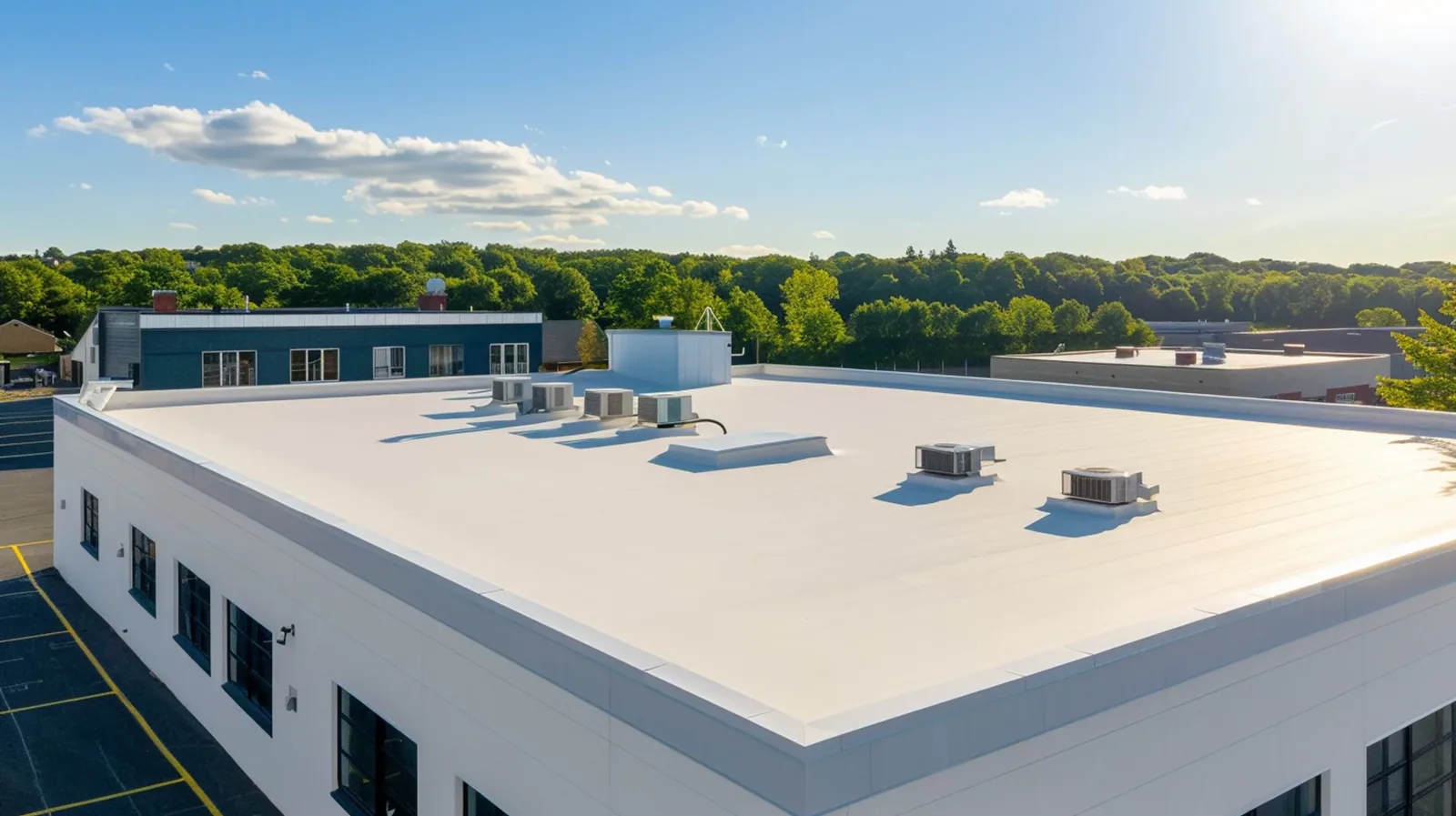
Kitchen exhaust work can leave the roof beside it difficult to repair. Deposits and crowded equipment complicate preparation at the membrane connection. We assess PVC roofing for commercial properties in Concord, NC. The proposed system needs to suit its actual exposure and assembly. We examine the covering, underlying layers and equipment details together. Product selection should follow the specified requirements for that condition. A suitable sheet still needs accessible, well-formed connections around the installed equipment.
Restaurants form part of the Concord Entertainment Corridor's commercial mix. Church Street Corridor also has businesses beside surrounding residential neighborhoods. Those settings bring different operating and access arrangements to roof work. We discuss the actual space and equipment served by the roof. A condition examination before PVC work helps define preparation and necessary correction. The proposed scope should identify where equipment limits access. Its location does not select the assembly without that assessment.
Review the material reaching the roof
Exhaust deposits can affect the surface beside restaurant equipment. The selected PVC system's exposure requirements need review for the actual application. Not every contaminant or operating condition should be treated alike. We identify accessible deposits and discuss the equipment involved. Cleaning must suit the covering without damaging it. Ongoing discharge may also need attention from the equipment specialist. Selecting a membrane does not correct a poorly managed exhaust arrangement.
Available product information helps establish suitability for the proposed exposure. We explain the requirements that affect material selection and preparation. If the exposure is uncertain, appropriate technical review may be needed. The owner should know which question remains before installation. The proposed assembly should address the conditions actually identified around the equipment.
Prepare the overlap for welding
PVC seams require the specified heat-welding method and suitable material surfaces. Residue or a degraded exposed layer can interfere with preparation. We examine an existing connection before deciding how it can be repaired. A small visible opening may sit within a wider unsuitable seam. The affected boundary needs assessment rather than a weld over the obvious gap. We follow the selected system's preparation and joining requirements. That includes checking the completed connection appropriately.
Repairs need compatible PVC components at the retained membrane. Similar-looking single-ply materials should not be assumed interchangeable. A TPO assembly has different material requirements despite also using welded connections. A KEE or PVC-alloy option needs its own product-specific review. We identify the existing covering before selecting repair material. Unknown previous treatments can require further examination. The owner should understand when that question limits a localized correction. A compatible connection depends on more than a similar surface color.
Make the equipment flashing reachable
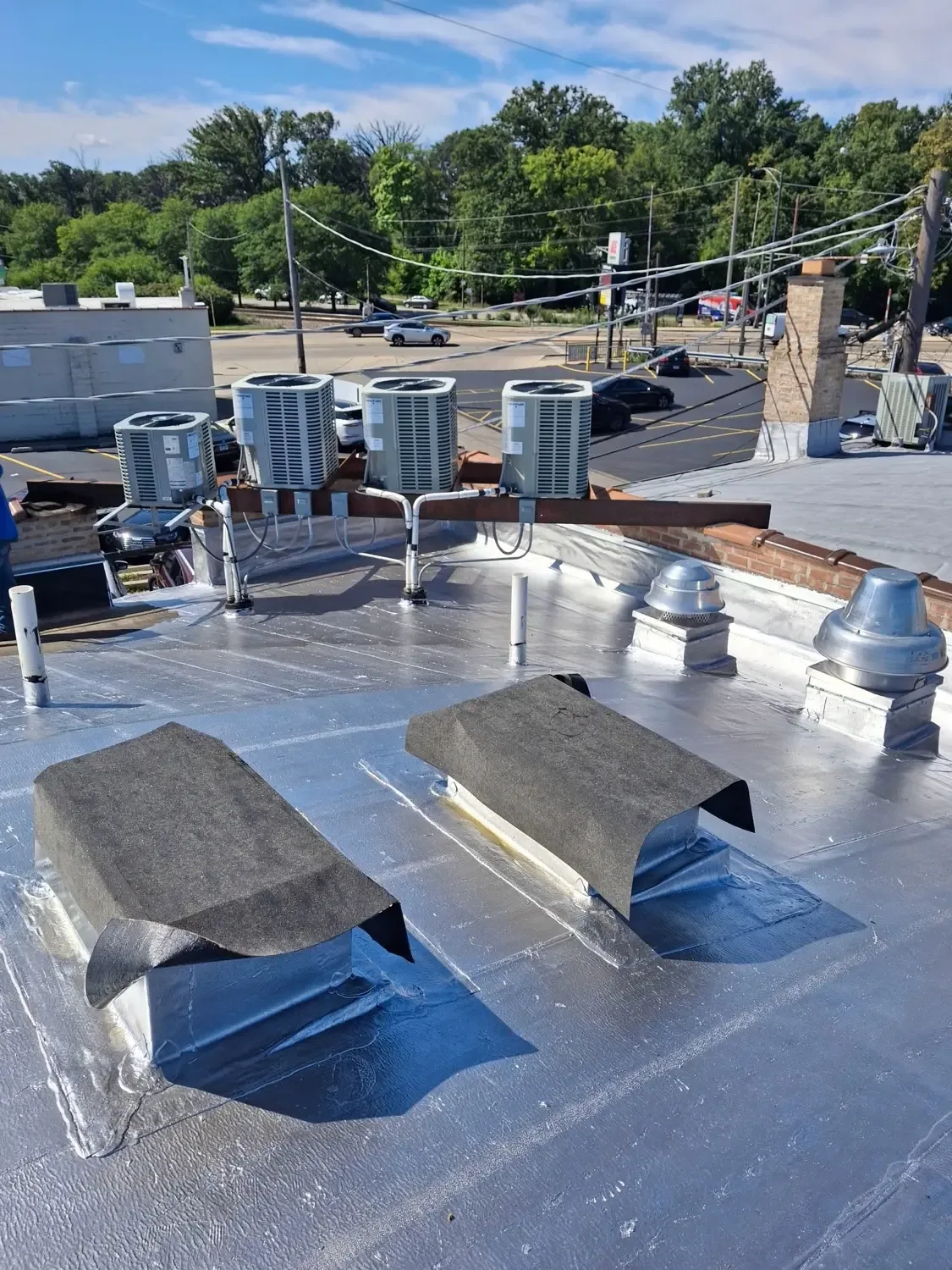
A curb connection can be hidden beneath an installed unit. Complete repair may require another trade to provide access. We identify that need before describing the flashing reconstruction. The curb's height and backing also need examination. A deteriorated or low connection can prevent a suitable detail. Added insulation may change the usable height further. The resulting correction should be included with the proposed membrane work.
Grouped pipes can create a different preparation problem near the same equipment. Their spacing may not allow separate suitable flashing details. We discuss the intended arrangement with the responsible contractor. Penetration flashing assessment helps define the roofing connection involved. Pipe movement and equipment service needs also matter. A new detail should not depend on an unstable support remaining unchanged. We identify those dependencies alongside the work boundary. The owner should know where roofing and equipment tasks need to meet.
Examine the layers proposed to remain
PVC installation can involve removal or retention of existing material. The useful approach follows the assembly's supported condition. Wet insulation, loose attachment or unsuitable backing can prevent retention. We investigate those concerns before proposing another covering. Separation layers may be necessary where the specified system requires them. Material compatibility needs attention beneath the membrane as well as at seams. The proposal should describe those layers and their purpose.
A roof surface may appear intact while concealed material remains unsuitable. Selected investigation can help establish that condition at relevant locations. Any opening needs appropriate repair after examination. We identify what was observed and where further uncertainty remains. The recover assessment also needs to consider added height at edges and curbs. Existing details may require reconstruction to accommodate the proposed layers. The comparison should include that complete work. Retaining more material is not automatically the suitable assembly choice.
Correct the drainage boundary separately
A new PVC membrane follows the surface created beneath it. It does not provide slope simply by covering a low area. We examine the route from retained water to the intended outlet. Debris blockage and depressed insulation require different corrections. The drain connection also needs compatible components and suitable support. Cabarrus County's warm-season thunderstorms make those connections relevant to occupied space. We describe each necessary task before installation.
Plan preparation beside the occupied operation
Removal, cleaning and installation can affect the space beneath the roof. We discuss the proposed work area with the operator before scheduling. Exhaust equipment may need a specific service arrangement during preparation. The responsible equipment personnel should confirm that requirement. Material handling and roof access also need suitable coordination. Temporary protection must follow any exposed boundary while work advances. We identify those practical tasks rather than promise unchanged operation throughout installation.
At a property in the Concord Entertainment Corridor, visitor-facing activity can influence staging. The actual entrance and service routes guide the arrangement. Restaurant roof work may require separate kitchen equipment coordination. We establish those conditions for the building involved. The area's commercial mix does not establish a particular service window. The owner should know which connection will be exposed and when. Changes in weather can require an adjusted work area. The sequence needs to remain suitable for protection and installation.
Preserve the installed connections during service
A completed PVC roof needs compatible repairs if later equipment work damages it. Service contractors should avoid dragging components across the covering. Appropriate protection needs to suit the installed roof system. We identify the vulnerable connections along the equipment route. Drainage and exhaust deposits also deserve continued attention. Cleaning methods should follow the material's requirements. A changed deposit or water symptom warrants focused examination.
The completed information should identify the assembly and relevant detail changes. That helps later work use suitable materials rather than an improvised treatment. Equipment changes may require reconstruction of affected roof connections. We discuss that need before a unit or pipe is moved. A review of roof alteration requirements can also address available warranty documents. The responsible party may need notification or approval for the proposed change. The planned membrane alteration should be identified during that review. Continued care follows the installed assembly and actual service activity.
Commercial Roofing Questions
Should roof material selection address kitchen exhaust deposits?
The actual exposure and selected product requirements need review. Cleaning and equipment discharge arrangements can also affect the condition. We examine the covering and nearby connections before proposing a PVC system. The equipment specialist may need to address ongoing deposits. Material selection should support that complete response rather than stand in for correcting the discharge arrangement.
Can repair material be selected by matching the roof color?
Similar appearances do not establish membrane compatibility. We identify the covering and review the appropriate repair components. PVC, TPO and alloy products have their own requirements. Previous treatments can complicate preparation further. The proposed correction should use a suitable method for the actual material. An uncertain covering needs clarification before a permanent tie-in is selected.
Why might a PVC repair include insulation removal?
Wet or deteriorated material can prevent a sound connection beneath the new membrane. We assess its condition and the appropriate removal boundary. The water entry route also needs correction. Leaving unsuitable material beneath a clean patch would leave part of the problem unresolved. The scope should describe both the exposed repair and necessary work within the assembly.
What should follow an equipment change above a PVC roof?
Examine the affected flashing and surrounding covering for disturbance. Moved pipes or altered curbs may need compatible reconstruction. The responsible trades should coordinate any access or disconnection required. We identify the roofing tasks with the operator. Existing warranty documents can also contain alteration requirements. The completed equipment task should not leave an unfinished roof boundary.
Examine the PVC work area
Arrange a Concord PVC assessment. Identify exhaust equipment, active water entry and access restrictions so we can evaluate the covering and its connections.