About Commercial Roofers Concord
Water entering a commercial building changes how people use the space. A shop counter may close, a hallway may need protection or stored material may need to move. We begin by locating the affected area and making a safe plan for roof access. The inspection then follows the path from the indoor symptom to the roof detail.
Our work is commercial roofing. We repair, replace, recover, restore, coat, inspect and maintain low-slope and metal roofs. The scope depends on the existing assembly and the problem found. A proposal should say what gets corrected, what remains and what further investigation may be needed.
Understand the roof before proposing work
Membrane, insulation, attachment and flashing work as one assembly. A loose curb detail can admit water even when the field sheet appears intact. A saturated layer can change the repair boundary. We inspect the material and its connections before choosing a repair method.
Our commercial roof inspections document visible conditions and recommended next steps. When an owner needs a readable record, a photo-backed condition report helps connect each finding with its location. We identify limits when concealed areas cannot be verified without further testing.
Plan around occupied buildings
Roof work happens over people, equipment and daily operations. We ask about entrances, rooms, roof hatches, loading paths and rooftop units before scheduling. Those details guide staging, tenant notice and the work sequence. If the building stays open, the plan should define how the work area will be separated and protected.
We can coordinate occupied-building reroofing in phases when the assembly and weather exposure allow it. Emergency protection also needs a safe access plan. We explain temporary measures and what remains before the permanent repair is complete.
Make a repair decision
A local defect may support a targeted repair. Wider deterioration, recurring leaks or wet insulation may require a larger correction. We distinguish those conditions and explain the cost and timing drivers without guessing at a number before the roof is inspected.
For active water entry, a leak repair assessment traces the opening and protects the affected space. If the covering cannot support a lasting local fix, a replacement review compares removal and recovery options. The owner receives a defined scope rather than an unsupported promise.
Work in the Concord area
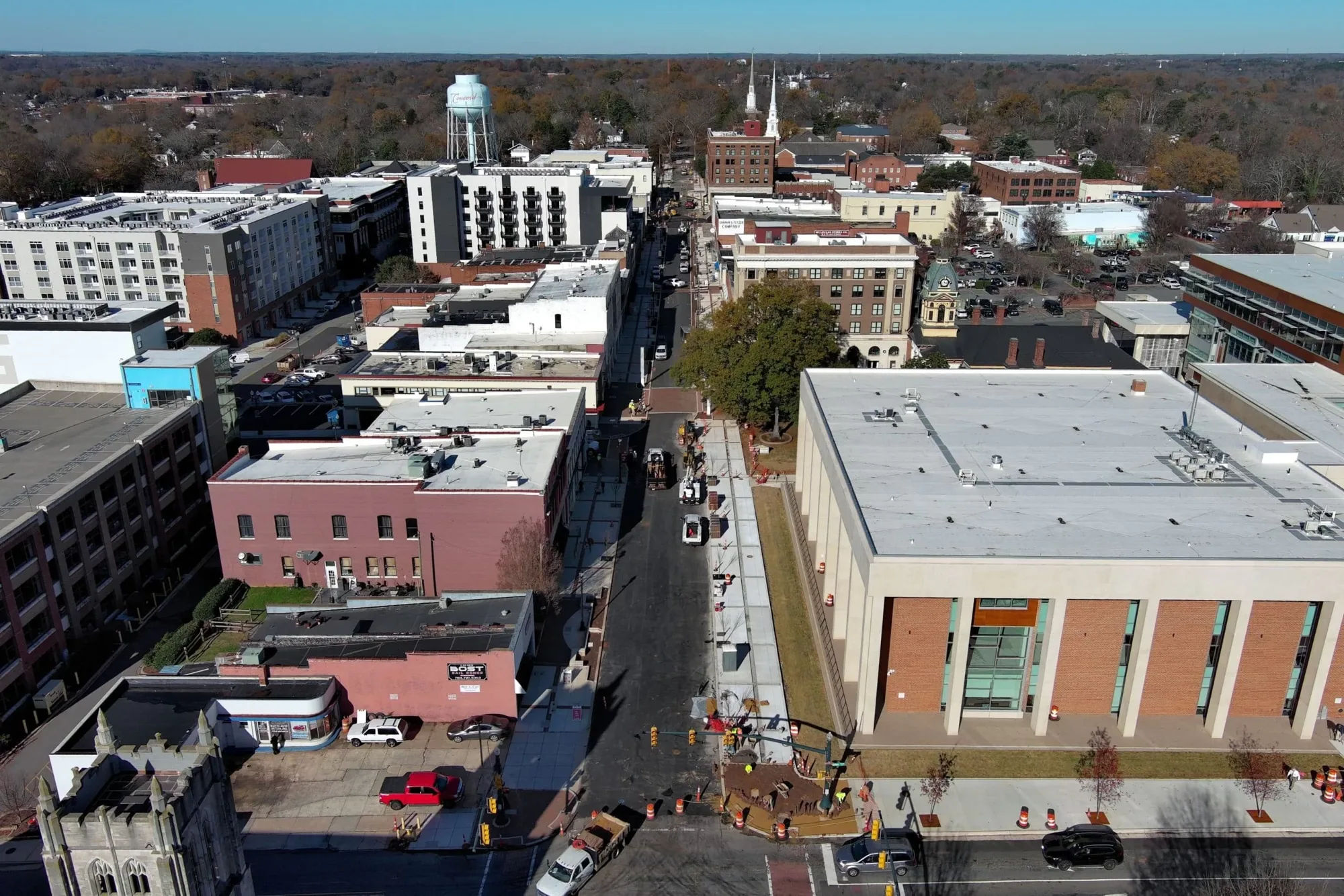
Business parks near I-85 include speculative buildings. Across the Entertainment Corridor, retail, dining, lodging and dealerships share a broad commercial area. Those uses guide scheduling questions, but we confirm each owner's access arrangements directly.
Cabarrus County sees warm-season thunderstorms and occasional winter ice or snow. We pay attention to drainage and temporary protection when those conditions affect the visit. The repair still depends on the roof itself. For work in the Concord Entertainment Corridor or International Business Park, we coordinate directly with the property contact.
Use the right survey method
Some roofs benefit from a drone view of broad or difficult areas. An infrared survey can help identify patterns that deserve additional investigation. Neither tool replaces confirmation at seams, penetrations or other details. We explain what the method observed and what remains uncertain.
A drone survey can support visual review. An infrared moisture survey may help target test areas. The owner receives a practical next step, not an image set without context.
Commercial roofs use membranes, asphaltic systems, metal and coating assemblies. Each one requires suitable preparation and detailing. We check product identity where possible, review prior repairs and avoid assuming manufacturer approval or partnership. The installation plan should state the actual material and the connection being repaired.
For membrane concerns, we can assess TPO, EPDM and other systems based on the roof present. A coating review includes adhesion, surface condition and drainage. Product records are helpful, but inspection remains necessary.
Leave the owner with a useful record
After the visit, the owner should know what was inspected, what changed and what needs follow-up. We use photos and written scopes to keep that information available for facility staff and asset managers. If work exposes concealed damage, we explain the finding before extending the repair.
Preventive maintenance can revisit drains, seams, flashings and equipment curbs before a small condition becomes an active leak. Our maintenance visits document findings and schedule needs. Each roof gets a record of its own conditions.
When you call, identify the building, affected room and roof symptom. Tell us whether water is active, what operations need protection and how roof access is arranged. Those details help us choose an appropriate first visit.
We will discuss the inspection or repair scope, the records that can help and any access requirement to confirm. No two proposals need the same opening or sequence. A useful conversation starts with the roof decision in front of you and the people who rely on the space.
Document the decision
A clear scope records the observed condition, proposed work area, material and access needs. When a repair meets concealed damage, we pause at the agreed decision point and explain what has changed. The owner can review photographs and choose whether to authorize added work. That step keeps an allowance from becoming an open-ended instruction.
Closeout notes should identify what the crew completed, what remains and when a follow-up inspection makes sense. Facility staff can use that record to brief another shift or compare a later roof visit. We keep observations separate from assumptions and note when a condition could not be confirmed without further testing. It is a practical record for the person responsible for the building after the immediate leak or project is resolved. For a later project, the same notes help identify whether the condition is new or has changed. We can explain what the next visit should confirm, including roof access, affected operations and whether a representative area needs testing. That gives the owner a workable starting point without treating an earlier observation as a permanent diagnosis. Before scheduling, we confirm the property contact, work hours and access plan.
Talk through the roof issue
Tell us what the building needs protected and which roof decision you need to make.