Home / Commercial Roofing Services / Emergency Commercial Roof Repair
Emergency Commercial Roof Repair in Concord, NC
Get emergency commercial roof help in Concord, day or night. We assess safe access, limit active exposure and plan the permanent correction after protection.
Water reaching an electrical service area can force a shutdown. The first roof task must fit that immediate building condition. We respond to commercial roof emergencies throughout Concord, NC. Calls are handled through nights, weekends and holiday periods. Safe access and weather conditions govern what can proceed. We assess the opening and arrange practical temporary protection. Permanent reconstruction follows once the extent and conditions are understood.
Weddington Road includes industrial facilities near neighborhoods and parks. An emergency at an industrial property can affect equipment access downstairs. The Concord Entertainment Corridor also includes hotels and restaurants. Their occupied rooms may need interior protection while roof work begins. We identify the affected operation and the available roof route. That helps distinguish a localized opening from a larger exposed area. Report the active symptom and any visibly displaced roofing. An ongoing drip without widespread exposure may need a focused leak investigation.
Establish safe access first
Loose roof material can create hazards beyond the leaking room. We assess falling debris, damaged edges and access conditions on arrival. Lightning, high winds or an unstable surface can prevent roof entry. The immediate plan then needs safe measures from accessible locations. Interior electrical exposure requires qualified attention and building isolation as appropriate. People should stay clear of damaged ceilings and exposed equipment. We coordinate roof protection with the operator managing those indoor conditions.
A roof hatch or ladder route can be affected by the event. We establish another safe route where one is available. Damaged decking can make an apparently intact surface unsafe to cross. Standing water may hide that condition or exposed openings. We evaluate before moving people or materials over the area. A suspicious structural condition can require specialist assessment. Temporary protection also needs a reliable place for its attachment. An unsafe connection cannot support a useful emergency closure.
Limit the exposed area
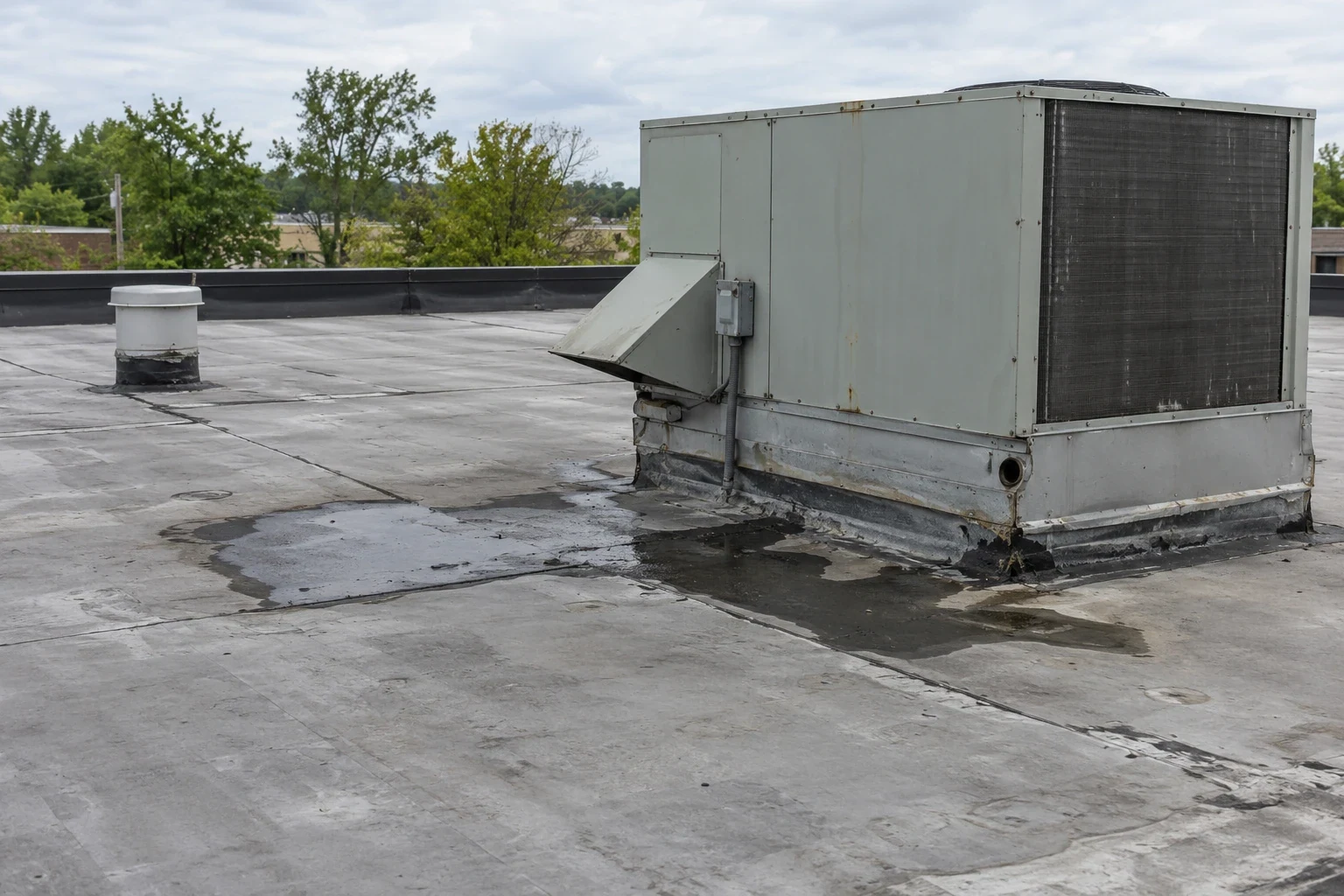
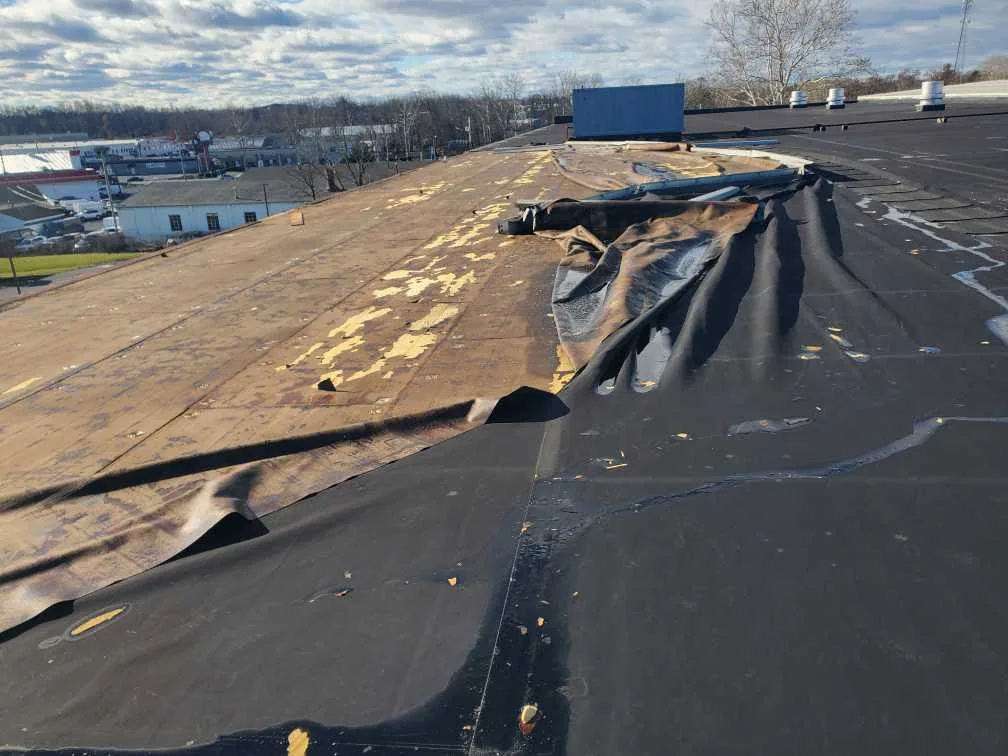
A torn membrane may need temporary closure onto sound adjoining material. Displaced flashing can require protection of the wall or curb connection. We choose the method suited to the opening and conditions. A tarp is useful only when it can be secured appropriately. Temporary coverings must resist movement without blocking necessary drainage. A localized compatible repair may be feasible on suitable dry material. We explain which protection is temporary and which work can remain.
Temporary protection must account for water reaching the same opening again. We consider where runoff approaches and where it must leave. Loose debris near outlets can make the exposed area harder to protect. Clearing it may help where access is safe. Emergency material should not send water toward another weak detail. We inspect its edges and drainage effect after installation. Any remaining exposure needs clear communication to the building operator.
Separate surface and structural concerns
A displaced covering can expose insulation before the deck itself fails. That distinction changes the immediate work and permanent repair. We examine available material without assuming the entire roof is damaged. Lifted attachment can extend beyond the obvious torn area. Adjoining seams and perimeter connections therefore deserve attention. Saturated insulation also changes what can support a lasting correction. We identify these findings as access and weather permit.
Helene produced a measured wind gust at Charlotte-Douglas International Airport. That regional event makes checking wind-affected roof connections a useful concern. The observed condition at your building defines the repair. We document loose material, openings and exposed support without assigning damage by storm name. Owner photographs taken safely before the visit can preserve early conditions. We prepare condition findings with photographs for the affected area. Those records can support insurance discussions without predicting coverage. Coverage and claim decisions remain with the insurer.
Keep the operator informed
An emergency closure needs an indoor counterpart wherever water is entering. The operator may need to relocate stock or isolate a room. Containers for drips are only useful where they can be placed safely. Water near wiring or unstable ceiling material needs a different response. We explain the affected roof area and limits of current protection. That information helps the owner choose which space remains usable. Temporary work does not promise a fully restored indoor environment.
For properties along Weddington Road, the work route may cross a service yard. We agree access that suits the actual building and emergency condition. A locked gate or inaccessible hatch can delay roof assessment. Tell us who can provide entry and manage equipment controls. Temporary barriers may be needed near a damaged edge. We also identify a contact for changed indoor conditions. A developing drip can alter the protection priority. That contact should remain available while the emergency work is underway.
Turn protection into a repair
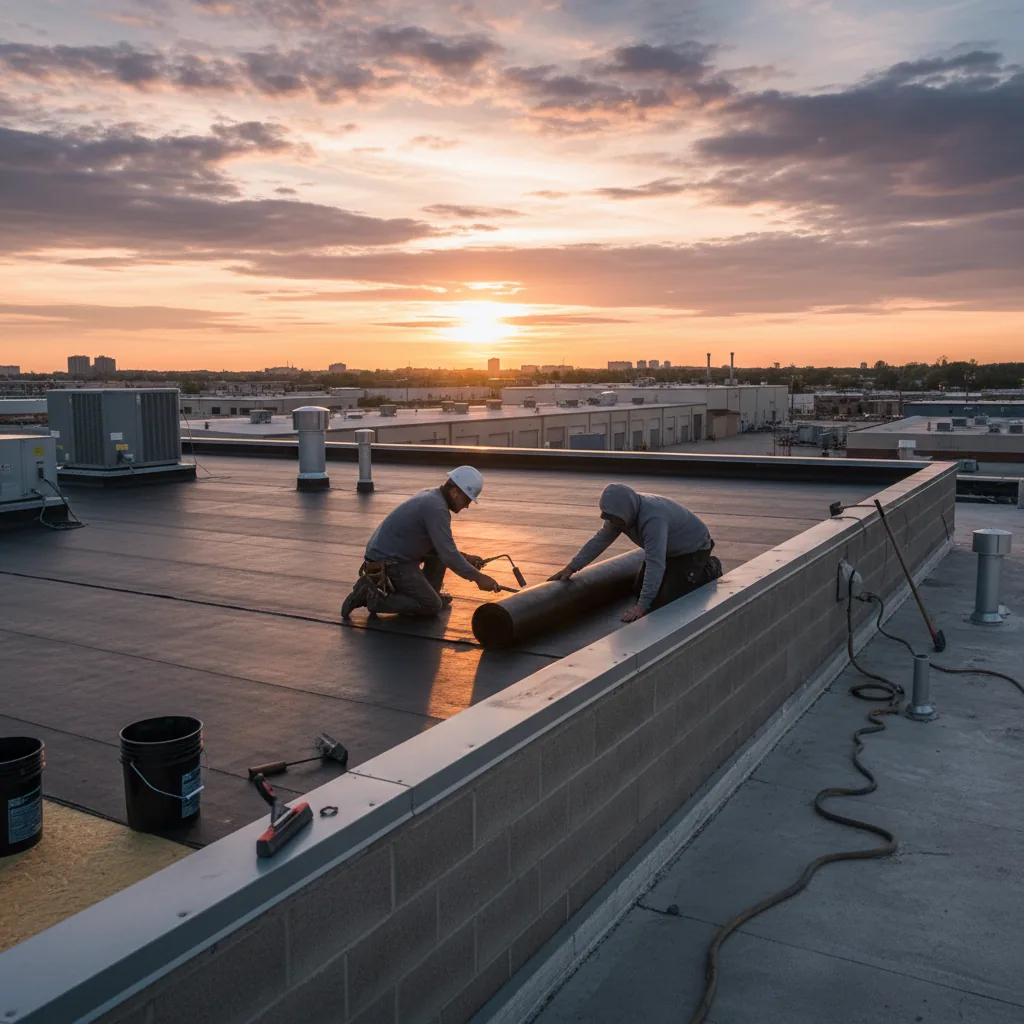
Temporary material needs review before it becomes part of permanent work. It may have covered an opening without removing damaged support. We examine the adjoining assembly once suitable conditions return. Wet insulation, loose attachment and deteriorated flashing can require removal. We then describe a repair joining sound compatible material. Drainage corrections or equipment moves may add separate tasks. The complete scope should identify those tasks rather than leaving them concealed.
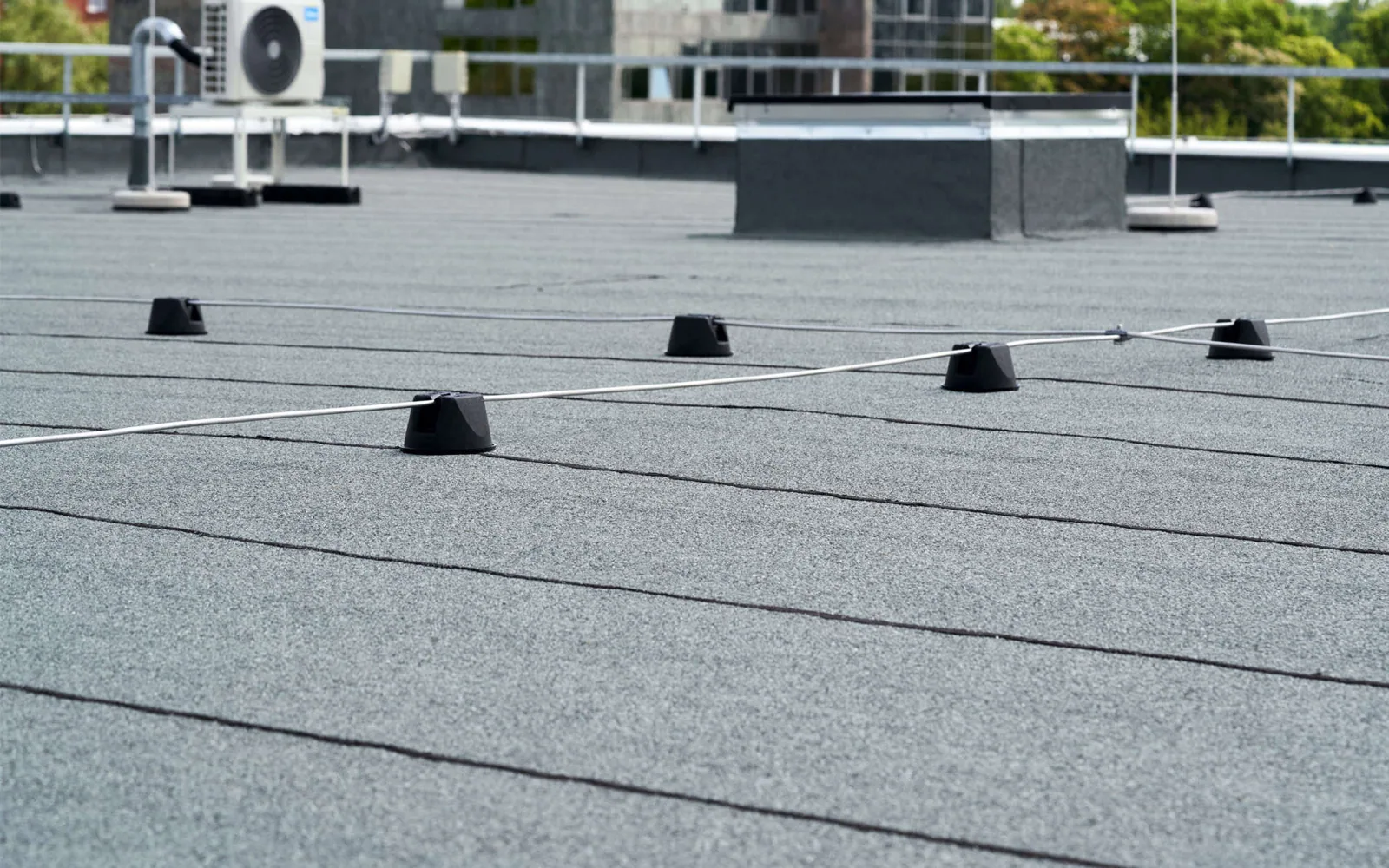
A modified bitumen roof needs treatment appropriate to its layers and reinforcement. Another membrane may require different preparation and joining. Emergency sealant can need removal before the permanent tie-in. A wide opening or extensive wet material may justify replacement evaluation. Smaller defects may be corrected without a broader project. We explain the physical condition supporting either recommendation. The permanent service window needs to suit the occupied space. It also needs weather suitable for the selected installation method.
Watch the temporary boundary
Movement or standing water around temporary protection needs prompt attention. The owner should report a changed indoor symptom after rainfall. We explain which area received protection and which work remains pending. A temporary covering can be disturbed by later equipment servicing. Keep unnecessary traffic away from it until the permanent correction proceeds. A return assessment can be needed after conditions improve. That assessment checks both the opening and nearby connections.
After permanent repair, the surrounding roof may still need examination. The event can reveal unrelated loose details or blocked outlets. A condition inspection after urgent work helps separate those remaining tasks. We record their location and explain which require early correction. A focused maintenance visit can then address accessible debris or small defects. Larger findings need an additional proposal with defined removal limits. That sequence keeps emergency protection and future expenditure distinct. It gives the owner a practical next step after the affected room is stabilized.
Commercial Roofing Questions
What should I tell you during an overnight emergency call?
Identify the building, affected room and active water or displaced material. Tell us about electrical exposure, damaged ceilings or blocked access. We also need an entry contact and available roof access information. Do not enter an unsafe area to obtain more photographs. The information helps prioritize assessment and practical protection.
Can roof work start while lightning or high winds continue?
Unsafe weather can prevent access even during an urgent call. We assess what protection is possible from safe locations. The building operator may need to isolate affected indoor spaces meanwhile. We explain the access restriction and what remains exposed. Roof work proceeds only when the method and conditions allow it safely.
Will the emergency covering be the permanent repair?
Some localized treatments can remain after suitable inspection and installation. Others are temporary closures that require removal or reconstruction. We identify that distinction for the installed protection. Concealed moisture or weak support can change the later scope. The permanent recommendation follows the checked assembly rather than the appearance of the covering.
Can you document damage while protecting the opening?
Photographs of accessible damaged material can accompany emergency protection. Safety and limiting active exposure take priority during the visit. Additional inspection may be needed once weather and access improve. We separate what was visible from conditions requiring later confirmation. That gives the owner usable records without treating initial findings as a complete damage assessment.
Report the exposed space
Call for Concord emergency roof help at any hour. Give us the affected room, immediate hazards and a contact who can arrange building entry.