Home / Service Areas / International Business Park
Commercial Roofing in International Business Park, Concord, NC
Plan commercial roof repair in Concord's International Business Park by checking roof access, drainage, loading activity and occupied business areas.
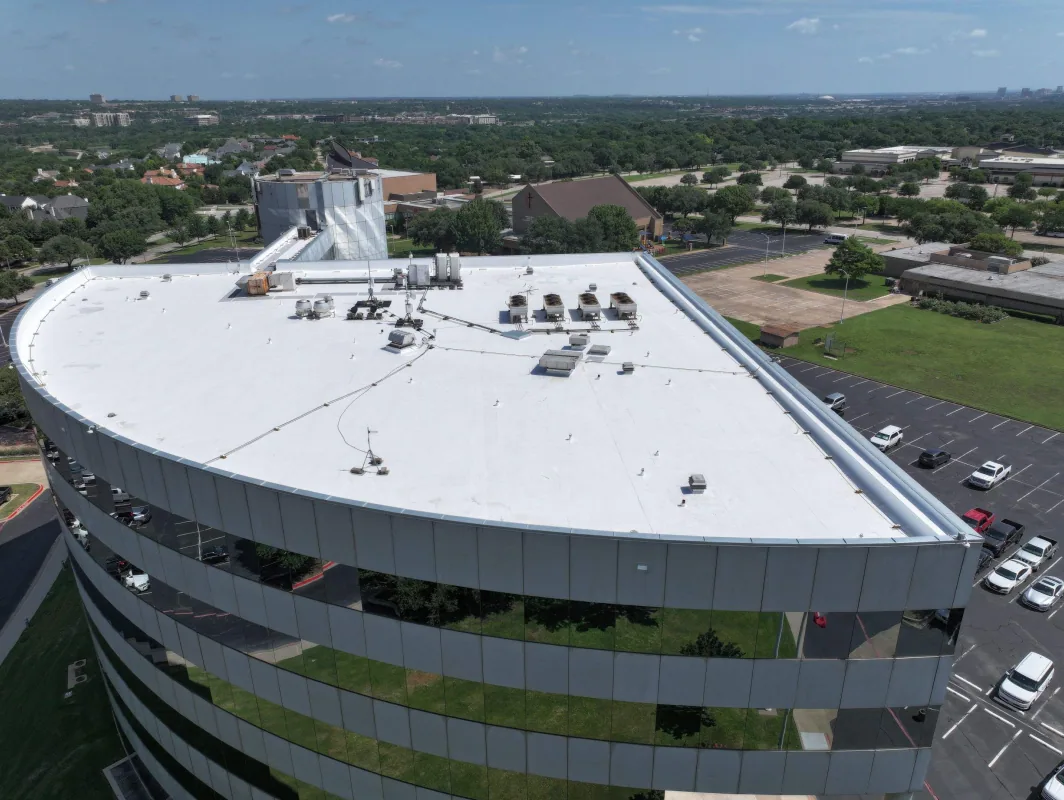
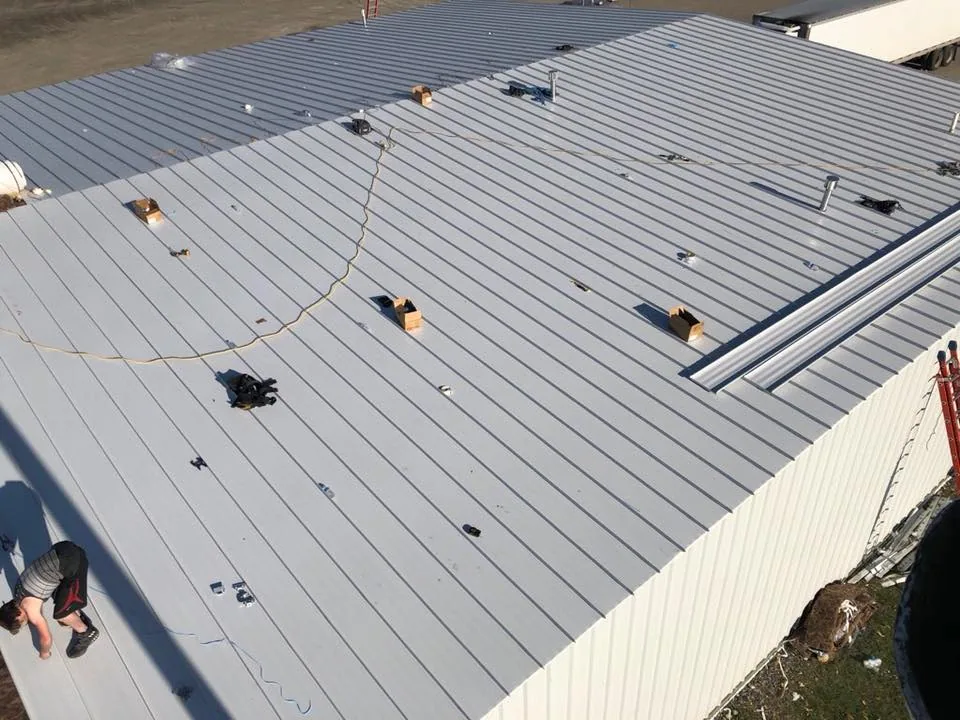
A delivery slot can narrow the time available to move roof materials past an active loading area. We start by confirming the property entrance, roof hatch and the room below the affected section. International Business Park is a 517-acre mixed-use business park in Concord along the I-85 corridor near Exit 55. That setting creates more than one operating pattern across the district, so we plan from the building in front of us rather than assume every roof shares the same access or assembly. We inspect membrane, metal, drains and transitions before drawing a repair boundary. Commercial roof repair can then be sequenced around the work taking place below and the path crews can safely use.
Set the work zone
International Business Park spans a large mixed-use area, and its I-85 location can put loading, office activity and roof access in the same daily schedule. We ask which entrance serves deliveries, whether roof access shares a route with staff, and which interior area needs protection. The park's multiple companies do not establish what any one building stores or how its roof was assembled. We verify the property itself, locate equipment and map the room under each suspect section. The work plan identifies staging, lift access, material protection and a point where the roof is closed before the crew leaves. Two buildings in one business park can have separate ownership, roof systems or access rules, so we keep each inspection and scope tied to its own structure. A shared district name helps identify the property group, but it does not replace a roof-by-roof review. Work on an occupied building should describe the affected rooms and access limits, not promise an interruption-free schedule.
Trace water to the detail
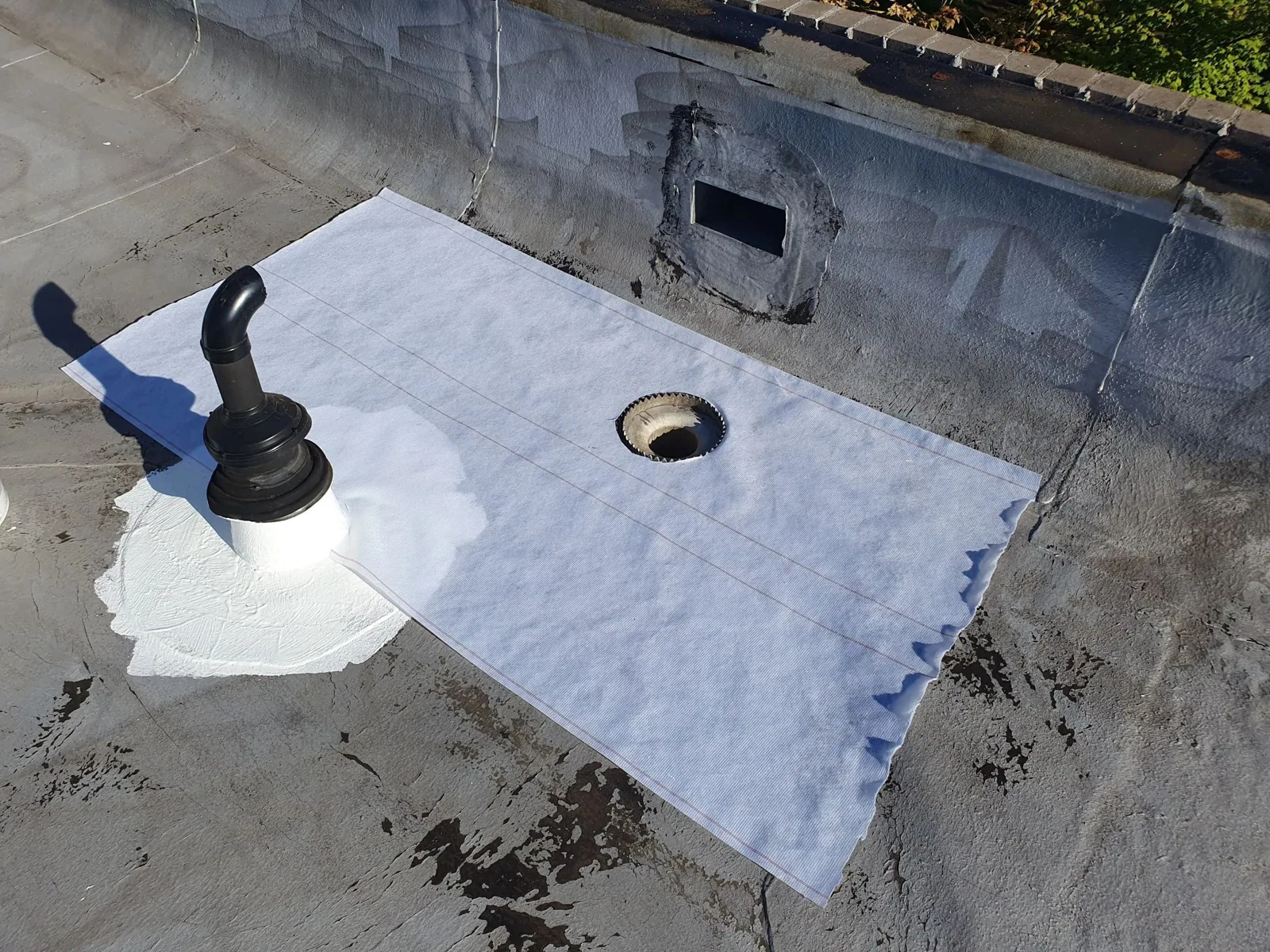
A wet ceiling tile can sit below a drain route, curb or wall transition rather than the roof opening itself. We check field seams, penetrations, edge metal, drain bowls and past repairs above the affected space. Water can move beneath a membrane before it reaches an interior finish. The inspection follows the slope and looks for trapped moisture, loose attachment and a weak termination. If the record does not identify the system, we note what can be seen and what requires a test opening. Before pricing, a commercial roof inspection records which roof details are accessible, which show visible distress, and what needs closer investigation. We also consider the roof hatch and loading arrangement near I-85 Exit 55, since materials cannot be staged safely until the property contact confirms a route.
Choose a repair boundary
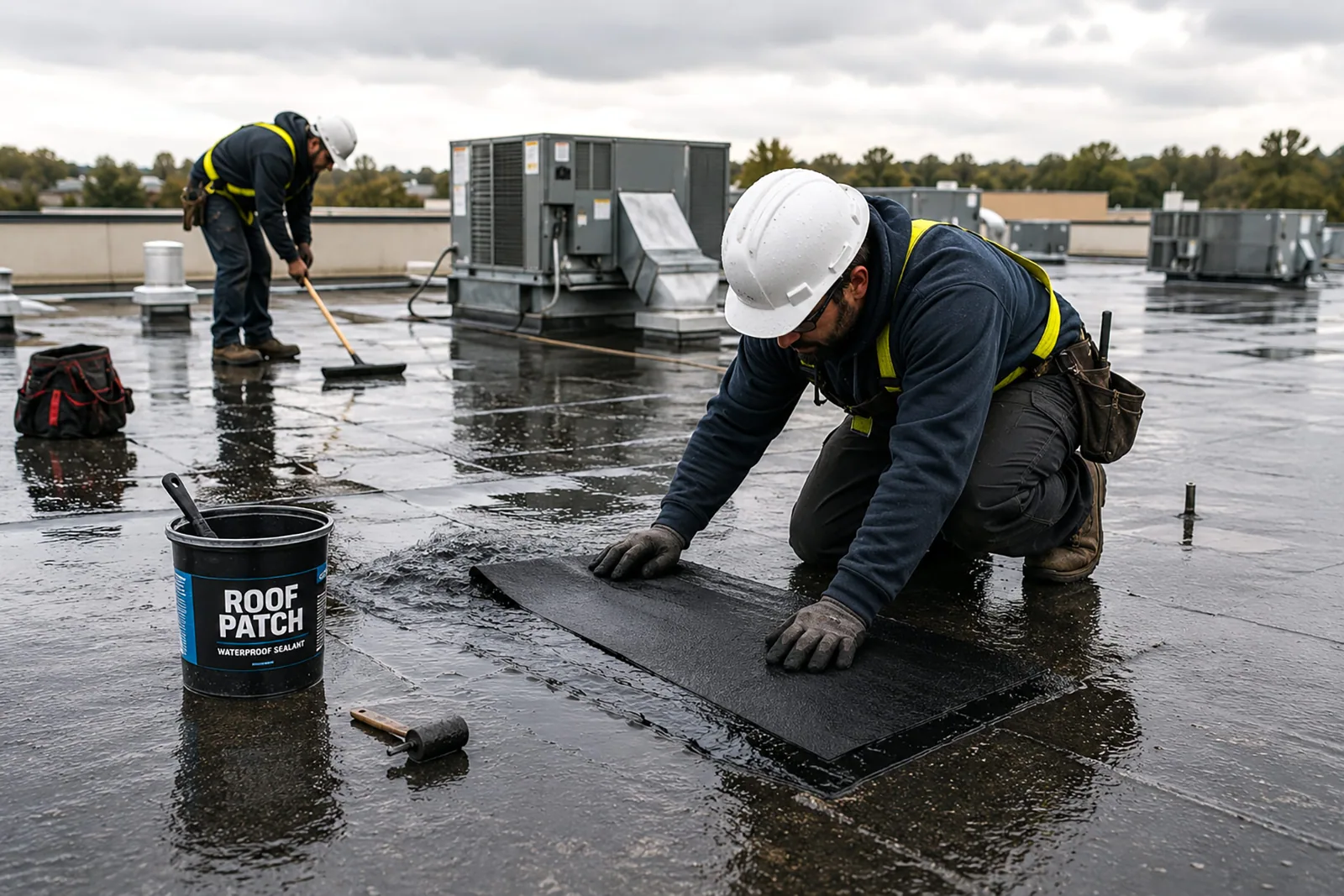
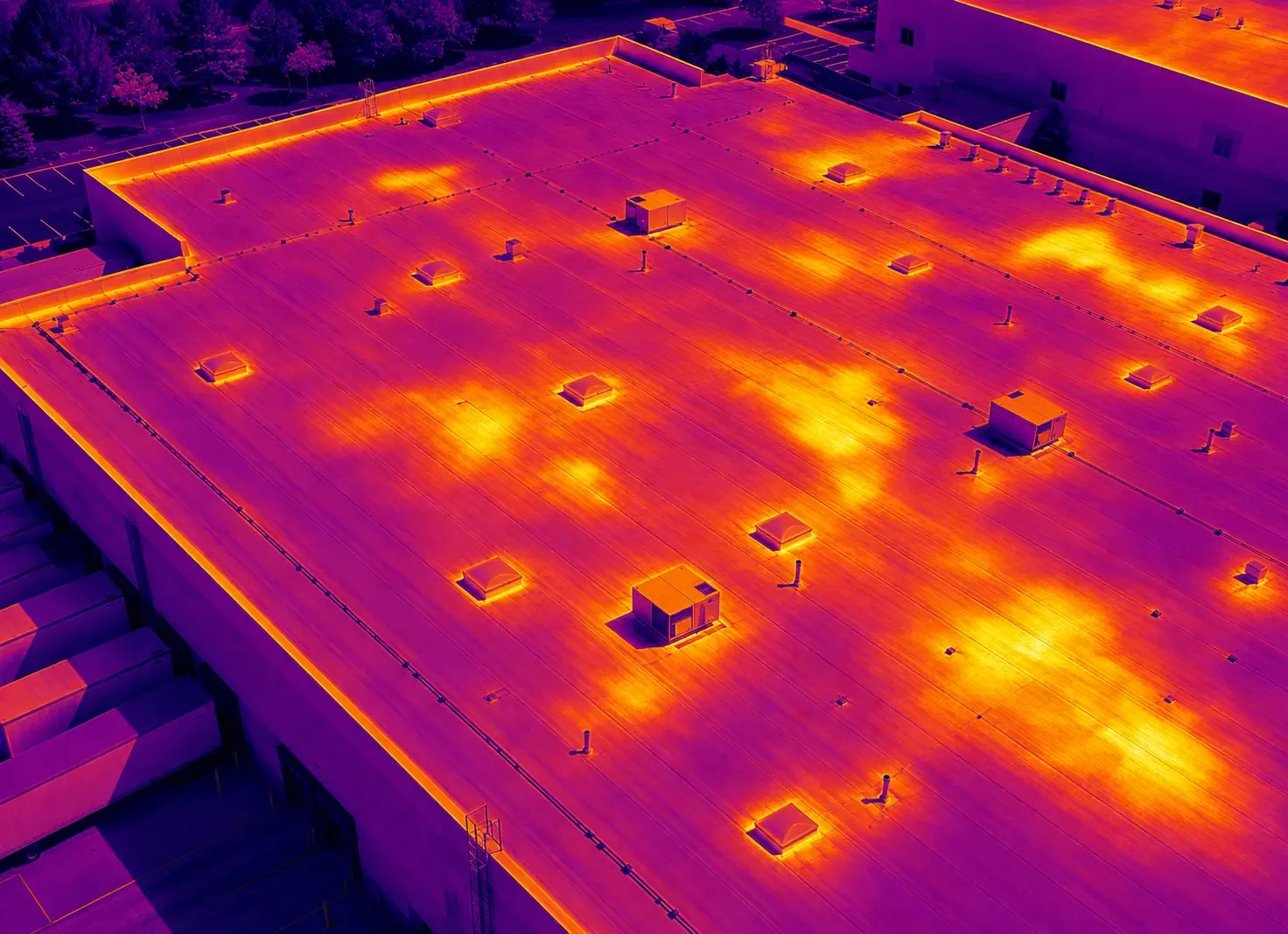
One open lap may need a localized patch, while recurring separation or wet insulation can change the scope. We distinguish the visible defect from connected damage, then identify whether the deck, cover board or flashing also needs attention. If moisture is suspected beyond the first opening, an infrared moisture survey can help direct additional review. A recover remains an option only when the existing layers, attachment, drains and edge height support it. Removal may be clearer when the assembly cannot accept another layer or concealed damage is widespread. We list observed conditions separately from allowances for areas that cannot be confirmed without opening the roof. That lets the owner compare a repair, recover and replacement on the same building facts rather than select from a product name alone.
Protect drains and transitions
Materials and temporary protection must leave water a path off the roof. We look for debris at drain bowls, loose clamping rings, ponding and low points near penetrations. A new membrane can raise the finished roof surface, which may change drain height and perimeter detail. Before work begins, we identify the outlet, confirm how each section will be dried in and set a closeout point for the shift. The linked Downtown Concord page addresses another area, but a roof recommendation still comes from inspecting the structure and documenting its condition. A property-specific review in Downtown Concord also begins by tracing the water route to the roof detail involved. Drain and scupper work is scoped to the actual outlet and adjoining membrane.
Keep the daily operation visible
Timing depends on the repair extent, material preparation, weather window and access path. A short repair beside a roof hatch has different staging needs from a section that requires removal and new insulation. We divide work into areas that can be protected and closed within the planned shift. The property contact identifies busy entrances, delivery windows and rooms where noise or odor matters. We also note any equipment that another trade may move, so curb flashing is restored after the work is complete. A written roof condition report can show which conditions were visible, which area was opened and what remains for the next visit. That record helps the facilities team compare later water entry with the repair boundary instead of repeating the first inspection. Weddington Road district work may present a different access question, but the same owner needs the affected room and roof zone identified before a crew arrives.
Leave a usable service record
For closeout, we photograph the completed membrane work and note the section boundaries, tested transitions, and any item that still needs a return visit. We record the membrane type and material used when they can be confirmed, along with the area addressed and any open question. A future service call can then begin at a known transition rather than a general stain report. Roof asset management can carry that condition into a longer maintenance plan. The record also helps when equipment changes, a later contractor accesses the roof or a tenant reports a new ceiling mark. We schedule follow-up only where the inspection found a reason to return, such as a test opening, monitored repair or condition that remains concealed.
Commercial Roofing Questions
Can roof work be staged around deliveries at International Business Park?
We confirm the building's loading route, delivery windows and roof access before material arrives. The work zone and lift path are set with the property contact. If a route needs to remain open, the schedule divides roof work into areas that can be protected and closed without blocking the agreed path.
What information helps locate a leak in a business park building?
A room number or ceiling location gives us a starting point, not a roof-entry point. We inspect the field above it, follow drainage and check nearby curbs, walls and prior repairs. If the layers conceal the path, we explain what testing or opening would answer the next question.
When should a property consider a recover instead of a patch?
The roof has to be dry enough, attached securely and able to accept added height at its drains and edges. We inspect those conditions before describing a recover. If the defect is limited and adjoining layers remain sound, a repair may be narrower. Broad moisture or repeated failures can support replacement instead.
Can the roof remain in use while repairs are underway?
We identify the open section, access route and interior protection before setting the sequence. A repair can proceed in zones when each area can be secured and closed at the planned stopping point. The owner receives the affected-room and notice details before work begins.
What does the closeout record include?
It identifies the area repaired, material used when confirmed, transitions inspected and any condition that still needs review. Photos should make the roof position recognizable. The facilities contact can use that record when another trade reaches the roof or a later leak appears nearby.
Review the roof access and affected space
Arrange a Concord visit and tell us which room is affected, where roof access is controlled and when deliveries need to remain clear.