Home / Roof Systems / Commercial Modified Bitumen Roofing
Commercial Modified Bitumen Roofing in Concord, NC
Assess SBS and APP modified bitumen roofing in Concord. We examine laps, surfacing and installation methods before defining work above occupied space.
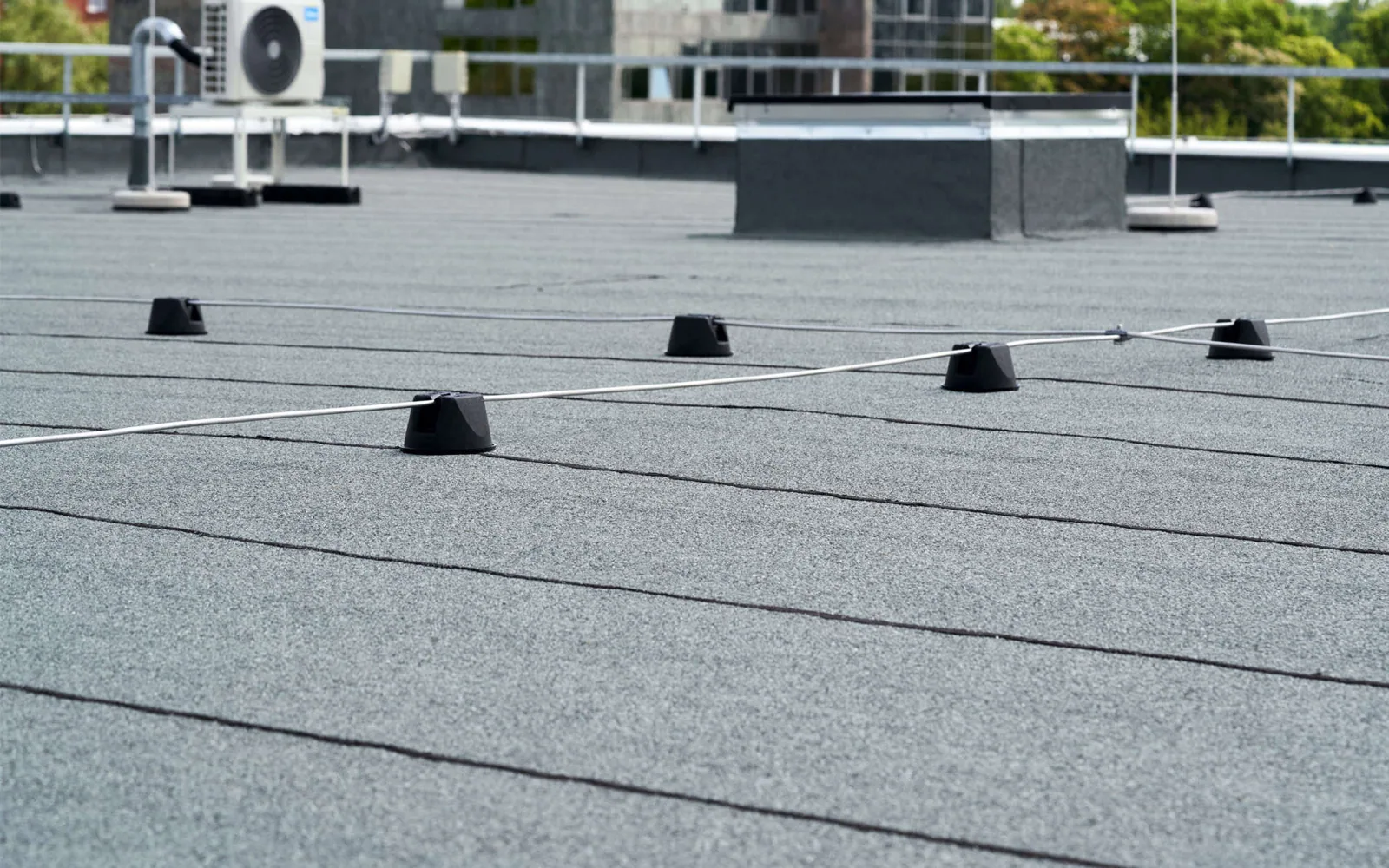
A storeroom beneath an open lap needs a repair suited to its layered roof. Adding material at the surface can leave a concealed connection unfinished. We assess modified bitumen roofing in Concord, NC. SBS and APP systems use reinforced bituminous sheets with specified installation methods. Their layers, surfacing and details need consideration together. We examine the existing assembly before defining a permanent correction. The owner should understand which boundary is repaired and what preparation it needs.
Lilly maintains a manufacturing site in Concord, adding pharmaceutical activity to the local mix. The Weddington Road Corridor planning area also includes industrial facilities. Concord business parks have immediate I-85 access, while on-property handling still needs coordination. An operating property may need close coordination around occupied storage or equipment. We discuss the actual building and affected space before scheduling roofing work. A layered roof condition assessment can identify accessible defects and further examination needs. The installation method should suit the approved assembly and work arrangement. It should not be selected without considering those conditions.
Choose the method before arranging the work
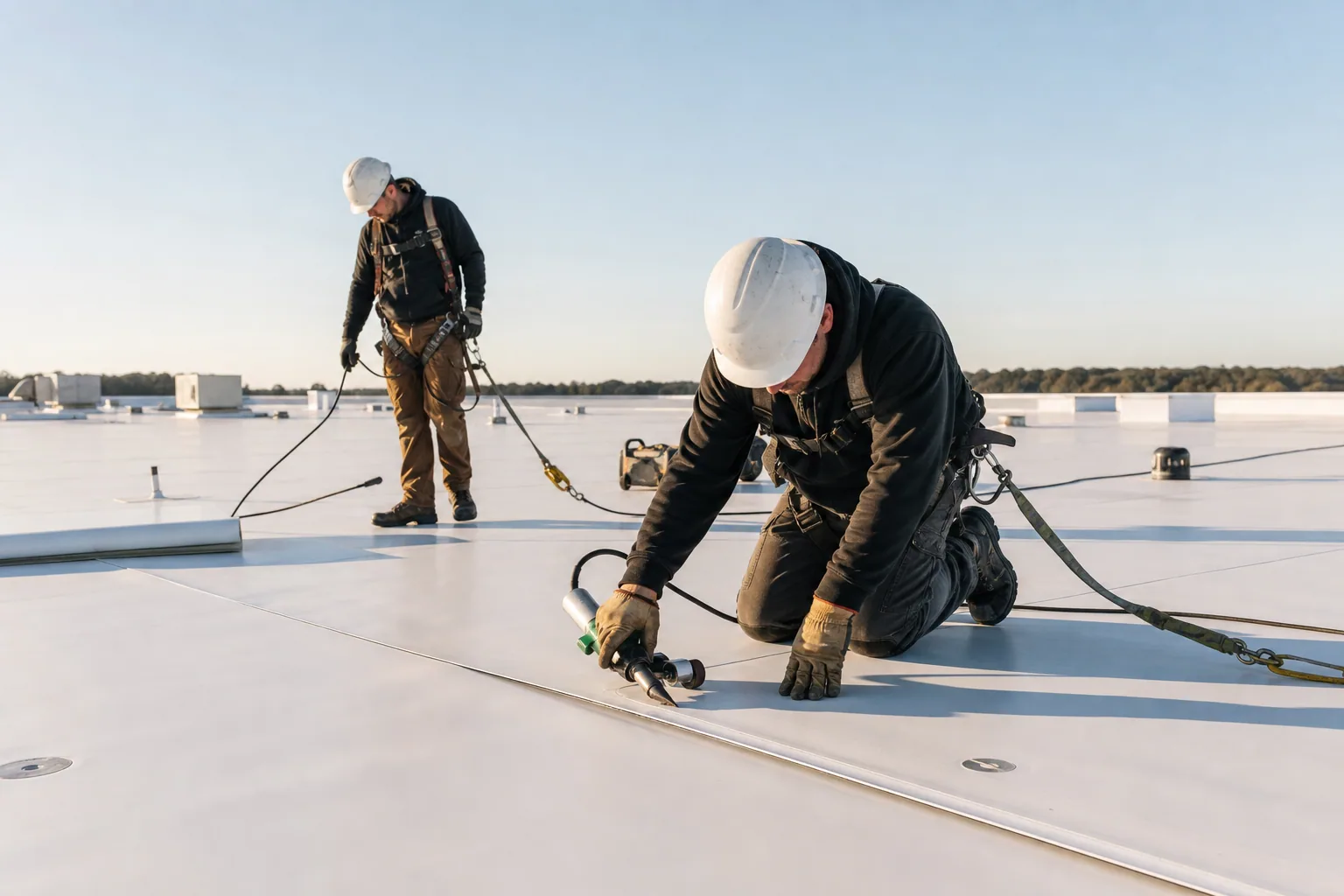
Modified bitumen systems can use different approved application methods. Some involve self-adhered sheets, cold adhesive or hot-applied material. Certain specified systems use torch application under appropriate controls. The selected product and assembly determine the suitable method. These approaches are not interchangeable simply because the sheets look similar. We explain the proposed installation and its practical requirements. The owner should know how preparation and application affect the work area.
Heat-related application needs the appropriate fire precautions and assessment. Adjacent concealed spaces or combustible material can influence the permitted method. We discuss those conditions with the responsible project participants. Another approved application approach may be appropriate for the assembly. Adhesive work has its own preparation and weather requirements. A suitable method must remain workable at corners and penetrations. The proposal should identify that method clearly. Installation should follow the selected system's requirements rather than an improvised combination of approaches.
Examine the sheet connections and edges
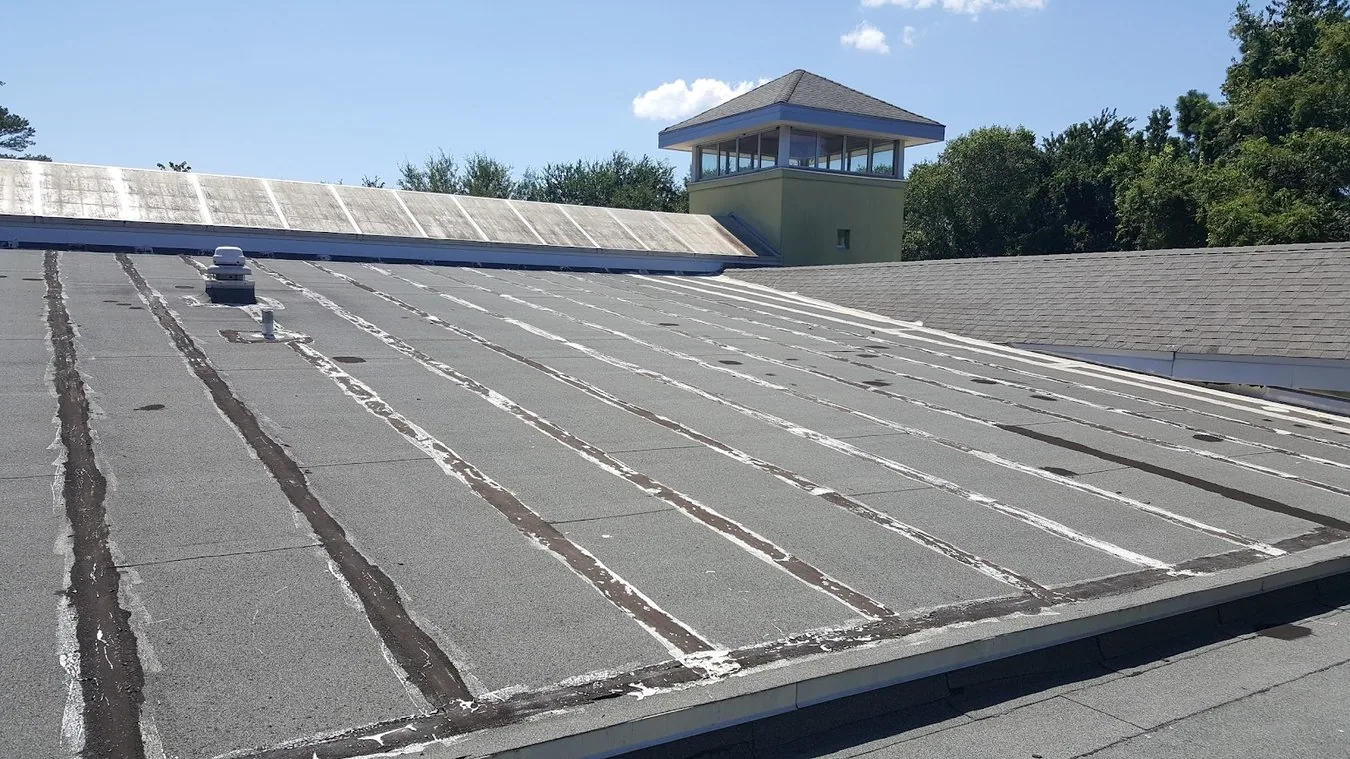
Side and end laps connect the reinforced sheets across the roof. An open lap can admit water into more than the exposed surface. The examination follows the open lap into its neighboring sheet boundaries. Preparation may require addressing granules or previous treatments at the joining area. The selected system guides that work. A patch needs a suitable boundary beyond the failed connection. We define that boundary before selecting compatible repair material.
Older corrections can obscure where the original lap has failed. We assess those treatments rather than automatically cover them again. A modified bitumen repair should address the actual connection and supporting layers. Some areas require removal where material is loose or deteriorated. The owner should understand why the work extends beyond the visible opening. A suitable lap also needs an appropriate transition at its ends. The completed repair should not leave another vulnerable boundary beside it. We examine those accessible transitions as part of the task.
Read changes in the exposed finish
Granulated or coated surfacing protects the specified modified bitumen assembly. Loss or deterioration of that surface needs assessment of the material beneath. A changed appearance does not describe the complete roof condition. We examine cracking, splits and exposed reinforcement where accessible. The useful response depends on whether the surrounding sheet remains suitable. Some areas may accept a compatible localized correction. Broader deterioration can change the practical repair option.
Blisters or wrinkles also need investigation before cutting or covering them. Their condition and relationship to underlying layers matter. An unnecessary opening can create another repair task. We examine the relevant area and identify any need for selected exposure. A restoration coating assessment may be useful on a suitable retained assembly. It must include compatible preparation and necessary repairs. Coating cannot correct loose or wet material beneath the finish. We explain those limits through the actual condition and proposed work.
Follow deterioration into the underlying layers
A layered roof can retain moisture beneath a limited visible defect. The removal boundary needs examination rather than a guess from the stain below. We assess accessible insulation and support where the scope permits exposure. Wet or deteriorated material may require replacement before the roofing tie-in. The assembly should provide a suitable base for its specified attachment. Leaving unsuitable layers beneath a new sheet retains an unresolved condition. The proposal should identify that material work.
Adding a new assembly over existing roofing needs separate retention review. Existing attachment, moisture and detail heights all matter. A built-up roof comparison involves another layered system with its own requirements. A rubber membrane alternative uses different connection methods. We compare complete workable scopes rather than exposed finishes alone. Removal can reveal support conditions requiring a changed task. The owner should understand how those findings would be handled. An assembly decision includes that practical uncertainty before work begins.
Rebuild the transition at curbs and outlets
Modified bitumen details need suitable material and preparation at vertical transitions. Curbs, wall terminations and drains can require additional reinforcing or specified components. Their shape and support matter beneath the finish. We examine corner movement and available flashing height. Added insulation may require reconstruction at a retained curb. Equipment can limit access to the concealed termination. We identify that dependency before describing a complete detail repair.
Water movement also needs attention around those transitions. Cabarrus County experiences warm-season thunderstorms, making outlet condition relevant to occupied space. An open drain connection can admit water beside an otherwise suitable roof field. Unsuitable slope may need another assembly correction. We examine the route and accessible outlet together. Drainage design or piping changes may require a separate professional. The roofing proposal should distinguish that task from flashing reconstruction. A sound new detail needs a usable surrounding water route.
Plan the application above the occupied room
Preparation and removal can affect the room beneath the work. We discuss the installation method with the building operator before scheduling. Handling heated or adhesive materials requires appropriate controls for the proposed task. Intakes, entrances and equipment service needs can influence the arrangement. The responsible operator should identify relevant operating constraints. We explain the roof sequence and necessary protective boundaries. The plan must remain suitable for both application and the space below.
For a property in the Weddington Road industrial and commercial area, staging follows the actual building access. An occupied storage room may need a different arrangement from an equipment enclosure. Reroofing coordination with the operator can establish those affected areas. Weather can change what should be exposed or applied that day. We discuss the necessary adjustment rather than force the original boundary. The completed information should identify the assembly and relevant connection changes. Later service work needs compatible repairs where it disturbs those details. We explain that requirement when handing over the finished work.
Commercial Roofing Questions
Does modified bitumen installation always involve a torch?
Several approved application approaches exist across different systems. The particular product and assembly determine the suitable method. We explain whether the proposed work uses self-adhered, adhesive, hot-applied or another specified approach. Site conditions and appropriate controls also matter. The method should be established before the occupied-space arrangement is finalized, rather than assumed from the roof type.
Can an open lap be covered without removing its previous patch?
The previous treatment needs assessment for condition and compatibility. Loose or unsuitable material can prevent a sound new connection. We examine the accessible lap and identify the necessary prepared boundary. Some repairs require removal before reconstruction. The scope should describe that task so the owner understands why another surface layer alone may leave the defect unresolved.
What does widespread granule loss mean for repair planning?
The exposed sheet and reinforcement need examination alongside the changed surface. Appearance alone does not establish the full condition. Localized correction may be useful where suitable material remains. Broader deterioration can require a different approach. We identify the supported option after assessing the covering and relevant underlying layers, rather than select treatment solely from a surface photograph.
How should an operating building prepare for application work?
Identify the affected room, nearby intakes and equipment service restrictions. We explain the selected method and proposed work boundary for that discussion. The operator should confirm any necessary space or service arrangement. Weather and exposed assembly findings can change the sequence. The plan needs appropriate protection and application conditions before work advances above occupied space.
Assess the layered repair boundary
Request a Concord modified bitumen visit. Identify the open lap, changed surfacing and occupied space below so we can evaluate preparation and the application method.