Home / Commercial Roofing Services / Commercial Roof Repair
Commercial Roof Repair in Concord, NC
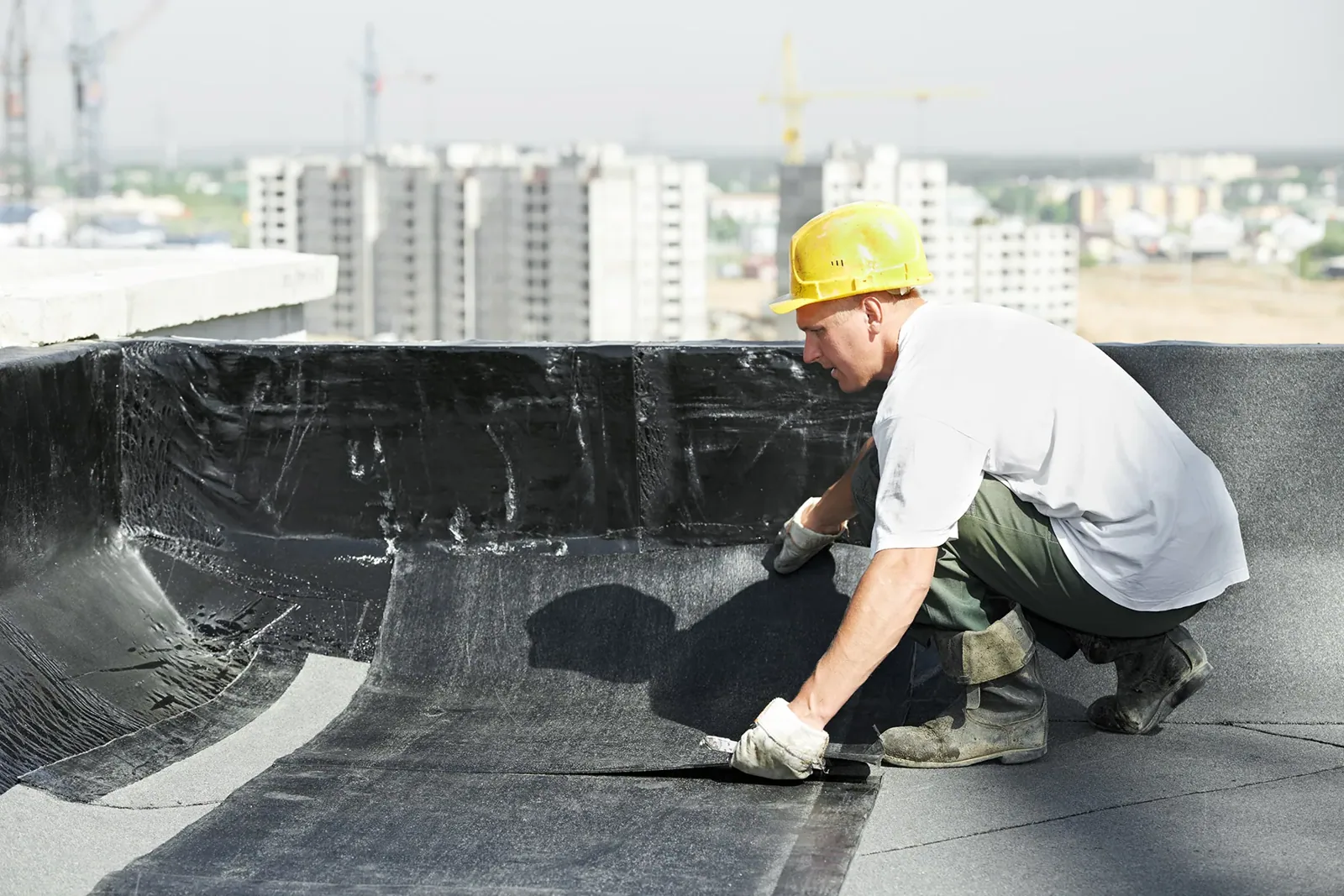
Repair commercial roofing in Concord with defined membrane, seam and flashing work. We assess adjoining material and arrange protection for occupied rooms.
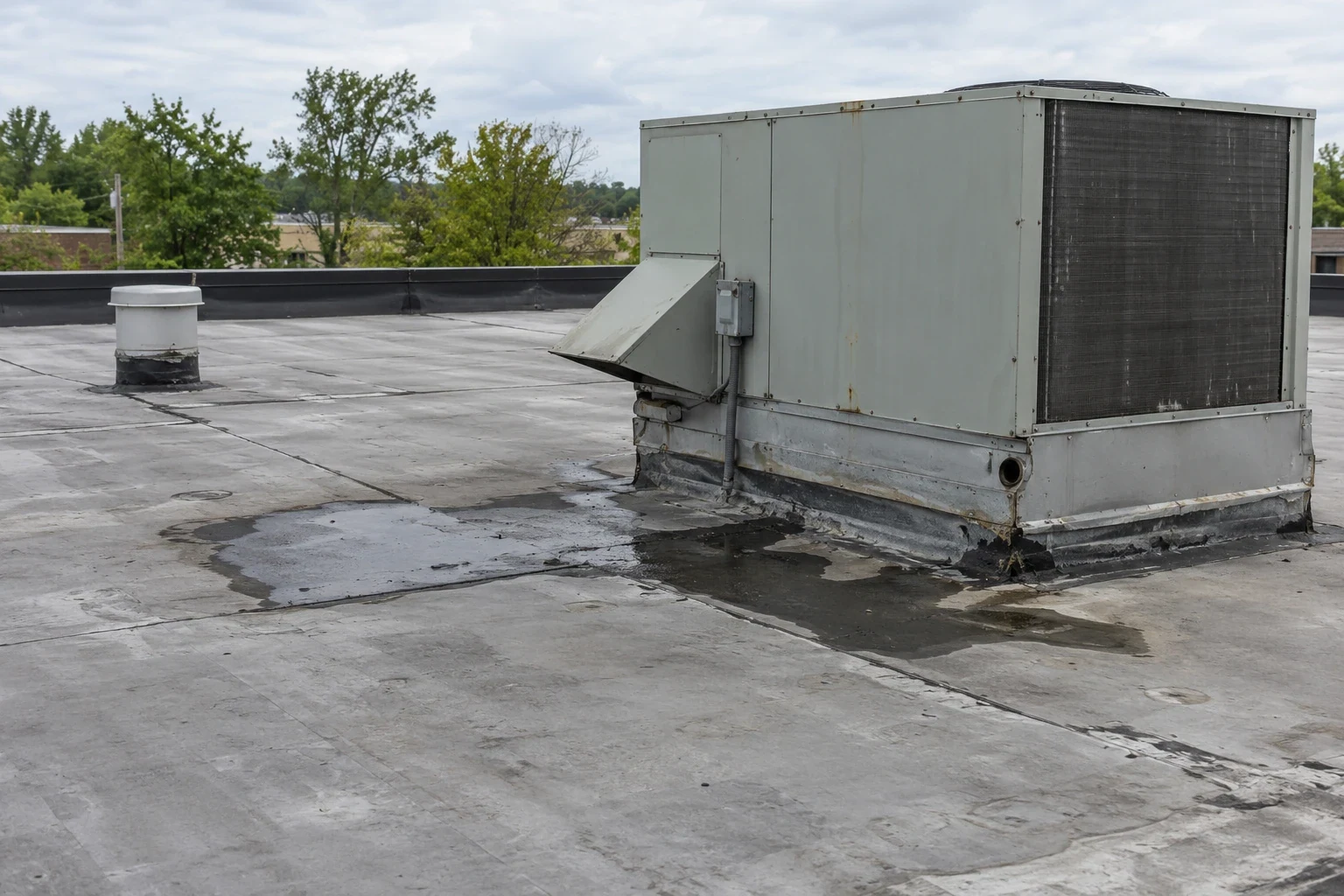
A maintenance closure can displace work from an otherwise usable room. The roof correction needs to address the defect causing that closure. We inspect the affected detail and establish a practical repair boundary. For owners in Concord, NC, that boundary can involve more than membrane. An opening near equipment may include damaged flashing or wet insulation. Loose metal can expose the connection beneath its visible face. We explain the permanent task before scheduling the service visit.
The Church Street Corridor contains commercial businesses near residential neighborhoods. A planned repair there needs manageable loading and safe pedestrian access. Concord Parkway and Warren C. Coleman Boulevard also serve commercial planning areas. Properties along these routes have their own entrances and service arrangements. We inspect the actual building rather than assuming its roof construction. The repair then fits the material, attachment and daily operation. An urgent drip may need water entry traced and stopped before the planned permanent correction begins.
Find the failed connection
A lifted seam needs examination along its adjoining length. A patch placed only over the visible opening can miss weak material. We check how the membrane was joined and what remains sound. We also look for movement or tension pulling on that connection. At a curb, flashing can fail where the wall changes direction. At a drain, the sheet connection can fail beneath accumulated debris. Different defects require different preparation and repair components.
We separate surface damage from a problem within the assembly. A puncture with dry, firm support may need a localized repair. The same opening over wet insulation needs additional removal. Soft support can prevent a reliable bond and hide ongoing deterioration. We inspect adjacent fasteners, plates or substrate where accessible. A repeated failure at the same detail deserves a wider investigation. Its cause may involve movement, equipment interference or poor drainage. The repair should remove that cause where the scope permits.
Match the existing covering
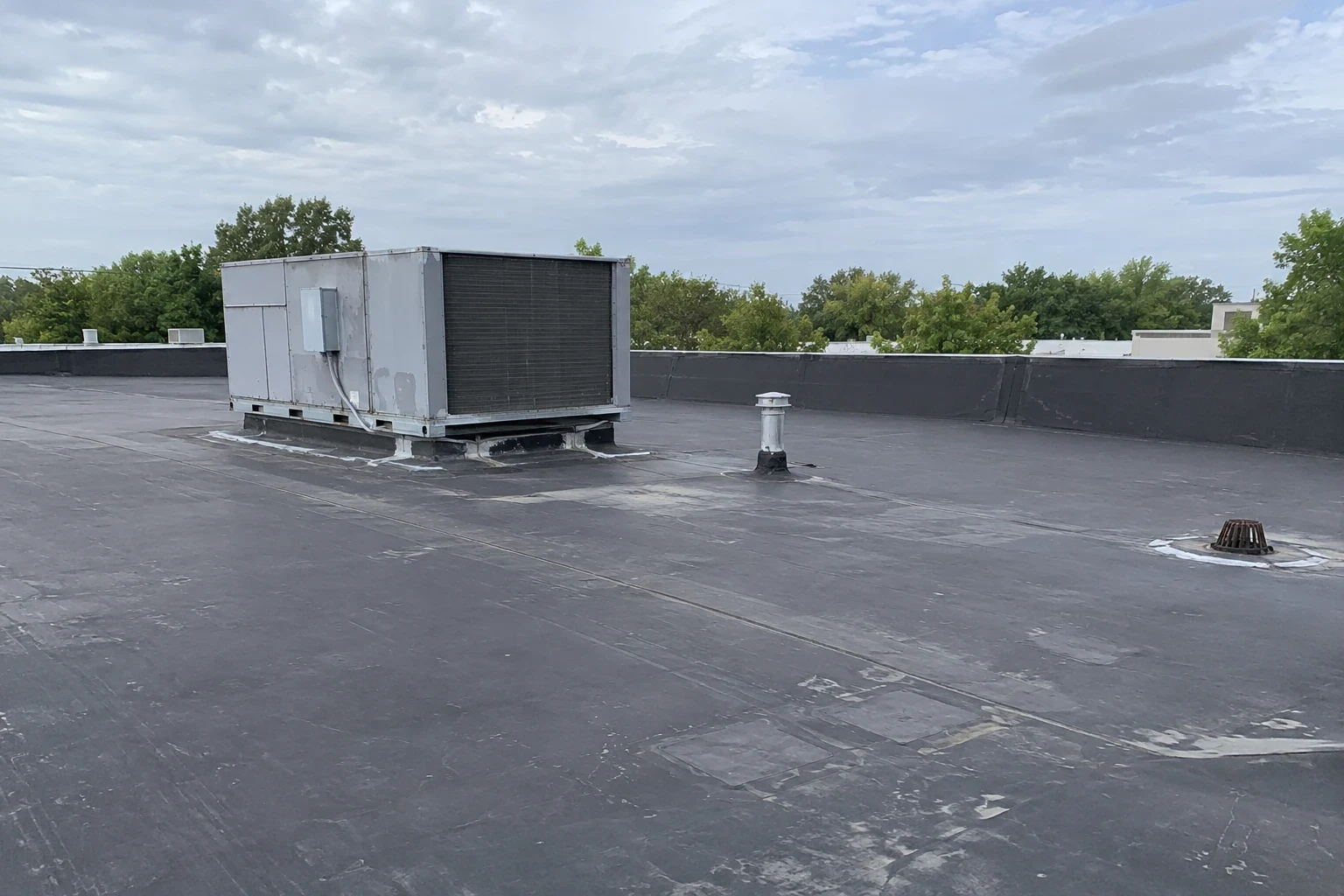
The existing membrane identity affects preparation and compatible repair methods. We check the covering rather than relying on color alone. Thermoplastic repairs need suitable material and weldable, properly cleaned surfaces. Older material may require preparation beyond a simple wipe. Rubber membrane repairs use compatible primers, tapes and flashing components. Asphalt coverings need repair methods suited to their reinforcement and condition. A coating also changes the surface we must evaluate before bonding.
A serviceable EPDM covering can need focused treatment at seams or penetrations. The repair material must extend onto sound, prepared areas. We avoid treating incompatible sealant as a permanent membrane connection. Some previous repairs need removal before the detail can be rebuilt. The available bonding width matters around crowded equipment. A narrow gap may require another trade to provide access. We identify that constraint while defining the task. It can change both the repair extent and scheduling.
Remove what prevents the repair
Wet insulation creates a different job than an isolated surface cut. We establish where the damaged material extends beneath the covering. Selected openings can help when the boundary is uncertain. We replace removed material with components suitable for the assembly. The rebuilt area needs a stable surface and compatible connection. Its height should not create a hollow that holds water. We check adjoining details before closing the opening.
Some damaged areas are too widespread for a sensible localized correction. Repeated repairs can also leave little suitable surface for another bond. We explain those limitations with photographs of the actual condition. Then we compare a larger correction with removing and replacing the deteriorated assembly. Replacement is a different commitment and needs its own scope. The owner should know which material remains serviceable. That distinction helps avoid paying repeatedly for a detail needing reconstruction. It also keeps unrelated work out of a focused repair.
Check the water route
Debris at an outlet can raise water around an otherwise sound detail. We clear accessible blockages and examine the surrounding connection. A drain restriction may extend into plumbing beyond the roof fitting. That needs the appropriate trade rather than a membrane patch. Poor slope or compressed insulation requires another correction. We distinguish these conditions before describing the permanent work. A repair should not depend on leaving its surroundings unchanged.
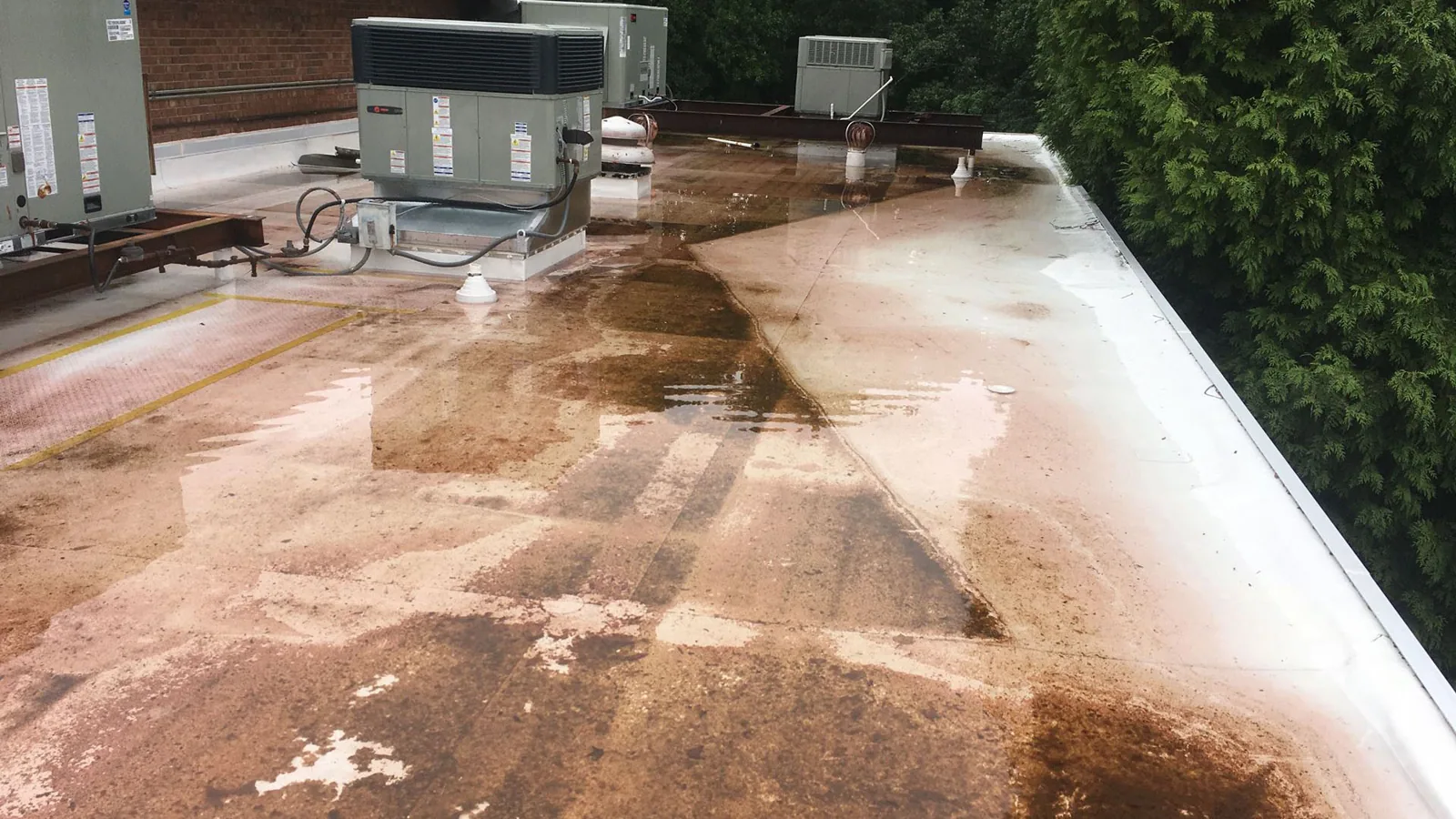
A later rainfall can reveal whether a drainage correction needs further evaluation. We inspect collection points and avoid leaving loose material near outlets. The correction of persistent standing water may involve tapered insulation or redesigned drainage. We discuss that separately when it exceeds the local repair. Winter ice and snow also occur in the county. Access and preparation need to suit the conditions during the visit. A wet or frozen surface cannot be treated like a dry repair substrate.
Put the task beside the operation
Noise and material handling can affect rooms even during limited repair work. We identify the occupied area below the proposed opening. The work arrangement should account for vulnerable contents and ceiling access. Building entrances need protection where tools or debris pass nearby. We discuss the roof hatch, ladder position or other safe access. Equipment shutoffs need a clear owner and an agreed service window. Those details allow the repair to proceed without improvising indoors.
Businesses along the Church Street commercial corridor sit near surrounding neighborhoods. We discuss disposal and staging with that setting in mind. The actual lot and entrance layout govern the arrangement. Materials for a small repair still need suitable storage and handling. We also establish what happens if preparation reveals additional damage. Extending removal can require renewed interior protection. We explain the finding and revised boundary before proceeding. Temporary closure needs to keep the affected area weather resistant until completion.
Keep the correction visible
A repaired detail needs a clear record of what changed. We provide photographs showing the condition and completed treatment. The owner should also know which nearby items require attention. A separate damaged connection may remain outside the approved repair. We identify it rather than letting completion obscure the finding. These distinctions support future maintenance and service coordination. They also help evaluate any later symptom in the occupied space.
The next equipment visit can disturb a completed correction. We identify vulnerable seams, flashing and routes for carrying tools. A maintenance team needs to recognize lifted edges or fresh cuts. Reporting those changes early can keep the repair task localized. A planned return for drainage and detail checks can suit roofs with recurring debris. The frequency follows exposure, assembly requirements and observed condition. We discuss those needs for your property. The purpose is to catch a developing failure before another room closes.
Commercial Roofing Questions
Can you repair only the damaged curb instead of the surrounding roof?
We inspect the curb flashing and the membrane needed for its tie-in. A local reconstruction is practical only with sound surrounding material. Wet support or heavily patched surfaces can enlarge the repair boundary. Equipment clearance may also limit access to the connection. We explain those conditions before confirming the extent of the work.
Why remove an earlier patch that appears intact?
An older patch can conceal weak bonding or incompatible material. It can also leave insufficient space for the correct new connection. We examine its attachment and surrounding surface before deciding. Removing it may expose the underlying failure more clearly. That allows the permanent correction to join the original assembly properly.
Will a planned repair address water trapped in insulation?
The scope must specifically include any wet material requiring removal. A covering repair alone does not restore saturated insulation. We investigate adjoining support where moisture is suspected. The proposal identifies removal and replacement separately from surface work. You can see whether the correction includes both parts of the problem.
What changes the scheduled completion date?
Surface conditions, newly exposed damage and equipment access can alter timing. Some repair methods require a dry preparation area and suitable temperatures. A mechanical move may need coordination with another service team. We explain those constraints before work starts and report material changes afterward. Temporary protection remains part of any interrupted correction.
Define the repair boundary
Book a Concord repair assessment. Identify the affected room or roof detail and any equipment that restricts access.