Home / Commercial Roofing Services / Infrared Roof Moisture Survey
Infrared Roof Moisture Survey in Concord, NC
Investigate concealed roof moisture in Concord with suitable infrared conditions and confirmation cuts. We define wet material before repair or replacement.
Reopening a workroom becomes harder when wet roof insulation remains overhead. Stopping the entry point may leave that concealed material in place. We investigate its condition before defining the permanent removal task. For an owner in Concord, NC, the useful result is a checked boundary. Infrared observation can help identify areas needing physical confirmation. It requires suitable weather and an assembly that produces interpretable patterns. We explain those conditions before arranging the survey.
Weddington Road includes industrial facilities as well as neighborhoods and parks. Repair extent there needs to suit the occupied operation underneath. The Church Street Corridor also contains established commercial businesses. A moisture investigation can help limit necessary openings above their rooms. We assess the roof covering, insulation and reported symptom first. Then we choose a method appropriate to the question. A close examination of the roof details remains necessary where active water entry is unresolved.
Read temperature patterns
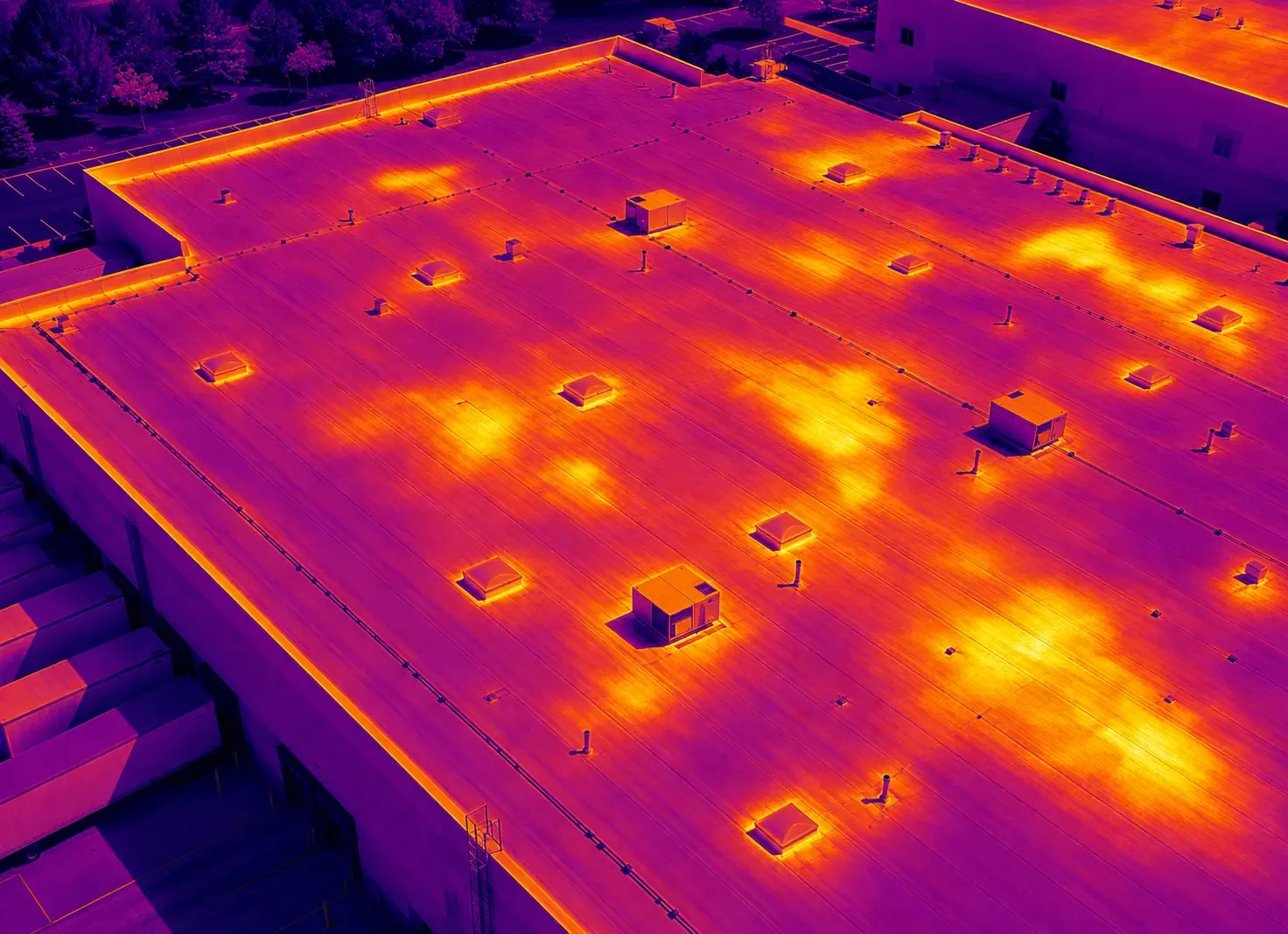
Wet and dry material can release stored heat at different rates. Under suitable conditions, that difference produces a visible thermal pattern. We examine the pattern in relation to the roof assembly. A warmer area alone does not establish wet insulation. Equipment heat, shading and material changes can affect the observation. The survey needs those influences considered during interpretation. We use suspected areas to direct further examination rather than automatic removal.
The roof covering and insulation type affect the method's usefulness. Multiple layers can complicate interpretation of the concealed condition. Some surfaces or assemblies do not provide a reliable thermal contrast. We assess whether the proposed observation can answer your question. A different investigation method may be more useful where it cannot. The owner should know that before scheduling further survey work. Thermal images document indications under particular conditions. They do not measure every layer's moisture or prove the entry point.
Use a suitable survey window
A thermal comparison needs conditions that allow meaningful temperature differences. Solar heating followed by appropriate cooling can support that contrast. Surface water, recent rain and changing weather can obscure it. Wind and rooftop equipment can also alter surface temperatures. We assess the roof and forecast rather than promise a fixed observation time. Unsuitable conditions can require postponement or another method. The selected window should serve the investigation rather than convenience alone.
A thermal survey depends on the assembly, surface condition and safe access. We review the roof before deciding whether the method can answer the question. Equipment that affects a reading also needs consideration. A building along the Weddington Road Corridor may also have equipment affecting thermal patterns. We discuss its operating schedule where that influence matters. Turning equipment off is not assumed or improvised. Any needed change requires the operator's agreement and appropriate trade coordination.
Check beneath selected indications
A confirmation opening examines the material beneath a suspect thermal area. We choose locations that address the observed pattern and assembly. Comparison openings can help check an apparently different area. The location and purpose of each opening need agreement. We also consider roof access, concealed services and closure requirements. Physical examination establishes the sampled material's condition directly. It can confirm moisture that an image only suggested.
Sampling still has limits outside the actual examined locations. We relate the checked points to adjoining patterns and roof geometry. An uncertain boundary may require more examination before removal quantities are proposed. We close survey openings with compatible materials suitable for the covering. Their locations remain part of the investigation record. A rubber membrane connection needs a different closure from a welded sheet. The repair method follows the existing assembly. Investigation should not leave an uncontrolled opening after the visit ends.
Define the material to remove
Confirmed wet insulation needs evaluation of its extent and support. We distinguish the affected material from sound adjoining portions. Removal boundaries should provide space for a dependable permanent tie-in. A narrow cut can leave damaged material beneath the new connection. A broad estimate without confirmation can include material that remains usable. We explain how the examination supports the proposed boundary. Any unresolved area remains a defined question for further work.
That information can shape a decision about retaining the existing roof. Recovering over unsuitable wet material is different from preserving a checked dry area. The assembly also needs adequate attachment and code eligibility. A moisture survey does not establish those requirements by itself. Replacement planning may use the same investigation to anticipate insulation removal. We connect the moisture findings with the project being considered. The result should describe physical work rather than a colored image alone. That helps the owner compare complete repair or replacement scopes.
Correct the route admitting water
Wet material can remain after an earlier defect has been repaired. It can also reflect an opening that still admits water. We compare the confirmed area with leak history and nearby details. Seams, penetrations and drain connections require examination for active defects. The survey does not identify cause simply from the wet boundary. A separate detail check can establish the permanent correction. Both tasks matter when moisture and ongoing entry occur together.
Commercial properties in the Church Street Corridor sit near residential neighborhoods. Investigation and repair need suitable handling arrangements for the particular property. A localized opening can require interior protection beneath it. A wider removal task may affect more than one occupied room. We identify those operating consequences while defining the work. The repair of active water entry should connect with any required insulation removal. Treating them separately without coordination can leave the owner with an incomplete correction.
Keep confirmed and suspected areas distinct
The findings need to distinguish thermal indications from physically checked conditions. We identify examined locations and the material observed at each. We also describe weather or assembly limitations affecting interpretation. A drawing or marked image helps relate those findings to equipment. The owner can then locate the proposed removal and adjoining details. Unchecked portions should not appear as confirmed dry roof. Clear distinctions make subsequent repair planning more dependable.
Written condition findings should explain the practical consequence of the moisture investigation. Wet support may affect bonding, insulation performance and removal depth. Those conditions influence preparation and occupied-space protection during repair. The next task might be another selected opening or a defined removal. We connect that task with the unresolved question or confirmed damage. Later leaks or equipment work can change the roof's condition. Keep the survey date and checked areas available for future comparison. They provide a useful baseline without promising that concealed conditions remain unchanged.
Commercial Roofing Questions
Does every bright thermal area mean insulation must come out?
Temperature differences have several possible causes, including equipment heat and material changes. We interpret each indication in relation to the assembly. Selected confirmation openings help establish whether the sampled material is wet. Removal decisions use that physical evidence and the surrounding condition. An image color alone does not define the work.
Can a survey find where the leak begins?
The wet area can help direct investigation toward nearby roof details. It does not identify the active opening by itself. We examine seams, curbs and drainage alongside the reported indoor symptom. Moisture left from an older defect may also appear. The entry-point correction and wet-material boundary therefore need separate confirmation.
What if we need a removal decision before suitable weather returns?
Direct selected openings or another appropriate method may address the immediate question. We assess what information is needed and where access is practical. The investigation can concentrate on the proposed work area. We explain how limited sampling affects the conclusion. An urgent opening may need temporary protection before broader moisture evaluation proceeds.
Will core openings leave the roof needing another repair visit?
Survey openings need suitable closure as part of the investigation task. We establish the method for the existing covering before cutting. Conditions preventing a dependable closure can restrict when sampling proceeds. The locations and observed materials remain in the findings. Future removal may revisit those points, but the investigation should leave them protected.
Check the concealed repair extent
Arrange a Concord roof moisture assessment. Tell us which occupied area is affected and which repair, recover or replacement decision needs support.