Home / Industries We Serve / Manufacturers
Commercial Roofing for Manufacturers in Concord, NC
Assess manufacturing company roofing in Concord around service penetrations, retained layers and equipment access. We investigate entry and explain roof work.
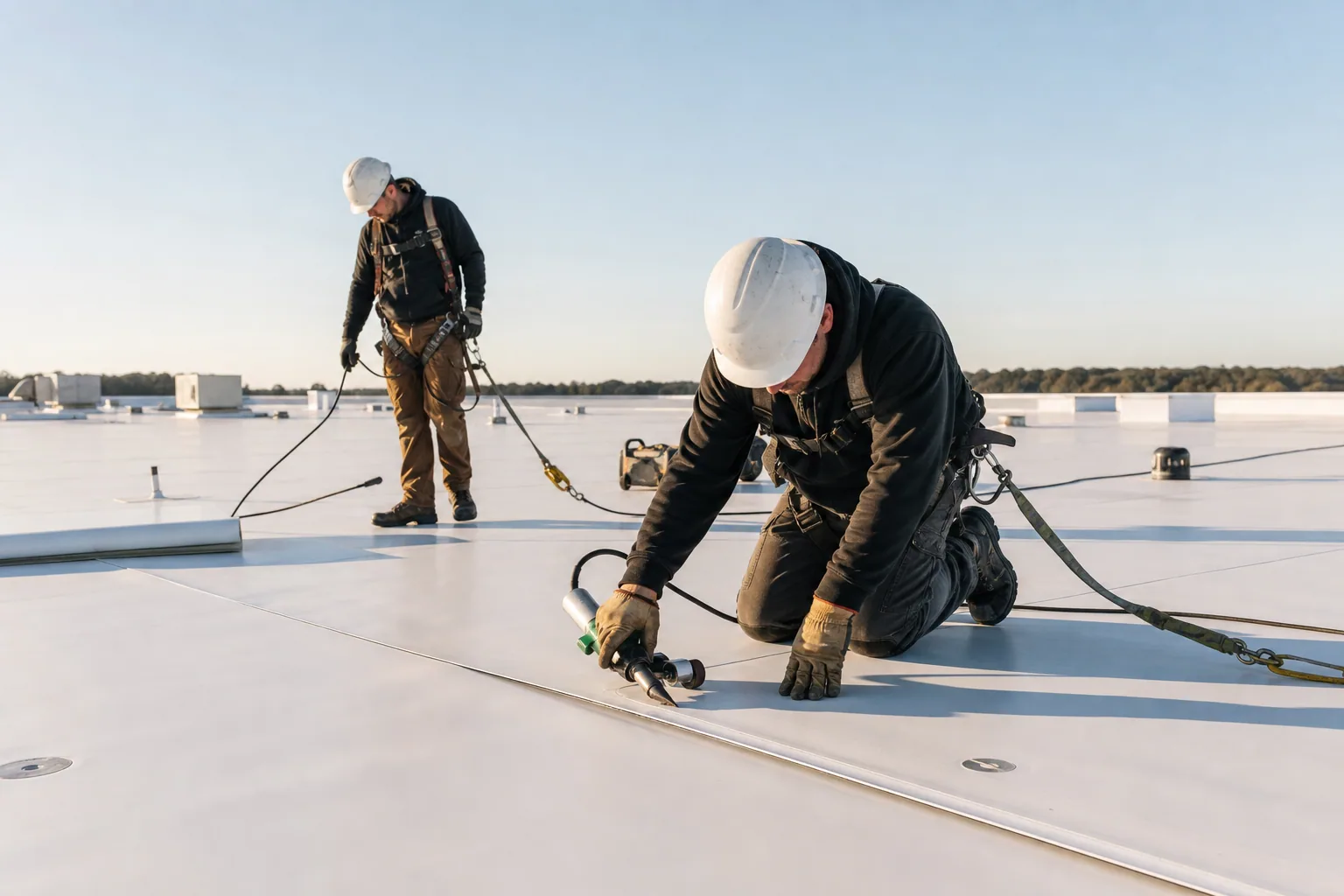
A damaged roof detail beside service piping can affect the work space below. The correction needs access to that actual connection. We assess commercial roofing for manufacturers in Concord, NC. The operator identifies affected equipment positions and available building access. We examine the installed assembly before selecting reconstruction. An indoor symptom can follow water movement from another roof area. Equipment water may also need its own examination. The proposal should distinguish the permanent roofing task from the service responsibilities that accompany it.
Lilly has a manufacturing site in Concord. Midland's manufacturing activity includes Corning and Intertape. Weddington Road Corridor planning also considers industrial facilities and neighborhood connections. Those local settings provide context for varied occupied properties. A manufacturing roof condition assessment establishes the relevant building's accessible condition. The operator should identify alterations and symptom timing. We explain which roof area needs correction or useful further examination. Material and access decisions should follow those findings rather than an assumed assembly based on the company's activity.
Distinguish roof entry from another water condition
Moisture above equipment does not identify its exterior cause by itself. The operator should describe when it appears and whether related service activity occurred. We inspect accessible covering, flashings and nearby outlets. Water can move within layers before reaching the visible position. Another participant may need to assess piping or equipment. The roof scope should explain the finding it addresses. A patch at the nearest seam would leave that important distinction unresolved if the actual entry lies elsewhere.
Selected examination may be useful where concealed material affects the correction. It needs authorization and an appropriate closure arrangement. Wet insulation or damaged support can enlarge the removal beyond a visible opening. We explain those findings and the material needed for a sound connection. The operator can then coordinate affected equipment or work positions with the proposed task understood. Interior restoration remains separate where necessary. The completed roof detail should not be interpreted as reconstruction of every system contributing to the indoor symptom. Each useful participating task needs an understandable boundary.
Provide enough clearance around service openings
Pipe clusters and equipment supports can leave little room for roofing preparation. We inspect the accessible terminations and intended movement at each relevant connection. A service participant may need to shift a component for complete reconstruction. The operator establishes the appropriate equipment arrangement. Manufacturing roof equipment coordination can define the roofing interface. The proposed task should identify whether concealed flashing can be reached. A finish beside an obstruction differs from rebuilding the termination underneath it. Clearance belongs in the scope before materials are selected.
Contractor coordination for building alterations should establish the intended service layout before openings are made. New supports, pipe routes or roof heights can change the details required. We identify the retained surface available for flashing the intended opening and its preparation. An equipment installation should not end with an unflashed opening outside the roof task. Its responsible participant should identify component movement and service requirements. The operator needs the complete participating sequence understood. Future changes should preserve those interfaces or provide suitable reconstruction where the installed assembly is disturbed.
Assess discharge and preparation at the repair area
Actual rooftop discharge can affect the condition around a proposed connection. The equipment participant should identify the exposure where relevant. We examine the retained surface and selected material's requirements. Unsuitable residue or previous treatment may require removal. Cleaning needs compatibility with the covering intended to remain. Continuing discharge can introduce a separate service correction. The roofing task should explain that dependency. Adding another finish over an unusable surface would not establish suitable preparation for permanent reconstruction.
PVC roof evaluation considers the complete assembly when that material is proposed or installed. Exposure to one condition does not make a covering selection sufficient by itself. Attachment, adjoining details and usable retained layers remain important. We identify the physical boundary receiving the new work. Roof coating assessment also requires consideration of the existing surface and preparation. A coating cannot make weak backing sound or repair every concealed connection. The owner should understand the actual material tasks included rather than review only a finish description.
Examine discharge above the service approach
A roof outlet restriction can affect neighboring details as water backs up. A collector joint can spill along an outside service route. We examine the relevant accessible discharge and covering. Debris clearance addresses a different condition from joint reconstruction. Low areas may need assembly-profile changes to improve runoff. Piping or capacity questions can require suitable professional review. The proposal should make those tasks distinct. The operator needs to understand what the roofing correction can reach and where another participant's work remains necessary.
Cabarrus County has hot summers. Current observations still govern the roof task rather than a general seasonal assumption. Report where runoff collects or affects the building approach during rain. For work around Midland, we assess the actual entrance and available roof access. The operator should preserve useful outlet positions for later care. Service debris needs control near discharge points. Completion information should identify the reconstructed connection and continuing access needs. A fresh water report should prompt examination of its own location and timing.
Connect handling and renewal with the operating arrangement
Deliveries and removed roofing need a defined handling zone. We discuss lifting, staging and vehicle routes with the operator. Required exits deserve appropriate consideration. Logistics roofing coordination identifies receiving routes affected by roof material handling. A manufacturing property with that receiving interface should establish where roofing and goods movement can occur. We explain the proposed method before the zone is fixed. Weather or concealed deterioration may change the achievable daily area. The reconstruction boundary must remain suitable for protection and completion.
Wider deterioration may justify renewal instead of successive local patches. We assess the moisture, attachment and support conditions relevant to retention. Added insulation can alter relationships at equipment and walls. Outlet correction may also be necessary. The complete scope should identify those tasks beside the covering selection. The owner should understand why the chosen boundary follows current condition. Applicable project requirements need confirmation through appropriate review. Completion information should distinguish roof reconstruction from continuing service or interior work. Later equipment activity should preserve the installed details or involve suitable roofing participation where it changes them.
Commercial Roofing Questions
What helps assess moisture above manufacturing equipment?
Identify the affected position and useful timing, including related service activity. We examine accessible roof connections and neighboring material. The appropriate service trade should examine its components where a separate water path is suspected. Water can travel before appearing indoors, so the visible mark does not locate the opening conclusively. The permanent roofing task should address the physical finding established during examination.
Why can a pipe cluster change the proposed flashing repair?
The connection needs enough accessible surrounding material for suitable preparation. Installed service lines may obstruct that area or introduce movement. We assess the termination and necessary working clearance. The equipment participant may need to reposition a component. The scope should include that dependency so the repair reaches the affected interface rather than stop beside the obstruction.
What should be reviewed before coating a manufacturing building roof?
Assess the existing surface, retained layers and relevant discharge exposure. Preparation must suit the covering and selected treatment. Unsuitable residue or weak material may require removal. We explain any equipment correction needed for continuing exposure. A finish application does not establish that concealed support is sound or that every obstructed flashing has been reconstructed.
How should receiving activity enter the roofing sequence?
Discuss the actual goods route and proposed material handling with the operator. We explain delivery, lifting and removal positions. The zone may affect more than the roofing vehicle's immediate space. Weather or concealed findings can change the daily task. The agreed arrangement should provide usable access and suitable protection for reconstruction while the operator coordinates affected receiving activity.
Assess the manufacturing roof connection
Arrange a Concord manufacturer roof visit. Identify the affected work position, service equipment and handling approach so we can examine the assembly and corrective scope.