Home / Commercial Roofing Services / Commercial Roof Coating Restoration
Commercial Roof Coating Restoration in Concord, NC
Assess roof coating restoration in Concord with adhesion checks, detail repairs and dry-substrate preparation. We explain retention limits before application.
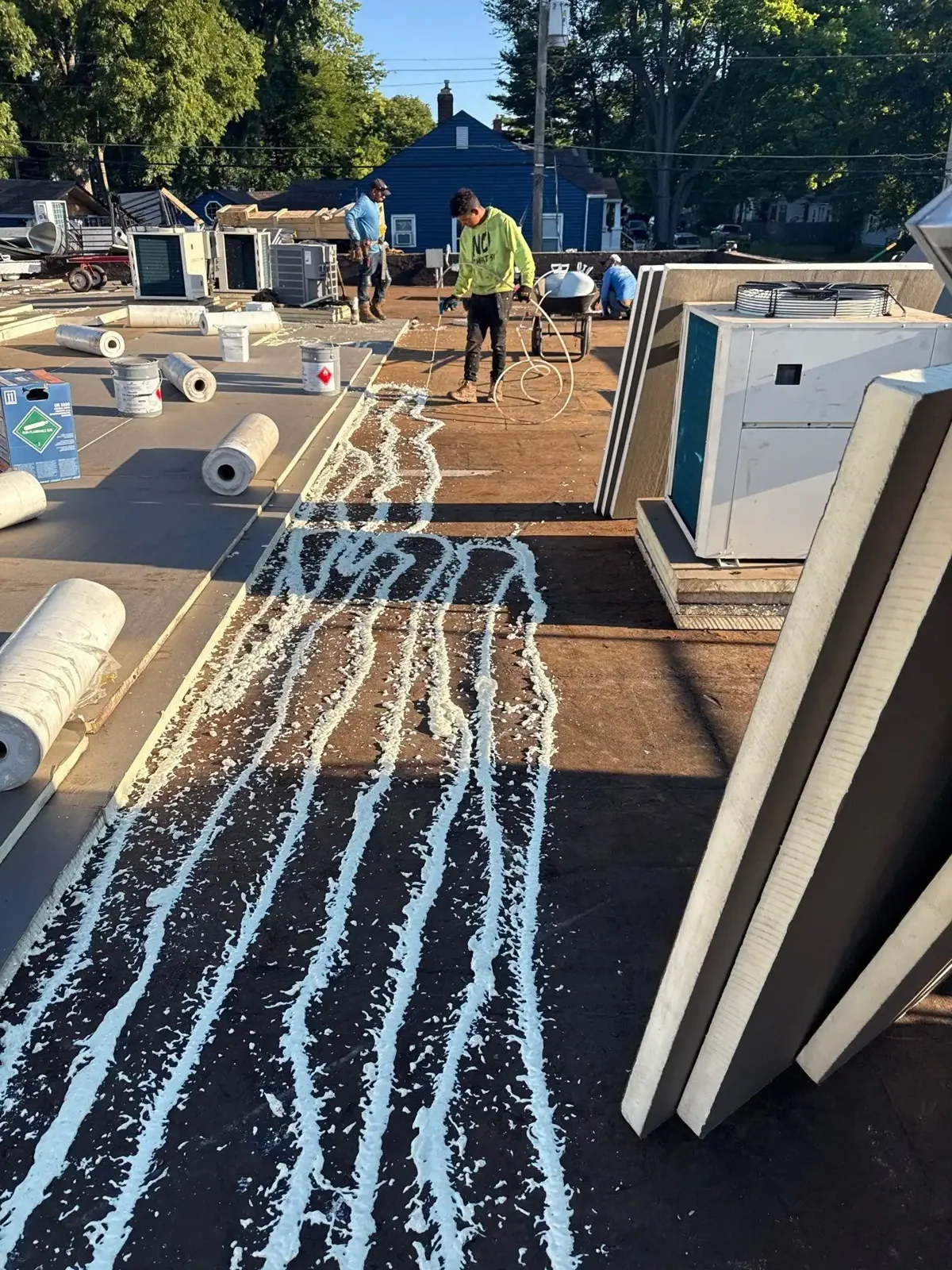
Discarding serviceable roofing adds material handling above an occupied suite. A coating can sometimes preserve that covering after appropriate repairs. We examine the existing assembly before proposing restoration in Concord, NC. The surface must accept the specified coating and its preparation. Wet insulation, loose attachment or failing support can prevent that approach. A renewed exposed finish cannot correct unsuitable material underneath. We identify the condition that can remain and the work needed first.
The Church Street Corridor includes commercial businesses near residential neighborhoods. Material storage and application there need attention to the actual property. International Business Park also contains multiple companies beside I-85 Exit 55. A coating task at one building needs its own operating arrangement. We discuss roof access, equipment and the space below the work. Those needs influence application timing and preparation. A condition examination before restoration establishes whether coating is a useful option for that assembly.
Preparation is physical work
A dusty or degraded surface can prevent dependable coating adhesion. Cleaning needs to remove contamination without damaging the existing covering. Loose previous treatments may require removal before further preparation. We assess the substrate and the selected product's requirements together. Some surfaces need an appropriate primer or additional preparation. Adhesion checks help evaluate whether the proposed treatment bonds suitably. A failed check calls for changed preparation or another approach.
Cleaning can also reveal defects previously obscured by debris. We examine the prepared surface before covering those connections again. Open seams, cuts and deteriorated flashings need compatible corrections. Moisture beneath the membrane requires separate investigation and removal where necessary. We describe those tasks independently from the coating application. A cleaner appearance does not establish a suitable retained assembly. The prepared surface needs to be dry under the specified conditions. Application should wait when those conditions cannot be achieved.
Application reaches beyond the roof
A coating visit can affect nearby intakes, entrances and parked equipment. We evaluate application methods with those surroundings in mind. Spraying needs control appropriate to wind and adjacent property. Rolling can suit some areas but has its own handling requirements. The chosen product's use conditions guide protection and coordination. We discuss any necessary intake or equipment arrangements with the operator. Those changes require approval from the people responsible for building services.
For properties in the Church Street commercial area, neighboring use can constrain staging. We establish where preparation materials and containers can be handled. Pedestrian access and required exits must remain usable as arranged. An application area also needs protection from unnecessary roof traffic. Curing material can be disturbed by a routine equipment visit. We coordinate that service window before the coating task begins. The owner should know which access points are affected. The arrangement follows the proposed work area, not a broad interruption promise.
Reinforce the vulnerable transitions
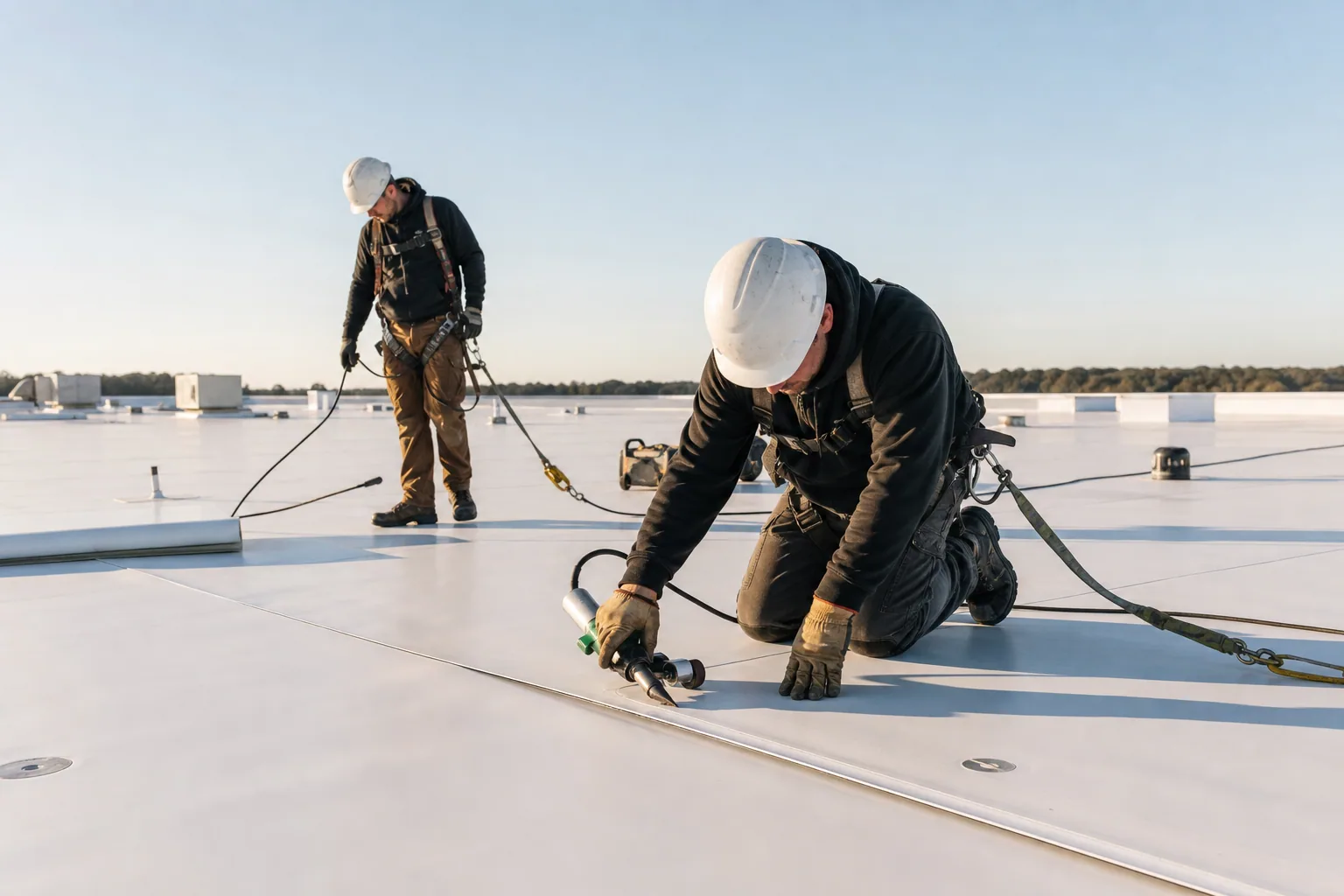
A coating over an open connection can leave its movement unresolved. We examine seams and transitions for the required repair method. Some specified restoration systems use reinforcing treatment at selected details. That treatment must join a prepared, suitable surface. Equipment curbs and wall terminations can need reconstruction before application. Loose metal or deteriorated backing requires attention beneath the exposed finish. We identify those conditions so the detail work is not omitted.
The roof's existing material determines compatible repair and coating components. A previously applied coating can complicate preparation for another product. We check that layer rather than assume the new system can cover it. The purpose of repairing deteriorated connections is to provide a sound retained assembly. It is distinct from changing the visible color. Crowded equipment can make detail access difficult. That may require another trade before preparation can be completed. We explain the access task alongside the proposed connection repair.
Do not coat over drainage defects
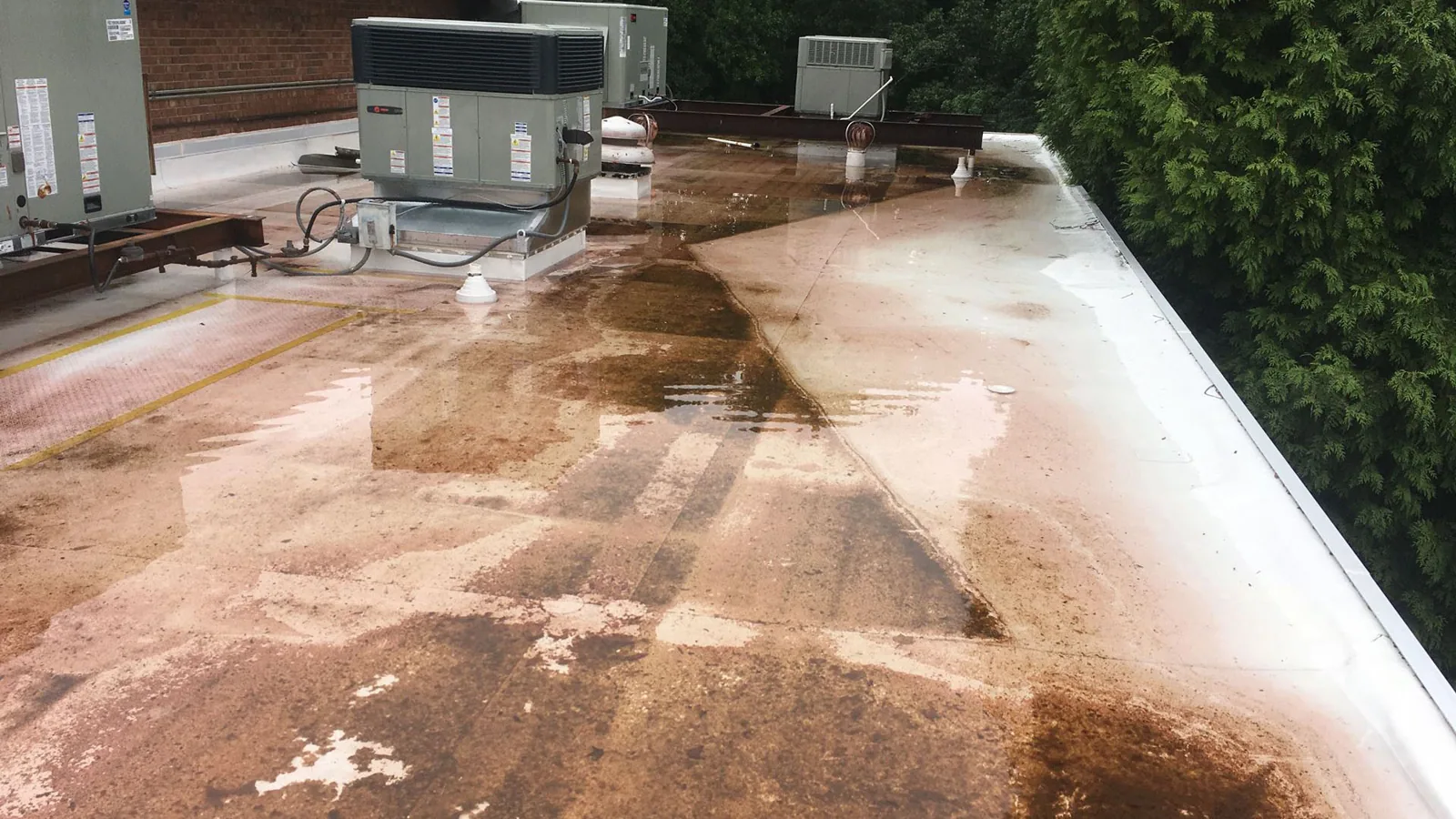
A depressed roof area can retain water after the surrounding surface dries. Coating alone does not change that underlying geometry. We examine standing-water locations and their outlet routes. Debris blockage needs removal, while poor slope needs a different solution. Drain connections should be repaired where their material is unsuitable. Some conditions require tapered insulation or a wider assembly correction. Those tasks need consideration before selecting a restoration system.
Cabarrus County thunderstorms make water movement an operating concern. Preparation and curing periods also need weather suitable for the product. Rain during an unsuitable application window can impair the result. We assess the forecast and actual surface conditions together. A correction for persistent ponding may remain necessary after cleaning. The selected coating's exposure requirements need to suit the corrected roof. Product suitability does not replace a drainage plan. We describe any remaining limitation that changes whether restoration should proceed.
Choose the complete restoration method
Coating products differ in substrate requirements and exposure limits. We compare those requirements with the building's actual roof condition. A silicone restoration system needs the specified preparation and detail treatment. An acrylic coating system has its own suitable application conditions. Product selection includes adhesion, reinforcement and curing needs. It should not rely on a name or color alone. The assembly beneath the finish remains part of that choice.
Application thickness must follow the selected system's requirements. Coverage needs control around equipment and uneven prepared surfaces. We check the work using appropriate application and thickness methods. A thin missed area can undermine a generally uniform-looking finish. Inspection should therefore occur during the work as well as afterward. The owner should know which preparation and repair tasks are included. Proposals omitting those tasks are not equivalent to a complete restoration. We compare that complete scope with other practical roof options.
Protect the restored surface
A cured coating still needs care around equipment and outlets. We identify service routes and areas vulnerable to tool damage. Compatible repair materials should be used for any later cut or opening. A future equipment contractor needs to know the applied system. Cleaning methods also need to suit its maintenance requirements. We explain those practical items with the completed work information. That helps avoid disturbing a serviceable finish during unrelated maintenance.
Restoration does not give every retained component the same remaining condition. Flashings, metal edges and drainage still require examination over time. We identify any area excluded from the approved work. New water entry or a damaged finish warrants focused assessment. A maintenance arrangement for the restored roof can revisit those exposed details. Visits should follow observed condition and system requirements. The owner can then distinguish surface care from a developing assembly defect. Continued inspection supports the retention decision after the application is complete.
Commercial Roofing Questions
Can coating stop a leak without rebuilding its flashing?
An open or poorly supported detail needs the appropriate physical correction. Some systems include reinforced treatment after that preparation. Simply covering the defect can leave movement or wet support unresolved. We examine the connection and explain the repair needed first. Coating should follow a suitable repair rather than conceal an unfinished one.
What happens if the adhesion check fails?
We reassess preparation, substrate condition and compatibility with the proposed product. Another primer or cleaning method may help where the system permits it. Some surfaces remain unsuitable for the intended coating. We explain that finding before continuing application. The decision may require a different restoration method or removal instead.
Will we need to move rooftop equipment for restoration?
Access beneath units and around curbs affects complete preparation. Equipment may need adjustment where those connections cannot be reached. We identify the locations and discuss the task with the responsible trade. Some work can proceed around serviceable clearances already present. The scope should distinguish accessible application from detail work needing another arrangement.
Does restoration eliminate future roof maintenance?
Drainage, equipment traffic and exposed details remain maintenance concerns afterward. The new finish also needs care compatible with its product requirements. We describe useful inspection points and service precautions at completion. A fresh cut or recurring water symptom needs assessment. Maintenance should address those changes without applying incompatible repair material.
Assess the coating base
Request a Concord restoration visit. Identify any active leaks, previous coatings and equipment access restrictions so we can assess the retained covering.