Home / Commercial Roofing Services / Commercial Roof Leak Repair
Commercial Roof Leak Repair in Concord, NC
Trace active commercial roof leaks in Concord. We examine water paths, protect affected stock and connect the leak correction with sound adjoining material.
A closed storeroom disrupts receiving even after the floor dries. Finding the opening above it needs more than sealing a visible mark. We connect the indoor symptom with the roof assembly and rainfall. In Concord, NC, a useful visit starts with that affected space. We inspect the likely water path and surrounding details. Temporary protection may be needed while the investigation continues. The permanent repair follows the connection actually allowing entry.
The Concord Entertainment Corridor has restaurants, hotels and retail properties. Their stored goods and occupied rooms present different protection needs. International Business Park brings multiple companies near I-85 Exit 55. A leak investigation in that setting needs the correct building and affected room. We arrange access to both the interior symptom and roof. Then we compare visible damage with membrane, flashing and drainage conditions. Persistent water requires a focused investigation, while a broader roof opening may call for urgent temporary protection.
Read the indoor symptom
The timing of water entry provides useful investigation evidence. A leak during hard rain can differ from one after rainfall stops. Water near equipment may also involve condensate or plumbing. We examine the room and ask which conditions precede the symptom. Ceiling marks alone can remain after an earlier leak dries. We look for active moisture and compare its location with roof features. Safe access above the ceiling can help follow that path.
Water can travel along decking, framing or concealed layers before appearing indoors. The visible drip therefore guides the investigation without fixing its roof location. We examine nearby penetrations and transitions as possible entry points. We also consider wall connections outside the horizontal roof field. A rooftop patch will not correct a leaking wall joint. Where electrical equipment is exposed, qualified personnel need to address that hazard. We coordinate the investigation with safe access to the affected space. Contents needing relocation should be identified before further water spreads.
Examine the connected details
An opening can occur at a seam, cut or flashing termination. We inspect those connections around the likely water path. We check membrane edges near equipment and drains for deterioration. Roof traffic can create small damage that escapes a distant view. Old repair material can also conceal an incomplete tie-in. We examine its perimeter and the support beneath it. A visible defect must be assessed for its connection to the reported leak.
Rebuilding failed flashing can involve the curb or wall termination. Surface sealant may provide short-term protection without correcting the underlying detail. We identify sound material available for a permanent membrane connection. The assembly beneath an opening may require a selected investigation cut. That helps distinguish dry support from saturated material needing removal. Equipment clearance can prevent complete inspection until access is arranged. We describe that limitation and the next practical investigation step. The task remains tied to the reported water entry.
Account for water backing up
A blocked drain can raise water against connections rarely submerged. The membrane may leak only after water reaches that height. We inspect outlet debris and the drainage path around the suspect area. A downpipe restriction needs attention beyond the roof surface. We separate that plumbing task from membrane work. Depressed insulation or poor slope can leave water after outlets clear. Those conditions can require a wider drainage correction.
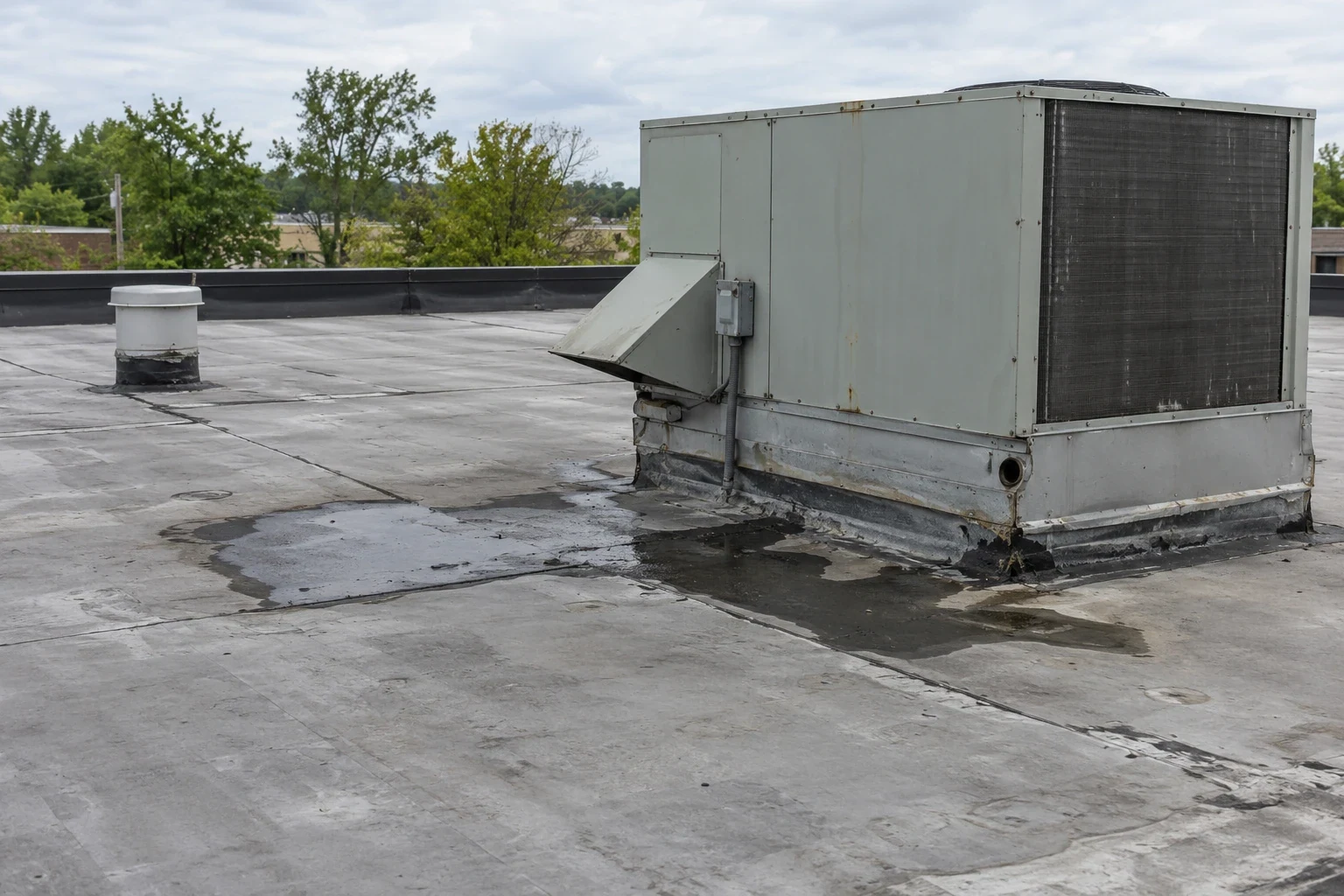
A blocked outlet can allow water to collect around vulnerable connections. We clear loose debris where safe and check the exposed fitting. The roof outlet connection needs both an open discharge and sound flashing. Water also needs a usable route toward that fitting. A temporary repair can change flow if placed without considering its surroundings. We examine the area after protection is installed. Keeping water away from an opening helps the correction perform as intended.
Narrow the investigation
Several plausible defects can exist above a single reported symptom. We use the roof condition and indoor evidence to narrow them. Controlled testing may help where access and building sensitivity permit. Such testing needs defined areas and observation inside the building. Introducing water without control can worsen an occupied-space problem. We discuss that risk before choosing the method. Sometimes investigation during suitable rainfall provides more useful evidence.
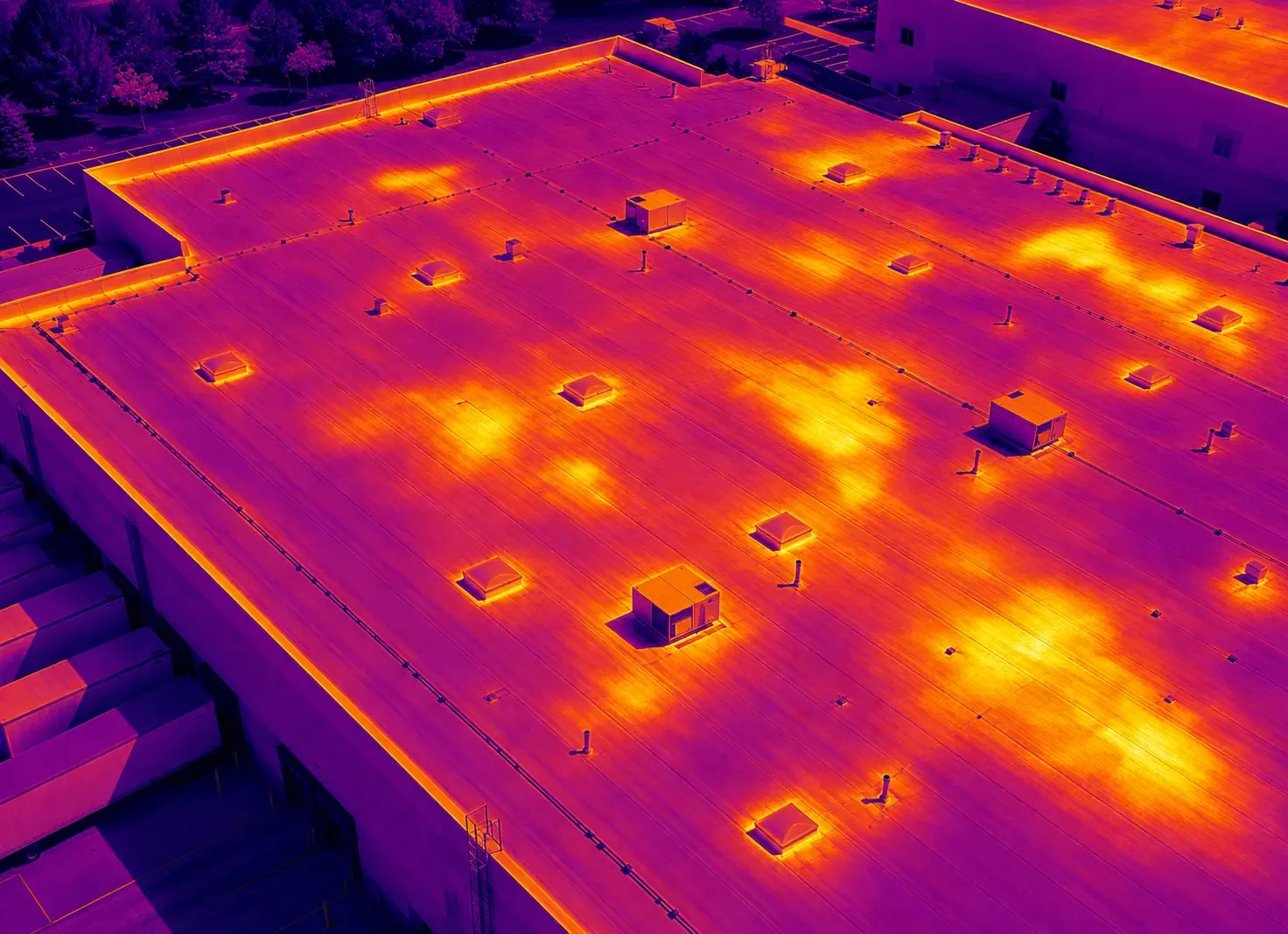
Thermal testing can support finding concealed moisture in an appropriate assembly. It cannot identify the entry point from a temperature pattern alone. We use any findings alongside detail inspection and physical confirmation. Some wet areas may reflect an older defect rather than current entry. Their condition still matters to the repair. We distinguish the active opening from damaged material requiring separate removal. The proposed work should explain both where they are connected. That prevents a stopped drip from hiding material still needing attention.
Make a sound permanent tie-in
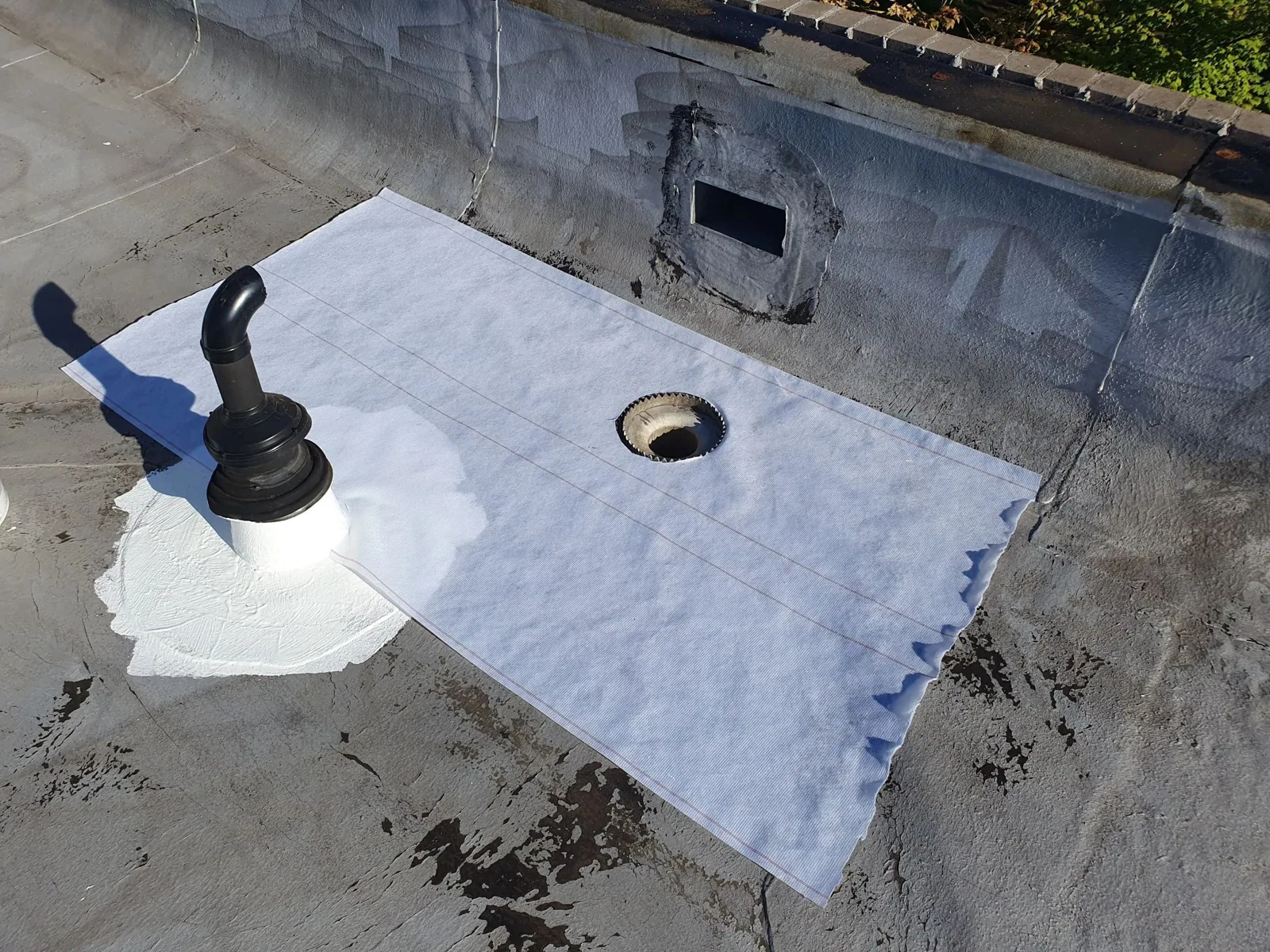
The permanent treatment needs compatible material and adequate bonding area. We clean and prepare the existing covering for its repair method. Thermoplastic connections need proper welding and checks of the completed seam. Rubber membrane details need the specified compatible repair components. Deteriorated substrate or wet insulation may require removal before either method. We define that opening and replace unsuitable material. The rebuilt surface should support the repair without creating a new water trap.
A leak above a restaurant service area can complicate access. Businesses along Concord Mills Boulevard and Bruton Smith Boulevard include dining and hospitality uses. We discuss which equipment or entrance the correction will affect. Work near an intake needs coordination with the building operator. A service window may be needed to reach concealed flashing. We also establish interior protection while the connection is open. That arrangement needs to reflect the repair extent. A limited patch and a curb reconstruction affect operations differently.
Check for a changed symptom
After the correction, the owner needs a clear way to report further water. We identify the repaired detail and the room used for observation. Residual ceiling moisture can take time to dry. A new drip during later rainfall needs evaluation rather than assumption. We compare its timing and location with the earlier symptom. A building can have more than one entry point. That possibility matters when the roof has several damaged connections.
Photographs help preserve the condition before and after the repair. They should show the connection and relevant adjoining material. We also identify any remaining issue outside the completed task. Loose debris near another drain can become the next maintenance concern. Service traffic around equipment may require protective routes. A focused review of the surrounding roof condition can address those items. The owner can then separate the active correction from future work. That makes the next visit more useful than repeating the same investigation.
Commercial Roofing Questions
The leak stops quickly after rain. Does that identify its cause?
A short-lived symptom helps establish timing but does not locate the opening. We compare it with drain levels, equipment and nearby roof details. Some defects admit water only under particular rainfall conditions. The indoor observation helps choose where to investigate. Physical inspection still needs to confirm a repairable connection.
Should we remove damaged ceiling material before you visit?
Preserve useful photographs and the location of active water if safe. Ceiling removal may be needed for drying or safe inspection. Electrical concerns and damaged interior material need appropriate building trades. We coordinate with those tasks when access above the ceiling is necessary. Do not delay urgent protection to retain a wet ceiling.
Can another rooftop unit be causing the water indoors?
Condensate, drain lines and equipment housings can produce similar symptoms. We compare the leak timing with equipment operation and rainfall. A mechanical defect needs the appropriate service team. Its curb flashing remains a separate roof connection to inspect. The investigation should distinguish those paths before permanent roofing work is specified.
What should we record during the next rainfall?
The affected room, time of entry and any change in the drip are useful. Photograph the symptom without approaching electrical hazards or unsafe ceilings. Record whether equipment was running and whether water continues afterward. We compare those observations with the inspected roof details. They help evaluate the correction or narrow another suspected entry point.
Locate the active opening
Arrange a Concord leak visit. Tell us which room is taking water and when the symptom appears during rainfall.