Home / Roof Systems / Commercial TPO Roofing
Commercial TPO Roofing in Concord, NC
Assess TPO roofing in Concord with welded seams, attachment and equipment details in view. We explain repair and replacement choices for the actual assembly.
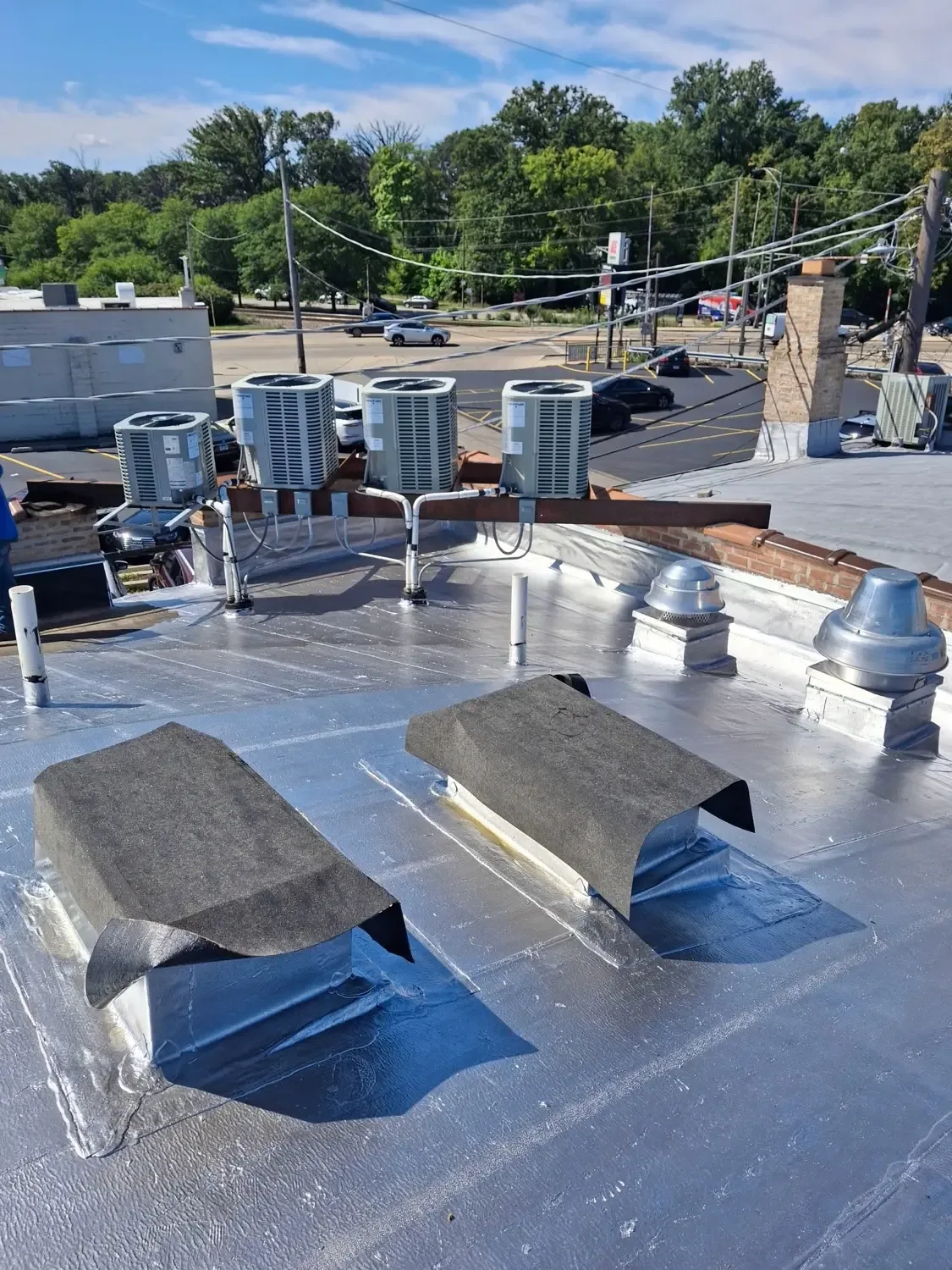
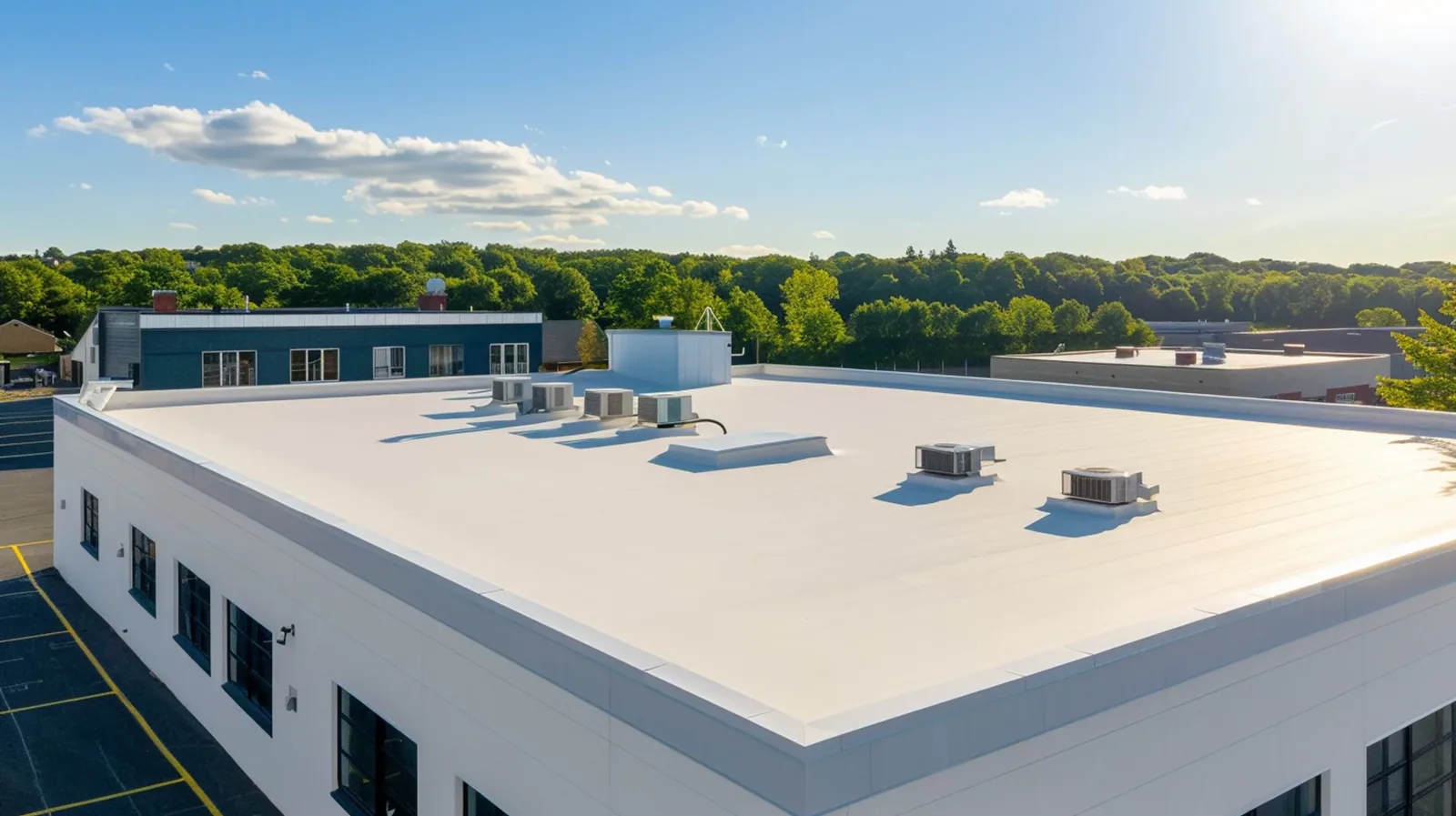
A reopened office needs more than a clean new roof surface. Its membrane connections must also withstand the exposure above that room. We install and repair commercial TPO roofing in Concord, NC. TPO sheets join through heat-welded seams and specified flashing details. The assembly beneath them needs suitable support and attachment. We examine those parts together before proposing the work. A sound-looking roof field can still have a vulnerable curb or perimeter connection.
The Church Street Corridor has commercial businesses near surrounding residential neighborhoods. A TPO task there needs access suited to the actual property. Companies at International Business Park share its setting by I-85 Exit 55. Its individual buildings likewise need their own assembly assessment. We discuss the occupied space and roof layout before selecting an installation arrangement. A hands-on assessment of membrane condition helps establish whether localized repair or broader work is useful. The choice follows that condition rather than the covering's visible color.
Examine the welded connections
A welded seam joins overlapping TPO sheets through controlled heat and pressure. Its formation requires suitable surfaces and installation conditions. Contamination or inappropriate welding conditions can leave an incomplete connection. We examine accessible seams using methods appropriate to the system. A separation needs assessment along its affected length. The visible opening may not describe the full weak area. We identify the suitable repair boundary before preparing new material.
Welding onto existing membrane requires attention to its surface condition. Aged or previously treated material can need additional preparation. We follow the compatible system requirements rather than weld over unsuitable residue. Some conditions limit whether a dependable local tie-in is practical. The owner should understand that finding before expecting a small patch. A correction to the failed seam needs suitable retained material on both sides. The completed connection should receive appropriate examination. A uniform-looking overlap alone does not establish a complete weld.
Follow the assembly beneath the sheet
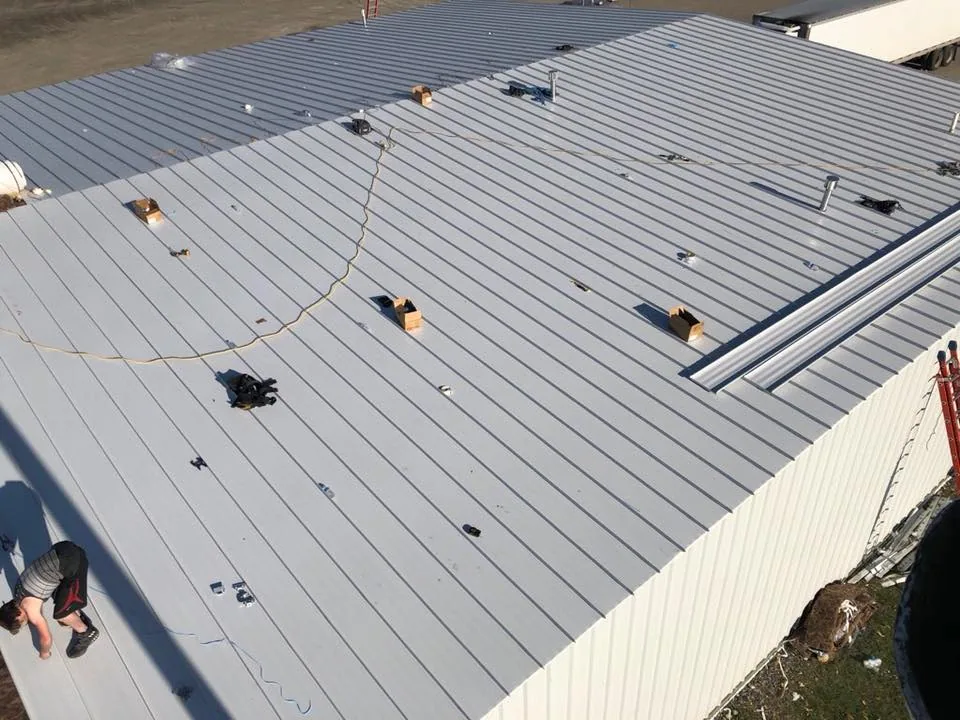
The membrane's attachment forms part of the complete roof system. Mechanically attached and adhered approaches have different installation requirements. The deck, insulation and any cover board must suit the selected assembly. We assess accessible existing material before proposing retention. Loose layers or damaged support can prevent the intended installation. Their correction belongs in the scope beneath the new covering. Selecting TPO does not resolve those underlying conditions automatically.
Attachment near edges and corners also needs the applicable assembly requirements. The roof layout and approved design guide the installation. Fasteners require suitable support, while adhesive work requires appropriate substrate preparation. We explain which method is proposed and its necessary conditions. Structural or design questions need review by the responsible professional. The complete proposal should identify those dependencies before material installation. A covering choice is only useful when its attachment can be properly executed. We keep that requirement connected with the actual roof involved.
Reach the corners around equipment
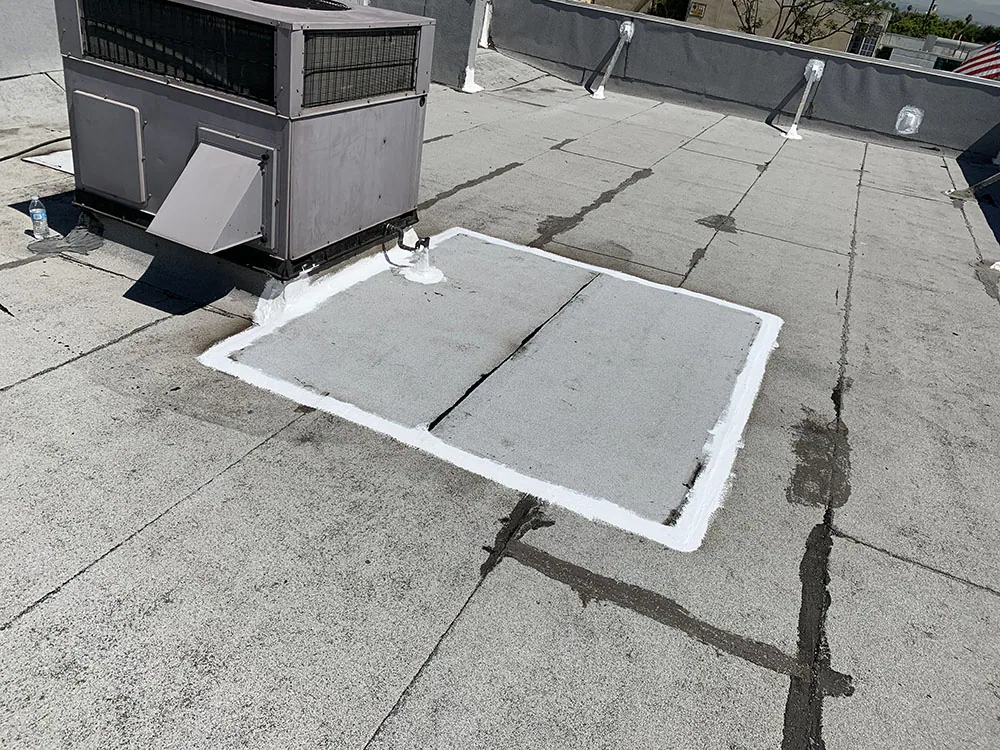
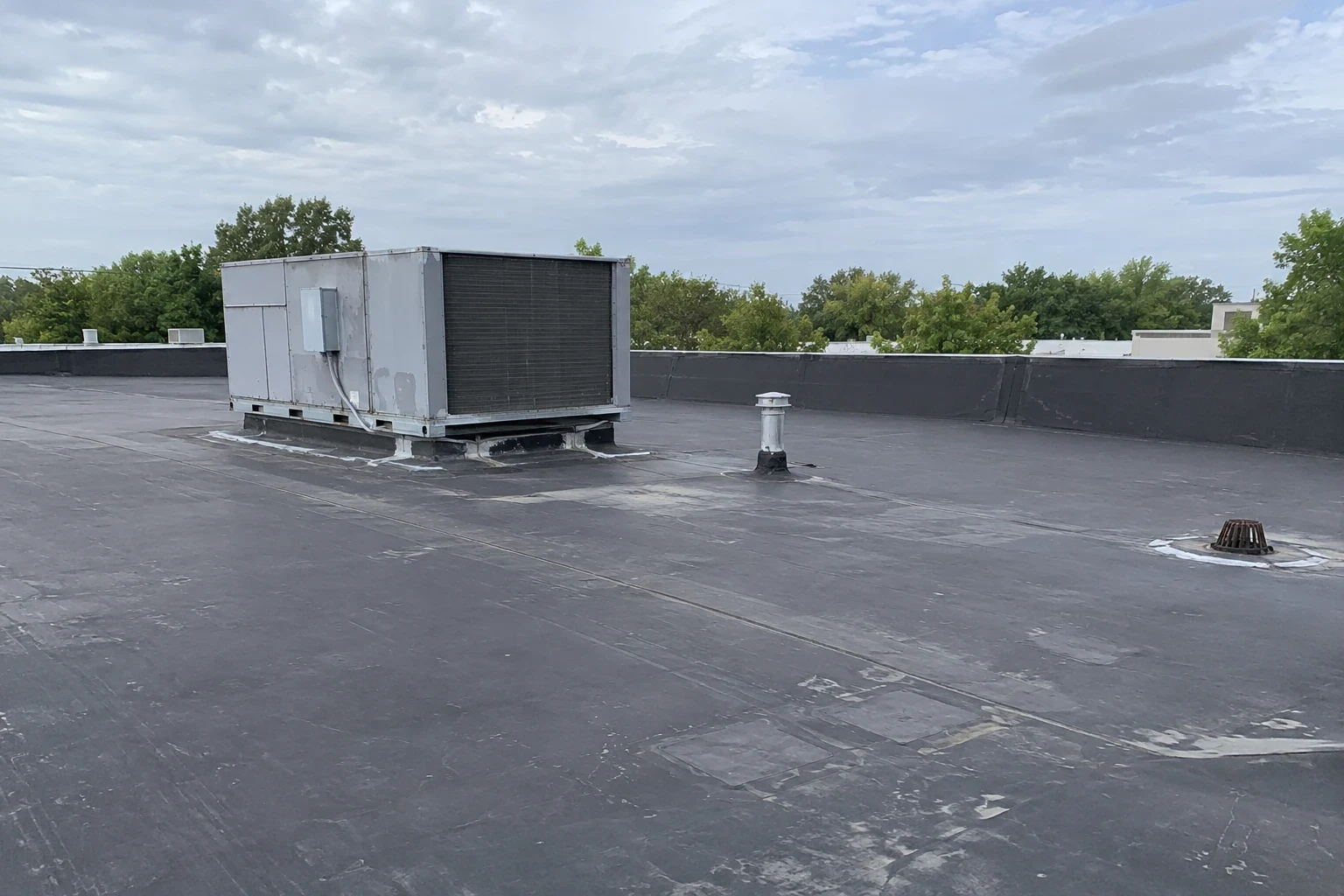
Equipment curbs and pipe penetrations interrupt the continuous membrane field. Their flashing needs suitable shape, height and termination. Crowded installations can prevent access for complete preparation or welding. We identify those locations during the initial examination. Another trade may need to lift or disconnect equipment. That dependency should be explained before a complete detail is proposed. An accessible patch has different limits from reconstructing a concealed connection.
Added insulation can reduce the available height at existing curbs. The resulting flashing detail may require changes to the equipment arrangement. Wall terminations and metal edges need similar consideration. We assess those transitions alongside the membrane installation. Penetration flashing work can address the specific failed connection. The upper equipment connection remains a separate question where water can enter there. We explain what is included in the roofing correction. The detail should join suitable material rather than hide deteriorated backing.
Make the covering meet usable outlets
TPO follows the roof surface beneath it. Installing a new sheet does not by itself correct a depressed area. We examine low spots and the route to the drain. Blockage, unsuitable slope and failed drain flashing need different responses. Some work requires tapered insulation or a changed outlet connection. We explain those tasks separately from membrane replacement. The full assembly should provide a workable drainage path.
Cabarrus County's warm-season thunderstorms make that path important to occupied space. A backed-up outlet can expose connections beyond the usual collection area. The repair should address the restriction or geometry responsible. We also examine the accessible membrane around the drain. Wet insulation may require removal before reconstructing that connection. A suitable TPO detail needs compatible components at the outlet. The completed work should leave access for later cleaning. Covering an unresolved low area leaves its water collection unchanged.
Compare the work that must actually be done
A localized TPO defect may be repairable where the surrounding assembly remains suitable. Broader deterioration can require removal or replacement instead. We assess that boundary before describing the proposed task. Previous repairs and concealed moisture can change the practical options. A PVC roof alternative requires its own complete system evaluation. An EPDM assembly option likewise has different connection methods. We compare workable scopes rather than present materials as interchangeable sheets.
Retaining an existing roof beneath a new assembly needs separate assessment. Its condition, attachment and detail heights all matter. Removal can expose concealed material requiring correction before reconstruction. The owner should understand those scope drivers when comparing proposals. Equipment coordination and drainage changes also affect the work sequence. We describe the relevant tasks at the actual building. A lower removal quantity does not establish the better roof option. The supported assembly condition provides the basis for that choice.
Protect the membrane during later service
Equipment maintenance can expose TPO to dropped tools or dragged components. A service route should provide suitable protection where required. That protection needs compatibility with the membrane and installation method. We identify vulnerable access areas when discussing continued care. New cuts or disturbed flashing should receive focused assessment. A repair needs material and preparation appropriate to the installed system. Applying an incompatible treatment can complicate the later permanent correction.
For a building in the Church Street commercial corridor, the actual roof access guides service planning. The operator should identify equipment visits and any difficult clearances. A roof condition management arrangement can keep those areas under observation. Drains, seams and perimeter details remain useful examination points. The completed installation information should identify the assembly used. Future alterations need to preserve or reconstruct its affected connections. Continued care follows those physical details rather than surface appearance alone. A changed indoor symptom warrants another roof investigation.
Commercial Roofing Questions
Can an open TPO seam be welded closed again?
The existing material needs examination and suitable preparation first. Contamination, deterioration or an incomplete original connection can change the required repair. Some areas need compatible new material rather than another weld along the old edge. We define that boundary from the observed condition. The completed connection should receive examination appropriate to the system before the task is treated as finished.
What affects whether existing insulation can remain beneath TPO?
Its condition, attachment and suitability for the proposed assembly require assessment. Wet or deteriorated material may need removal. Added layers can also change flashing heights around retained equipment. We identify those consequences with the roof examination. The proposal should distinguish suitable retention from material requiring correction rather than assume everything beneath the membrane can stay.
Is TPO installation mainly a change of surface material?
The complete work includes attachment, underlying layers and roof connections. Drainage and curb heights may require correction as well. We examine those tasks before proposing installation. The membrane must join a suitable assembly at its boundaries. A scope that omits necessary preparation or detail reconstruction is different from a complete roof system installation.
How should equipment contractors protect a TPO service route?
Use protection suited to the installed roof system and planned activity. Tools, removed panels and dragged components can damage the covering. We identify vulnerable areas and discuss compatible precautions with the operator. A moved pipe or unit may require flashing reconstruction. Equipment work should preserve those connections or coordinate their correction with the roofing task.
Assess the TPO assembly
Request a Concord TPO visit. Identify any active seam or curb symptom and roof equipment access so we can define the repair or installation scope.