Home / Service Areas / Mount Pleasant
Commercial Roofing in Mount Pleasant, NC
Commercial roofing in Mount Pleasant, NC, starts with the actual roof assembly, drainage and work below it. We explain repair and replacement choices.
A utility change can put a new penetration through an otherwise serviceable roof. In Mount Pleasant, NC, we inspect the existing assembly before tying new work into it. The town's planning materials address industry and local business in eastern Cabarrus County, and its comprehensive plan was updated on June 10, 2025. Those details make utility coordination relevant, but they do not identify any roof at a particular property. We check the deck, insulation, membrane, and existing penetrations before recommending a repair or replacement. A focused commercial roof inspection gives the owner a basis for the next decision.
Trace the new penetration
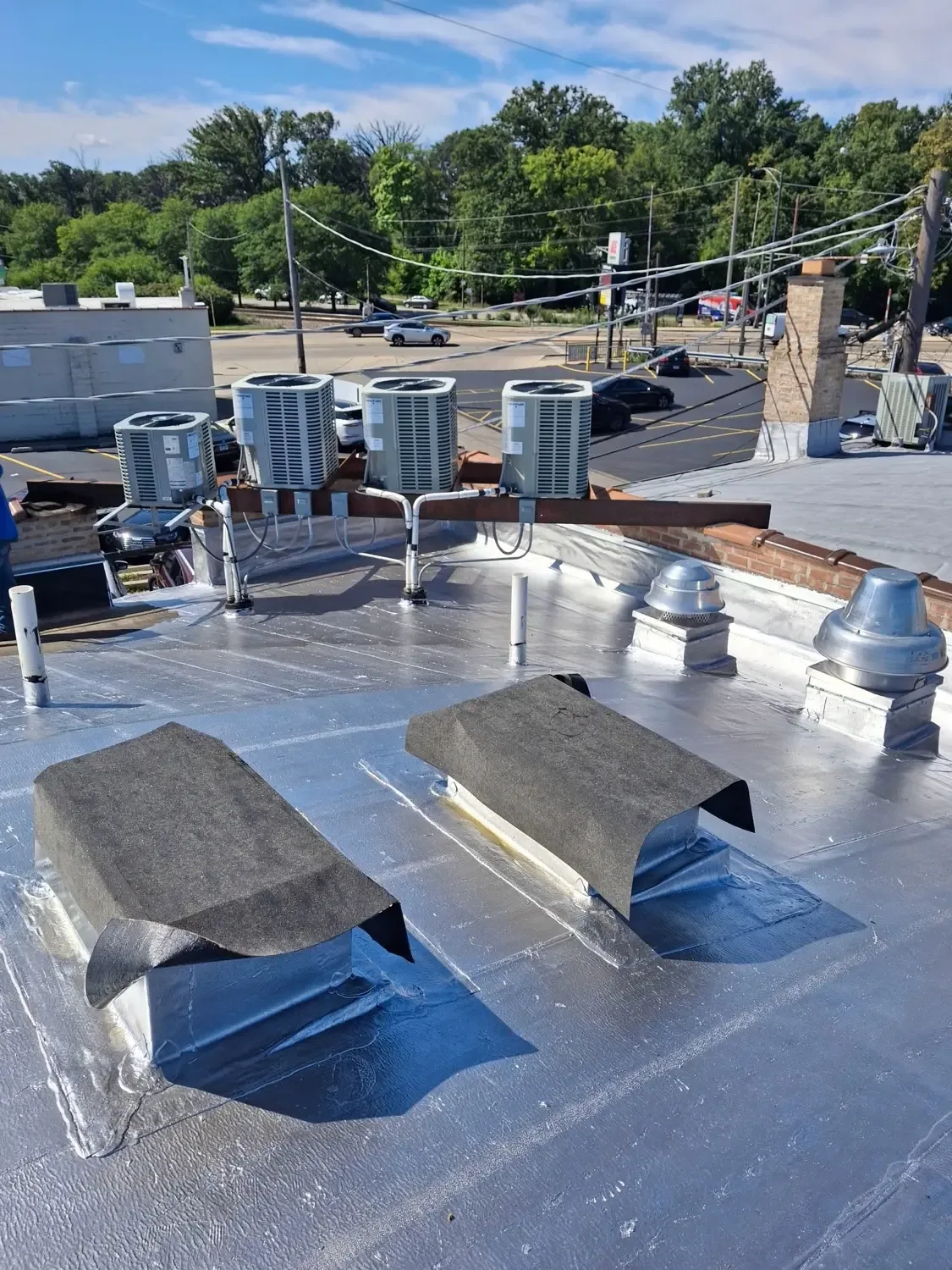
A new curb or pipe sleeve creates several edges that must stay watertight. We confirm the proposed location, the support below, the existing membrane, and the route water takes toward the nearest drain. The opening cannot be placed from a drawing alone if the roof has hidden framing, old patches, or a tapered insulation layout. We mark the surrounding work area before cutting. If the assembly is not documented, a small test or record review can establish what material is present before a tie-in is selected.
For an existing leak, we start below and work upward. The stain may align with a seam, but water can move along a deck flute or insulation joint. We compare interior observations with the roof field, wall turn, curb, and drain outlet. A moisture survey can help separate a wet section from a dry one when a broad repair could otherwise be proposed. The report distinguishes a confirmed defect from an area that needs further testing. That gives the owner a defined limit and avoids removing sound material without reason.
Set a sound repair edge
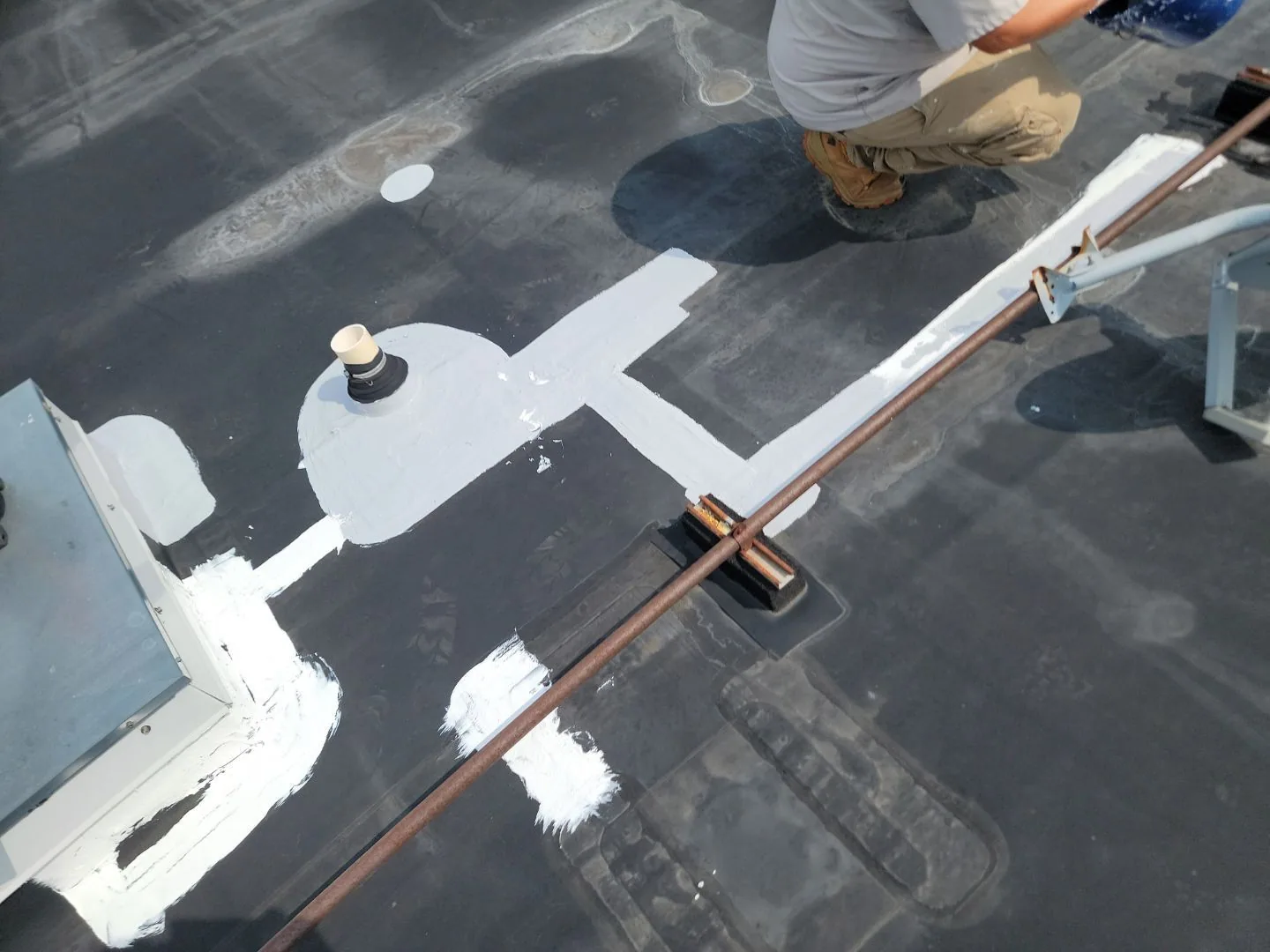
A patch needs clean, stable material beyond the failed point. We remove loose or wet layers only within the approved boundary, prepare the surface, and install a compatible repair. A single-ply seam, modified-bitumen lap, metal panel, and built-up roof do not receive the same treatment. We identify the assembly from records and physical signs before choosing a material. At a curb, the corners and vertical flashing deserve the same attention as the field seam. A surface coating cannot compensate for an open connection or wet insulation beneath it.
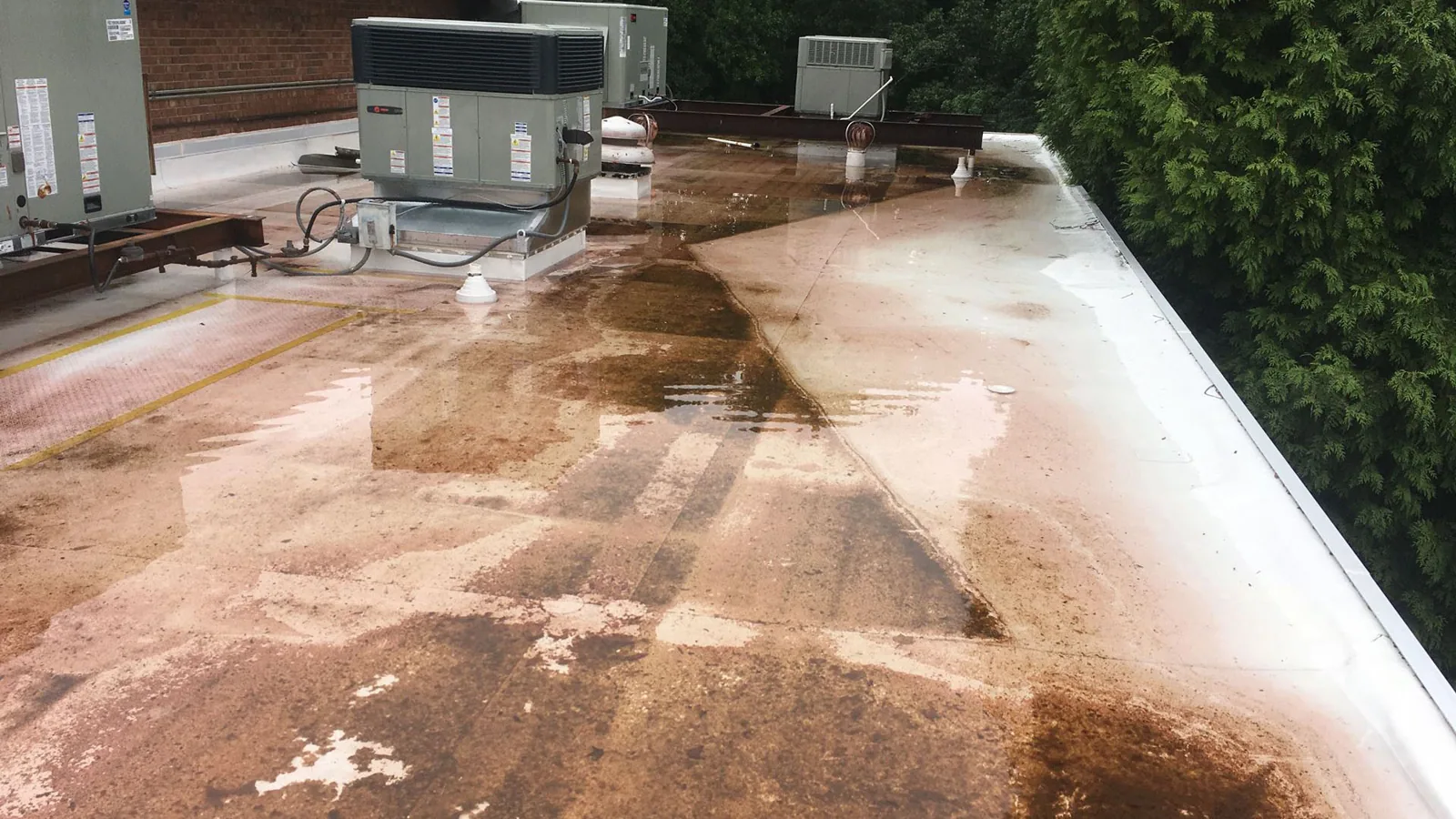
The decision can change when the deck or insulation is affected. A localized opening can be practical when adjacent material remains dry and the roof is otherwise stable. Repeated seam failure, saturated layers, or a deteriorated deck may make replacement more reliable. We show the repair limit, the layers to remove, and the tie-in detail in writing. A ponding-water assessment helps when slow drainage and membrane wear appear together. The owner can compare immediate protection with the longer-term scope.
Plan around the building below
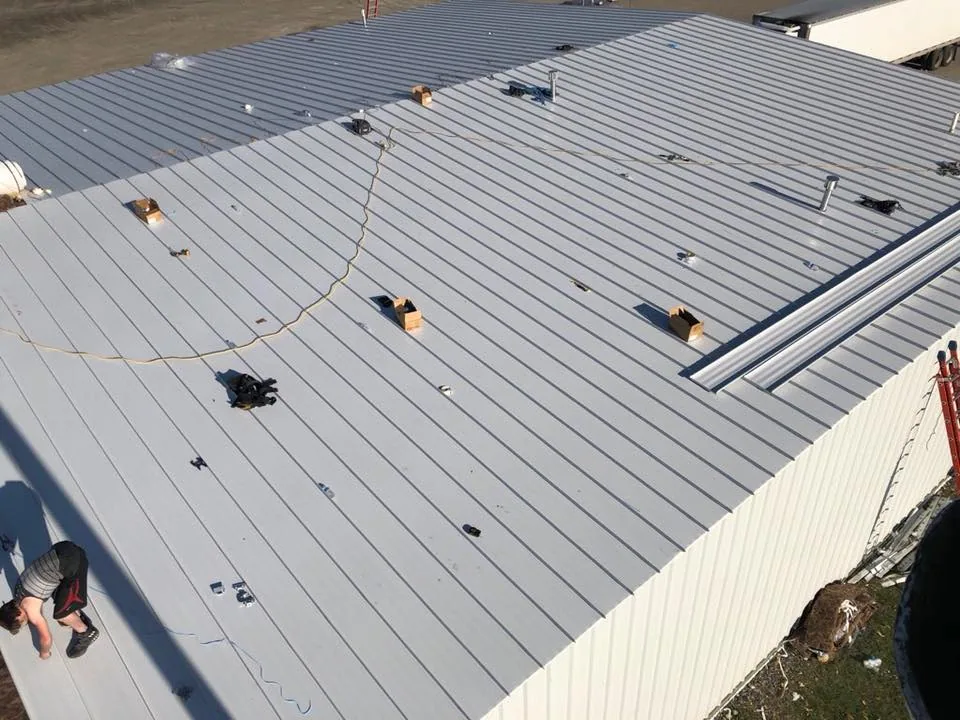
Replacement work changes the roof in stages. We identify which section opens first, where removed material will go, and how each area will dry in at the end of the shift. The plan also addresses deliveries, tenant notice, roof access, and the route that occupants need to keep clear. If a new utility connection is part of the same project, it should be coordinated before tear-off begins. That sequence can prevent a finished section from being opened again for equipment work. The owner receives the daily work boundary before the crew moves to another area.
Charlotte-Douglas logged a 57 mph gust during Helene, the Weather Service reports. That reading belongs to the airport, not a Mount Pleasant roof. We use it as regional context, then inspect edge details and confirm what needs fastening at the property. Temporary dry-in must close each exposed edge before the shift ends.
For a lower-disruption option, recovery may suit a roof when the existing layers, drainage, structure, and permit path allow it. It adds material and can raise roof height at edges or equipment. Replacement removes more material but exposes the deck for inspection. A replacement scope should state removal limits, insulation changes, flashing transitions, and daily dry-in. When a new roof assembly is being considered, a TPO system review compares seams, attachment, drainage, and the work area with the building's requirements.
Keep permits in the sequence
The town updated its comprehensive plan on June 10, 2025, aligning land-use intensity with utility infrastructure. For a roof project that includes new equipment or a service change, the property team should confirm capacity, pathways, and approval responsibility before setting a curb layout. We keep that coordination separate from the roofing scope and do not assume a planned utility extension serves a particular parcel.
Before cutting, mark the proposed curb against the drain path, membrane seams, and roof access aisle. Confirm whether the equipment installer needs a separate opening, power route, or structural support. If reroofing comes first, include the future curb in the sequence or specify its temporary closure and later tie-in. The scope should name who inspects each interface.
Leave the roof ready for rain
For a maintenance visit, we note the roof areas reviewed, outlet condition, visible flashing changes, and any prior patch that deserves another look. The next inspection can compare the same points after heavy rain or after rooftop equipment work. A maintenance plan can organize those checks without treating every roof as though it has the same exposure. Owners coordinating nearby commercial properties can arrange separate inspections in Locust or Monroe. Each property gets its own findings, access plan, and repair limit.
Call with the affected room, the roof access point, and any equipment change already scheduled. We can inspect the assembly, protect the occupied area, and explain the options supported by the condition we find. If a leak is active, emergency response is available around the clock, including holidays. We will identify what temporary protection can safely do and what permanent work remains. The owner knows which step is next before the service visit ends.
Commercial Roofing Questions
How does the 2025 town plan affect roof work at a business?
The plan links land use and utility infrastructure, so an equipment change can involve both roof and building approvals. We inspect the existing assembly, confirm who can authorize an opening, and coordinate the roof detail with the equipment schedule. The plan does not identify the condition of any specific roof.
What should be checked before adding a rooftop unit?
Start with the framing or support, curb height, flashing, membrane, and route for service access. We confirm what is installed before cutting and identify whether a small opening or additional structural review is needed. A new unit should not rest on a detail that has not been checked.
Can a wet area be repaired without replacing the whole roof?
A local repair can make sense when the surrounding material and deck remain serviceable. We map the affected layers, test further if hidden moisture could change the scope, and show the boundary before removal. Wider deterioration or repeated seam failure can shift the comparison toward replacement.
Which weather conditions change the schedule?
The selected material sets limits for surface temperature, moisture, and cure time. Charlotte station normals provide regional context, but we use the actual forecast and roof conditions for the job. A safe dry-in at the end of each shift remains part of the plan.
What helps the first Mount Pleasant service visit go smoothly?
Identify the affected room, roof hatch or ladder, equipment work already planned, and any hours when noise or access must be limited. Share prior repair notes if available. We confirm the roof assembly on site and explain any test opening before changing the approved scope.
Schedule a Mount Pleasant roof visit
Tell us which room or roof area needs attention, how we can reach the roof, and whether a utility or equipment project is scheduled. We will inspect the assembly and explain a practical repair or replacement path.