Home / Service Areas / Huntersville
Commercial Roofing in Huntersville, NC
Commercial roof inspection, repair and replacement planning in Huntersville, with practical scopes for access, occupied operations and concealed conditions.
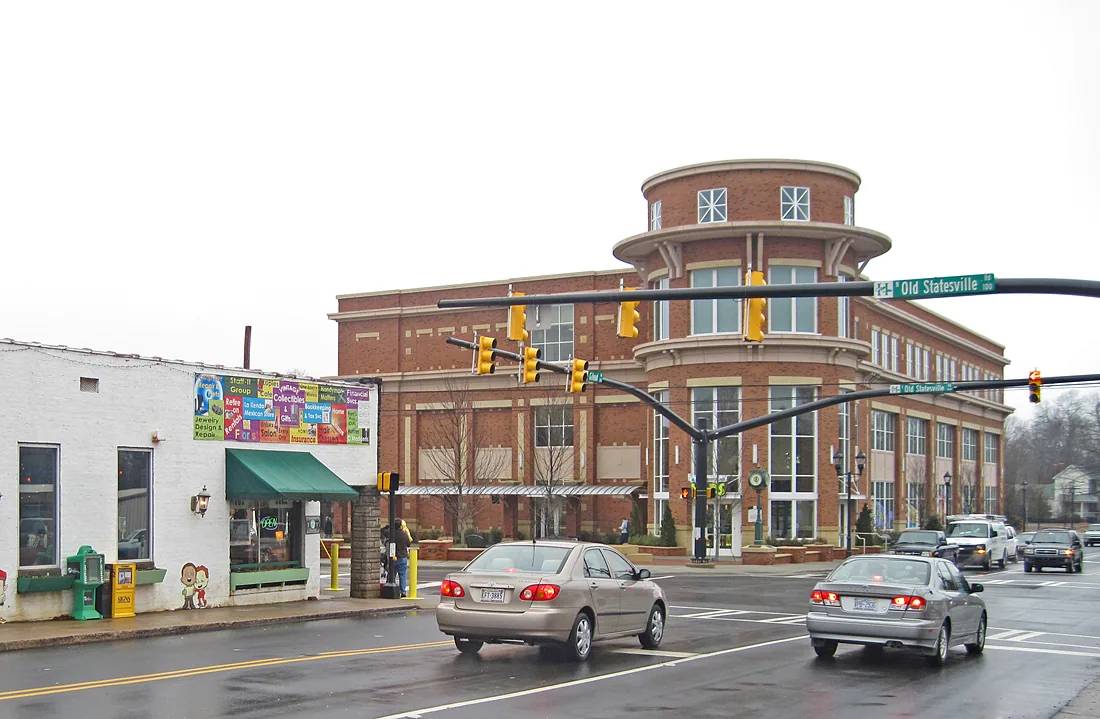
A leak above an office, shop or medical suite needs a roof review that reaches beyond the ceiling stain. We inspect the assembly, trace water paths and define the first repair boundary before recommending larger work. Huntersville is served by I-77 at Gilead Road and NC 73, and NC 73 connects eastward with Concord. The Exit 25 area includes shopping, medical and office complexes, which makes access and active building use relevant planning questions. The road network and surrounding uses do not identify the roof on any one property. We verify the membrane, penetrations, drainage and edge conditions on site. A commercial roof inspection gives the owner a written starting point when the cause or extent of a leak is unclear.
Follow the water, not just the stain
Water can travel along insulation, a deck flute or a transition before it appears indoors. We start above the affected room and inspect the surrounding seams, drains, curbs and wall connections. A failed lap and a backed-up outlet need different corrections, so we record the evidence that separates them. If a roof has additions or prior overlays, we inspect those transitions rather than assume a single assembly continues across the full area. A commercial leak-repair assessment can include a focused test when surface conditions do not show the complete path. The written scope identifies what is visible, which areas were reached and where an opening would be needed to confirm concealed moisture. That keeps the owner from approving a broad tear-out based only on a stain or a single surface defect. We also ask whether the interior mark changes after rain or during a different operating cycle. That timing can help prioritize inspection, but it does not replace a roof review. Where a test is needed, we agree on the opening location, temporary protection and closeout before cutting through the assembly.
Coordinate arrival and roof access
I-77 access near Gilead Road and NC 73 gives useful geographic context, but the delivery route to a particular building still needs confirmation. We ask where a truck can stage, which entrance must remain open and whether a lift or secured ladder is needed. A shopping, medical or office use may have patient, customer, staff or loading periods that shape when a roof area can be opened. The property contact identifies sensitive equipment, restricted doors and any tenant notice requirement. We then mark the work boundary and a dry-in point for each shift. A phased occupied-building reroof can separate work zones while interior areas remain in use. The schedule should be tied to those operating constraints and the weather window, not just a broad map of the town.
Confirm the membrane and tie-in
We identify TPO, PVC, EPDM, modified bitumen or metal only when records and accessible details support the conclusion. A repair has to connect to compatible, attached material around the failure. We check whether the surface can be prepared, whether wet insulation extends beyond the visible mark and whether edge height can accept another layer. A recover may be workable where existing layers remain sound and drainage is adequate. A TPO roof system evaluation asks different questions from a metal roof review, especially at fasteners, laps, clips and penetrations. The proposal should identify the material confirmed, the area to be removed or retained and any test needed before a permanent repair. That level of detail matters even when nearby properties have different roof histories and different assemblies. A roof cut can reveal moisture that was not visible at the surface, so we define who will review the result and how the opening will be made watertight at the end of the visit.
Check outlets and rooftop details
A drain, scupper or gutter can affect a leak even when the visible membrane looks intact. We follow the roof plane toward each outlet and note debris, deformation or a changed elevation that could interrupt runoff. Curbs, skylights and equipment supports also deserve attention because water can enter at a weak flashing connection. When maintenance trades move equipment, we identify details that need protection before work starts. A drain and scupper repair scope should define which outlet and adjacent membrane are included. If the property has repeated ponding or several active leak paths, we document each area rather than treating every mark as one defect. Photos help the owner compare drainage and penetration conditions with the scope and decide whether a targeted correction is enough.
Choose a repair boundary
A localized patch can make sense when damage is contained and nearby material is secure. More extensive moisture, weak attachment, repeated seam failures or deteriorated decking may require a larger removal area. A coating is an option only when the substrate and transitions are suitable and preparation can be completed. Replacement may be more direct when insulation or perimeter details cannot support a reliable recover. A replacement proposal should separate removal, insulation, disposal, edge metal, access and weather-dependent work. The owner can compare that with roof work at a commercial property in Kannapolis or an inspection at a property in Harrisburg, while keeping this property's decision tied to its own condition. We explain the observed basis for each option and which approval point applies if hidden damage changes the estimate. A phased project may reduce the area left open at one time, but it can require separate mobilization, protection and tie-ins. We lay out those tradeoffs alongside the materials and removal assumptions. If testing changes the amount of wet insulation or the deck condition, the owner receives the finding and cost effect before the boundary changes. That makes the comparison useful for budgeting and scheduling without promising a result that has not yet been exposed.
Document what the work changed
At handoff, we record the completed detail, material and limit of the repaired area. Photos should show a seam, flashing transition or outlet in context, not just a close-up that cannot be located later. The property manager receives a note of any adjacent area that was reviewed but not included and any condition that still needs access or approval. If a later stain appears, that record can help distinguish a new path from the corrected defect. A property in Concord's Weddington Road corridor or a commercial property near Concord Parkway and Roberta Church Road also needs a roof-specific record. We leave the owner with a clear service record, a follow-up contact and the next decision if additional moisture is found. That is more useful than a broad statement that the building is fixed without describing what was inspected.
Commercial Roofing Questions
Does the Exit 25 area's office and medical activity tell you which roof system is present?
No. Those uses provide local context, but the roof assembly comes from records and details we can inspect at the property. We confirm the material before selecting compatible repair work.
Can a leak be traced from the ceiling stain alone?
A stain locates the symptom, not necessarily the entry point. We inspect the roof above and nearby transitions, then identify any concealed layer that would need a test opening to confirm.
What should a manager have ready before crews arrive?
The access contact, staging area, active entrances, sensitive equipment and any restricted hours help set the work sequence. We confirm the opening and dry-in boundaries with that contact before starting.
When is a coating unsuitable for a commercial roof?
A coating may not fit when the substrate is wet, loose or incompatible, or when flashing and edge transitions cannot be prepared. We inspect those conditions before pricing a coating restoration.
How does the owner know whether repair or replacement is more practical?
We compare the confirmed failure area, adjacent attachment, moisture, drainage and perimeter details. The estimate then shows removal, retained layers, access and any concealed condition that could change the scope.
Set up a roof review in Huntersville
Tell us where water appears, what access or operating limits apply and who can approve a test opening or repair change.