Home / Service Areas / Cornelius
Commercial Roofing in Cornelius, NC
Plan commercial roof repair and replacement in Cornelius, NC around access, drainage, occupied rooms, and the roof condition that controls the work.
A ceiling drip over a staffed room can stop work below before a roof repair begins. In Cornelius, NC, we start with the affected space, safe access, and the roof area above it. I-77 crosses the town at Catawba Avenue, and NC 115 runs as Main Street toward Davidson and Huntersville. Those routes help locate a visit; the roof assembly and water path set the repair. We protect the room, trace the entry point, and explain whether a defined repair or wider correction is supported.
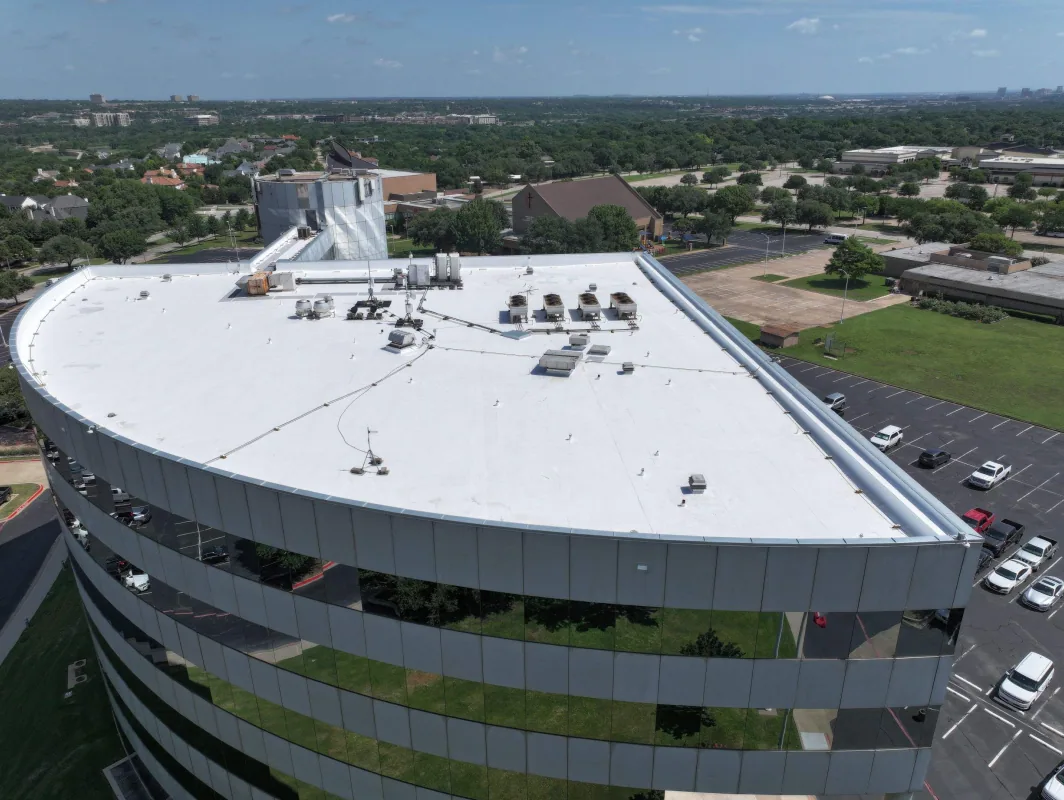
We repair, replace, recover, inspect, coat, and maintain low-slope and metal commercial roofs. Occupied rooms can have different protection needs from a private office or shop. We ask which rooms must remain usable, what equipment sits near the work, and where temporary protection will matter in the next rain. A commercial roof inspection starts with those operating details and the roof condition we can confirm.
Trace the water path
A ceiling mark can sit well away from a roof opening. We compare the indoor symptom with seams, penetrations, walls, drains, and edges above it. Then we check whether nearby insulation is wet and whether an earlier patch changed the water path. The repair boundary should follow the failure and sound material, not stop at the room stain. Photos tie the finding to the affected space and help the owner see why the proposed work reaches a particular roof detail.
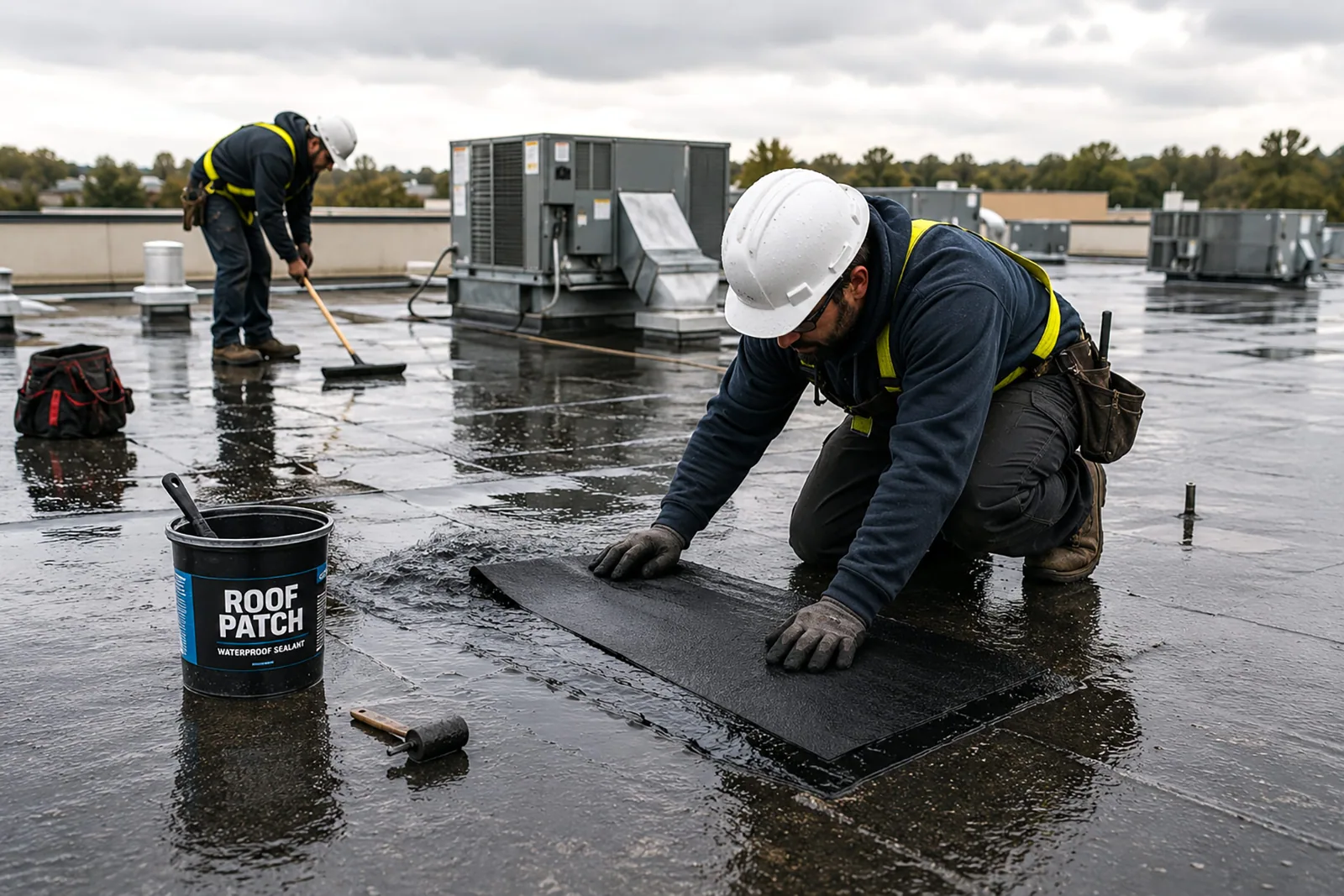
NC 115 carries Main Street through Cornelius toward Davidson and Huntersville. We inspect the hatch or ladder, fragile surfaces, and equipment clearances before walking to the repair. Where water is active over a shop counter, classroom, or office, we protect the interior before opening the roof. A membrane puncture repair must address the surface and any affected layers below it.
Set the repair boundary
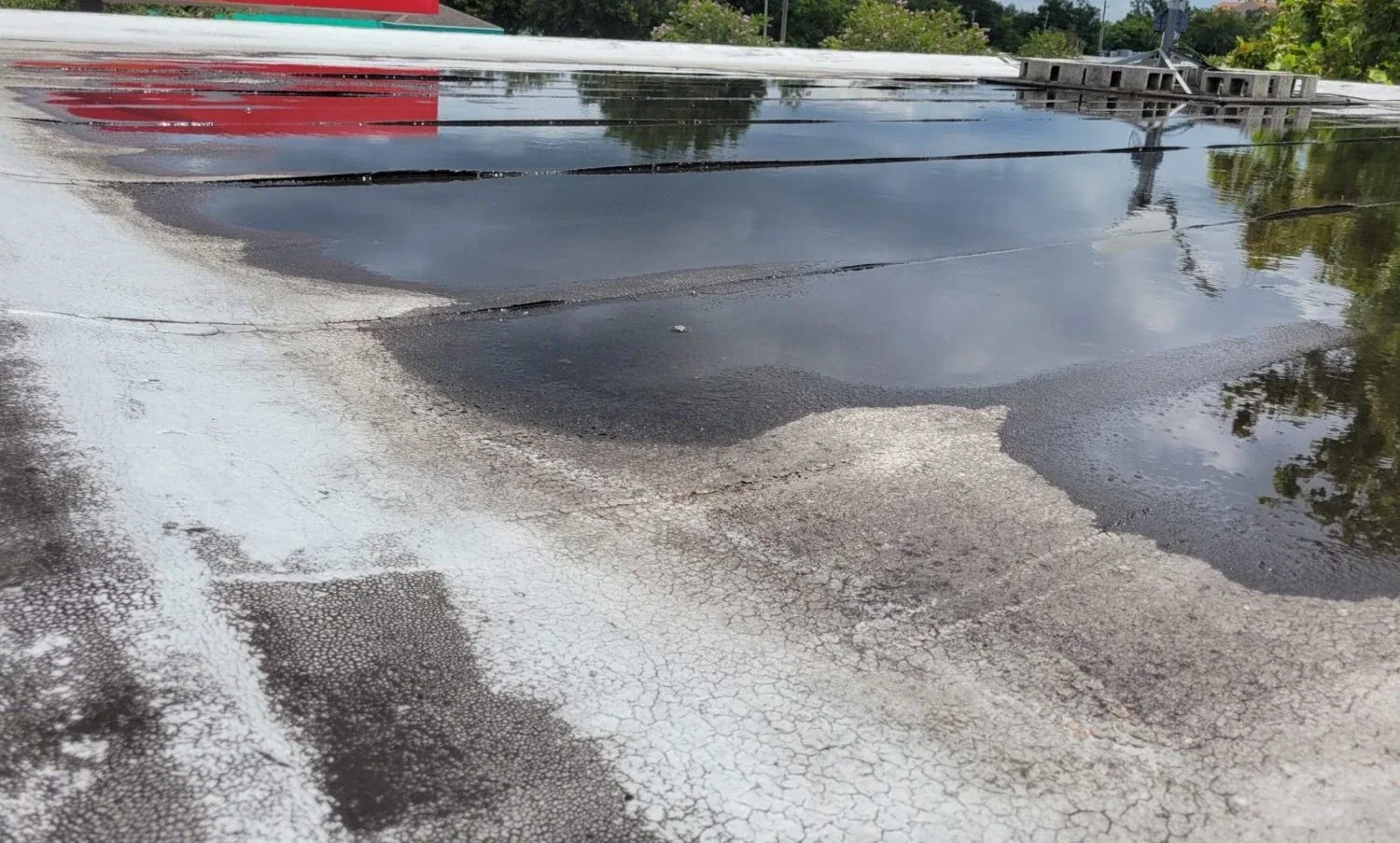
A released seam over a short run can call for a different correction than insulation that has taken on water across a wider area. We determine whether the membrane can be prepared and rejoined, whether flashing needs rebuilding, or whether saturated material must come out. Repeated failures across seams, drains, and penetrations may justify a condition review before another isolated patch is approved.
For an occupied school or public-facing property, the choice also includes room access and work timing. We compare a defined repair with a recover or replacement when roof condition supports more than one path. A recover can avoid some removal if the existing assembly, drainage, and code requirements permit it. Replacement can require deck review, new insulation, edge transitions, and a weather plan. We explain the difference with a repair scope and, when relevant, an replacement scope that reflect the inspected roof.
Protect against the next rain
Rain can interrupt roof work at any time. Before permanent work starts, we decide what must be covered at the end of a shift and how water will be directed away from the opening. If a storm interrupts a repair, secured temporary protection helps keep water from reaching the room until the permanent tie-in can proceed.
We inspect the actual assembly here and plan material handling for the conditions on the work date. If occupants use a school building or library branch during work, we coordinate notice, noise, and access before the roof is opened. Temporary emergency response can protect the space while we define the permanent correction.
Keep rooms in service
Roof access belongs in the scope. We confirm the hatch or ladder, mark fragile areas, and choose a route that avoids unnecessary movement over the membrane. Near an HVAC unit, skylight, or conduit, the crew needs room to inspect flashing without blocking service access. Inside, the owner can identify sensitive rooms and spaces that require notice. A short access discussion helps keep work focused and protects the daily operation below.
For a public-facing building, we coordinate with the person responsible for occupants and building access. If a repair needs temporary protection overnight, we explain what has been secured and what still awaits permanent correction. A work plan for an occupied building should say which area is affected, what notice is needed, and how the entrance stays usable. The service record can include photos and the next maintenance item.
Use compatible materials
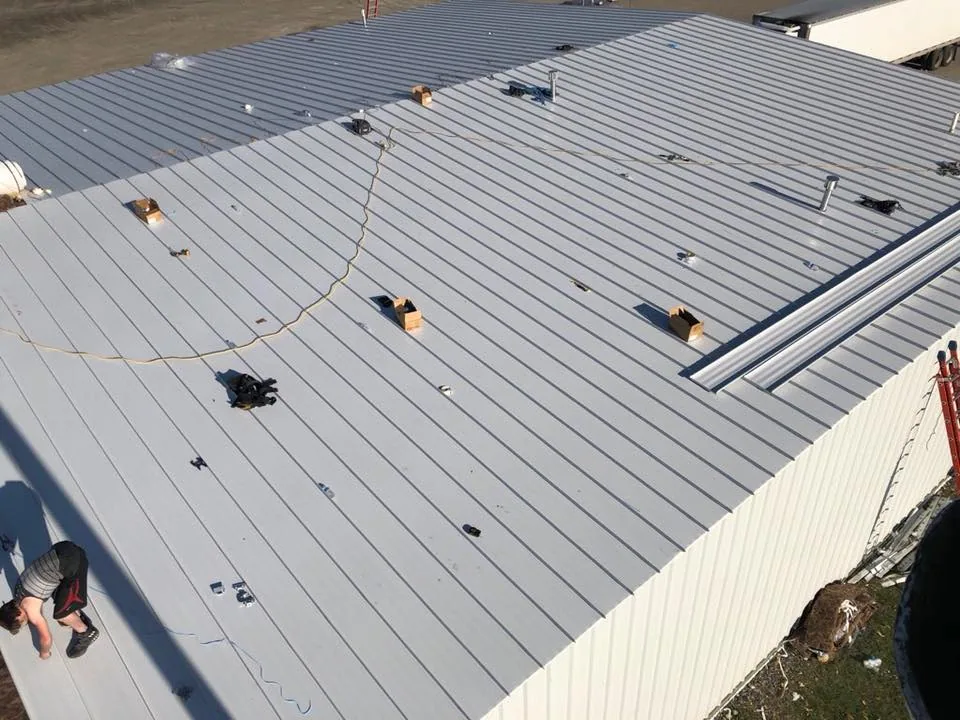
TPO, PVC, EPDM, modified bitumen, built-up roofing, metal, and coating systems need different preparation and repair methods. We identify the installed material before selecting a patch or flashing treatment. A coating can restore a suitable surface, but it will not replace wet insulation, rebuild a damaged deck, or correct a drain that cannot move water. Where prior repairs overlap, we check the tie-in and confirm the new work bonds to compatible, sound material.
Owners can compare a documented repair with a recover or replacement when the condition makes those choices relevant. Deck, insulation, seams, edge metal, penetrations, and drainage all affect the decision. We can use a hands-on inspection, drone review, or infrared survey when the roof and question warrant it. For a suitable surface, coating restoration can be considered alongside TPO assembly repair and other compatible approaches.
Sequence work around use
Schedule depends on roof size, access, weather, material condition, and how much must be removed. A localized seam correction differs from work that changes drains, edge transitions, or equipment supports. If one roof area can remain in service while another is repaired, we mark the boundary and any temporary measure. That gives the owner a sound basis for coordinating occupants and trades.
Permitting can affect timing. North Carolina currently lists the 2018 Building, Existing Building, and Energy Conservation Codes as effective while transitioning toward the 2024 series. The owner may request the 2024 codes as an alternate method before their effective date, so the applicable edition should be confirmed during permitting. We include that step in the schedule rather than assuming the code path. A scheduled maintenance visit can identify drainage or flashing concerns before they become an unplanned opening.
Prepare for a useful visit
Note where water appeared, when it showed, and whether it followed rain or equipment work. Tell us if a ceiling tile, stored item, or room needs protection. Photos from inside can help locate the symptom, but we still inspect the roof and surrounding details. For larger work, share plans, prior repair notes, access rules, and schedule restrictions. We use that information to focus the first walk and explain what we can confirm or what may require additional testing.
If water is active, call for emergency response and describe the affected room, safe entry point, and operating concern. We can arrange temporary protection, then complete a permanent repair when conditions permit. Cornelius owners can coordinate along I-77 or NC 115 toward Davidson and Huntersville, while access and roof findings remain specific to each property. For a nearby building, compare commercial roofing in Davidson and commercial roofing in Huntersville; the inspection still begins at the property needing attention.
Commercial Roofing Questions
Can a ceiling stain identify the roof section that needs work?
No. We compare the mark with seams, penetrations, walls, and drains above it, then trace the likely path before setting the repair boundary.
What happens if rain is expected before a permanent repair?
We identify the open area and secure temporary protection that moves water away from the opening. The permanent tie-in follows when the surface and weather permit.
Can classrooms or offices stay open during roof work?
We plan access and interior protection around occupied rooms. The visit confirms routes, notice needs, noise-sensitive periods, and any space that cannot be disturbed.
When should we compare a recover with replacement?
A recover is an option when the assembly, deck, drainage, and code path support it. We document those conditions and compare them with removal and replacement needs.
What should we share before a Cornelius service visit?
Send the room with the symptom, recent rain timing, safe roof access, prior repair notes, and occupant restrictions. Those details help focus the first walk.
Set a focused roof visit
Tell us where water appeared, how the space is used, and which access rules apply. We will inspect the related roof area and explain a practical repair or planning scope.