Home / Roof Damage Repair / Commercial Roof Membrane Puncture Repair
Commercial Roof Membrane Puncture Repair in Concord, NC
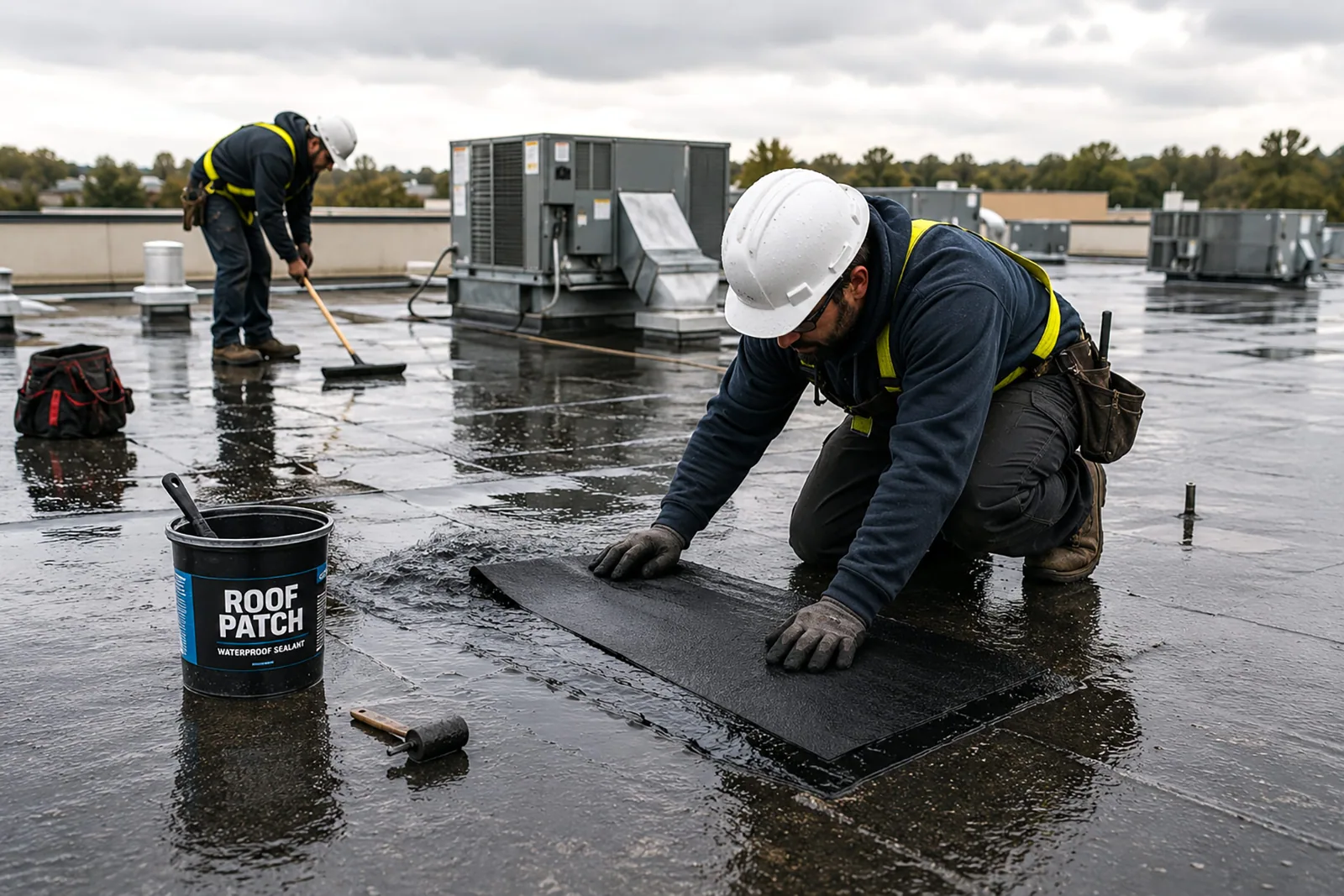
Examine punctured commercial roofing in Concord. We assess the damaged area, receiving membrane and service route before defining repair and protection.
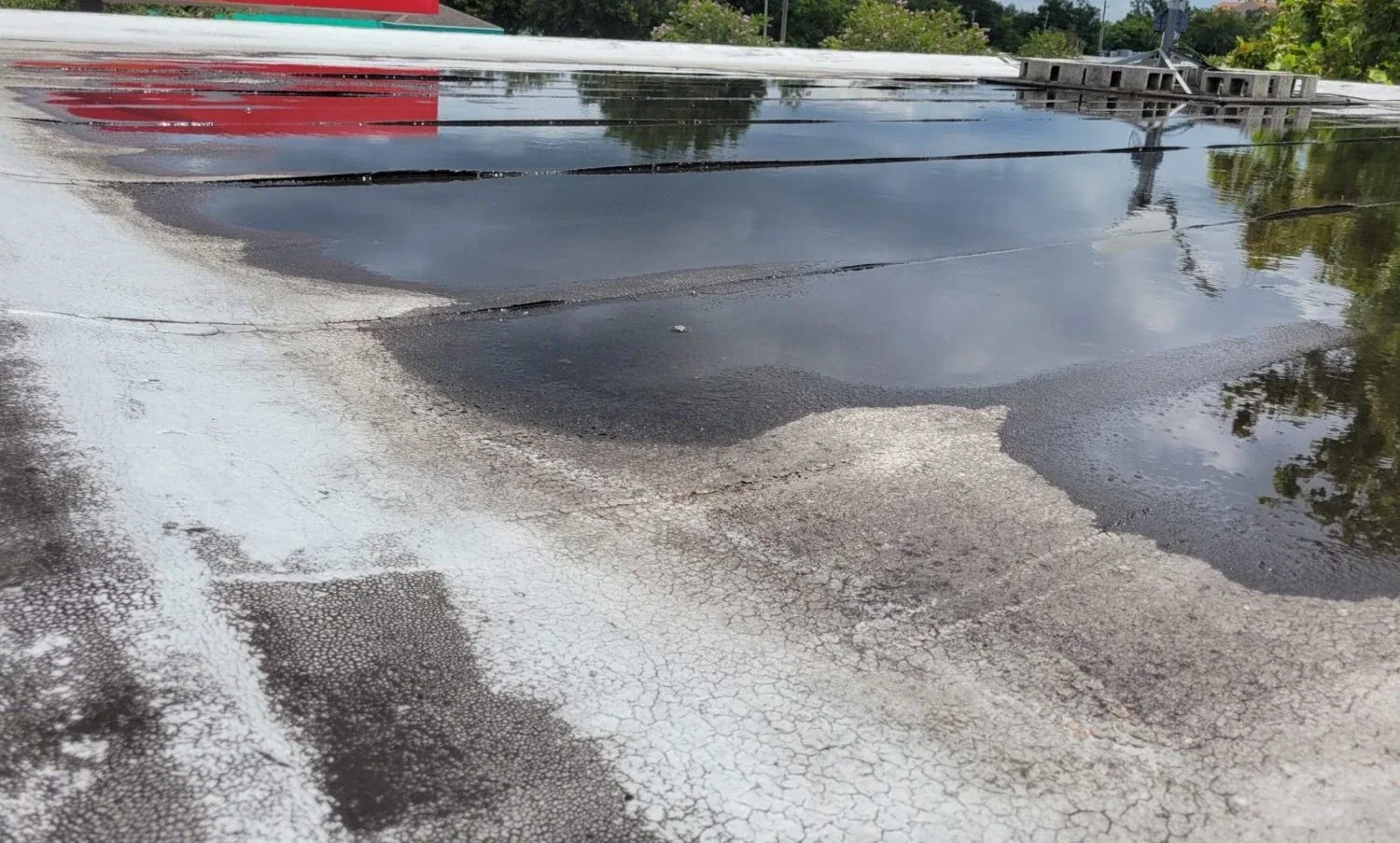
A tool left beneath a service route can turn a routine equipment visit into roof water entry. The hole may be smaller than the concealed area affected. We assess commercial membrane puncture repair in Concord, NC. We examine the damaged covering and its accessible surroundings. The operator identifies recent roof activity and the occupied position showing water. A repair needs usable material around its connection. We explain preparation and any further layer examination before limiting the scope to a patch. The service route also needs attention if it will continue crossing the damaged area.
Weddington Road Corridor planning includes industrial facilities and neighborhood connectivity. The Concord Entertainment Corridor includes commercial activity around hotels, restaurants and vehicle dealerships. Equipment access at these properties should preserve the covering beneath the visit. We assess the actual handling route and reported damage. A defined membrane repair task can reconnect a suitable damaged area while identifying wider deterioration that requires another step.
Examine the impact and its surrounding covering
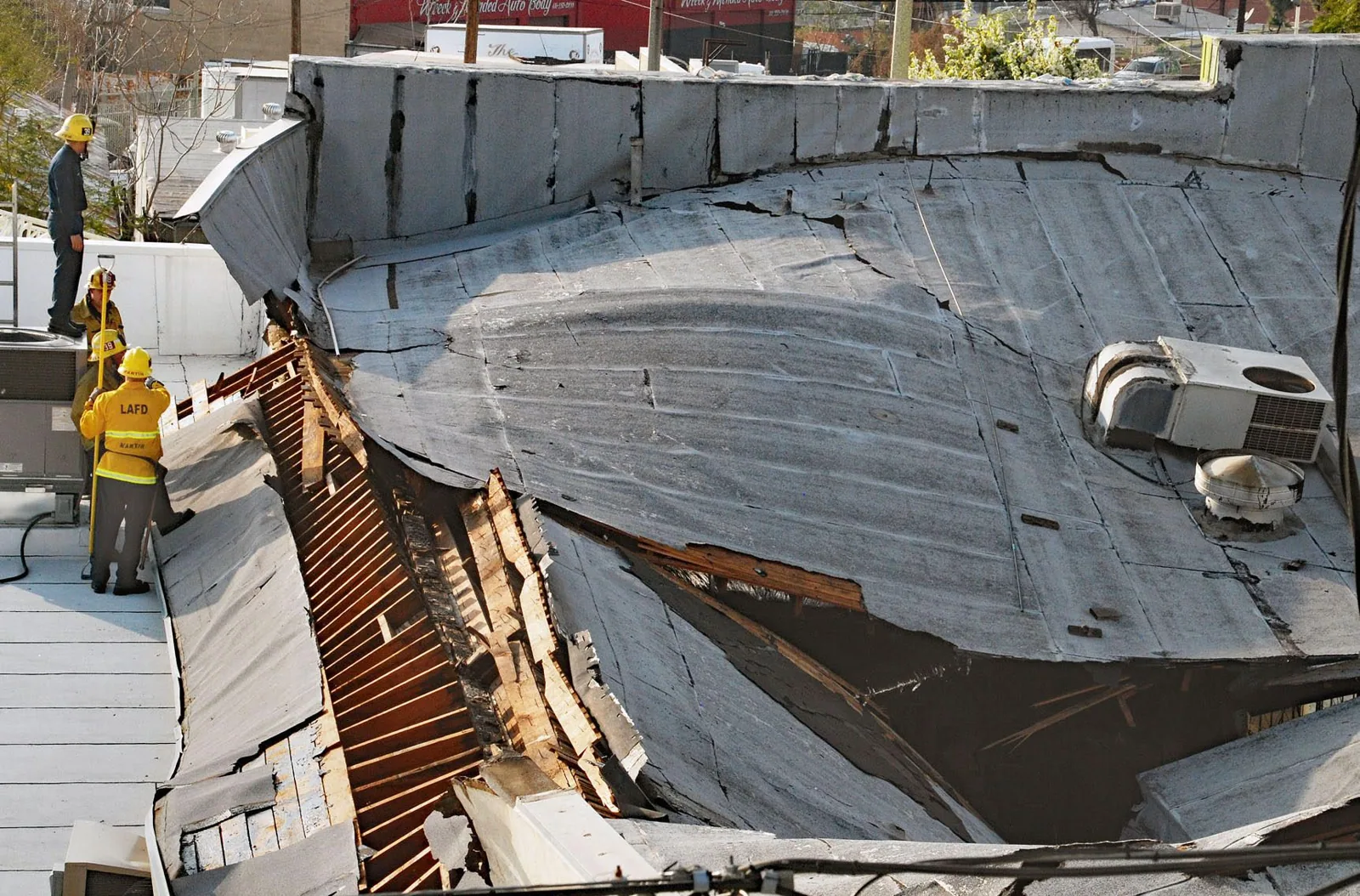
A visible hole needs examination beyond the mark itself. Dragged equipment may have produced several cuts along its route. A dropped component can damage the material beneath the covering. We inspect what is accessible and identify useful further assessment. The puncture's location, nearby equipment and available activity history can guide that visit. We do not assume the smallest visible opening describes the complete task. The surrounding membrane must be capable of receiving the intended connection. A brittle or contaminated area may change the repair boundary.
The operator should identify items moved across the roof and any work performed near the reported position. That information can help locate additional damage without requiring an unsafe search by building staff. We examine the relevant roof area and adjacent details. A separated membrane joint may need reconstruction where handling strained an existing seam. A damaged flashing transition requires examination at its own interface. The scope should address each established defect instead of grouping every mark beneath one surface treatment.
Connect the repair to usable installed material
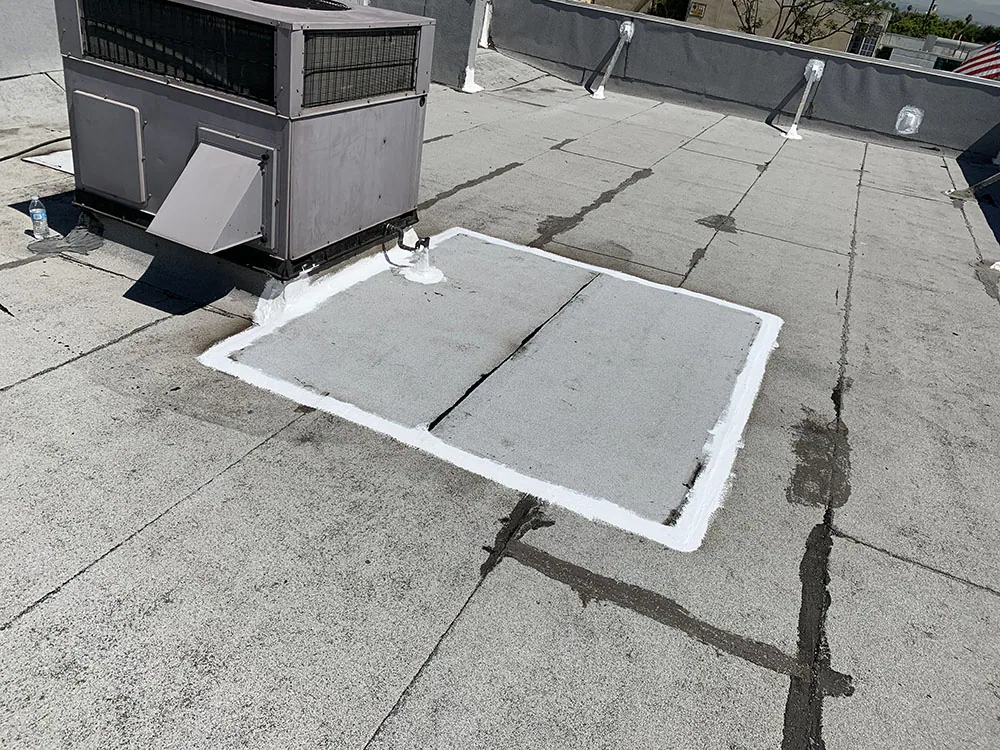
Preparation depends on the covering that is actually installed. Dirt, residue and previous treatments can affect the tie-in. We assess whether the adjoining material remains suitable for the proposed method. A puncture repair needs a connected boundary around the opening. An edge left over unsuitable material can separate and admit water again. We explain removal or preparation needed to reach the receiving area. The method should suit the installed assembly rather than rely on a generic product across every kind of roof.
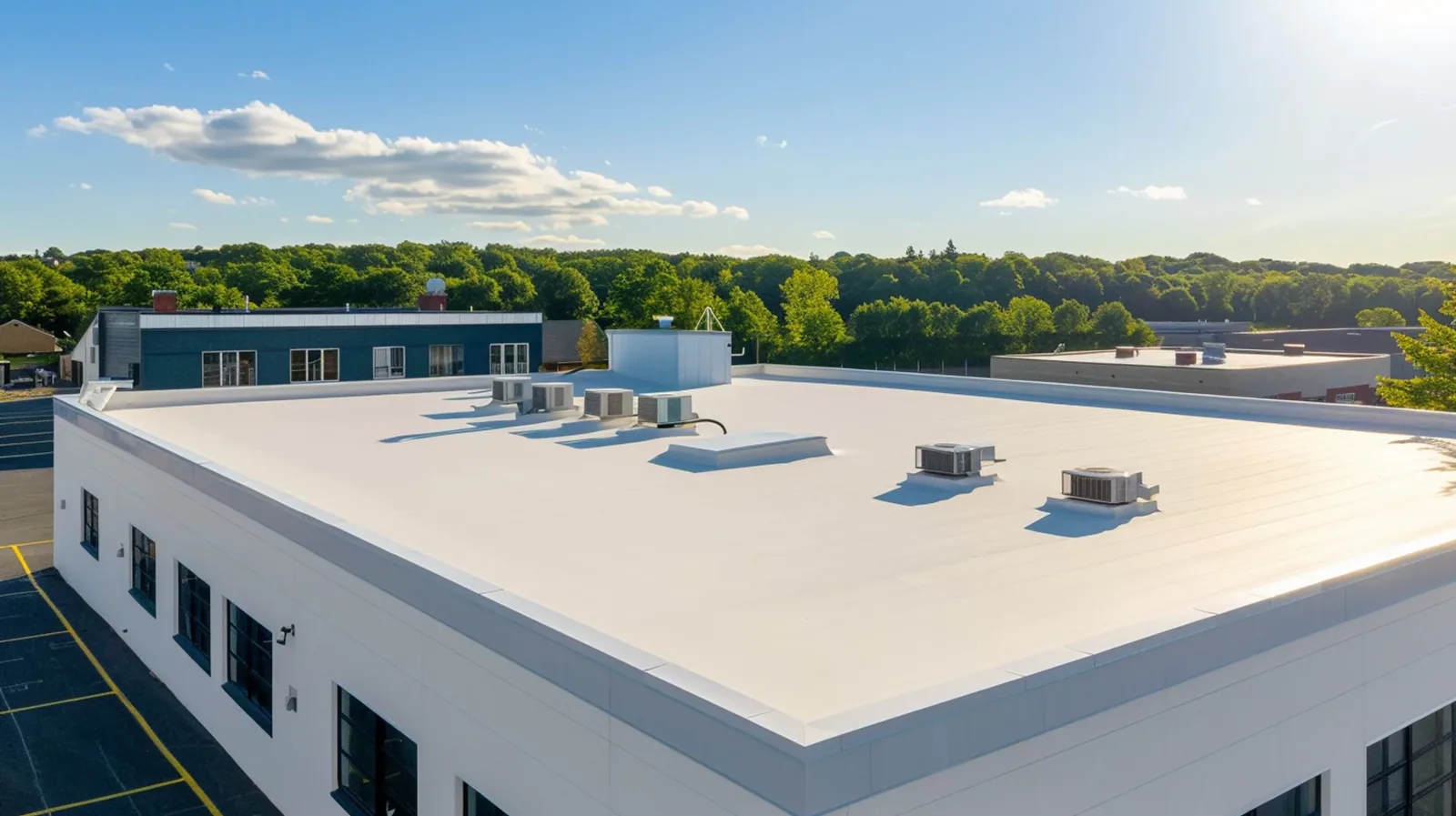
PVC membrane work requires consideration of that covering's connections and condition. Other installed materials can need a different task. Useful assembly information helps identify the method and existing limitations. Where age or deterioration makes the surrounding covering unsuitable, a broader examination is needed before choosing another patch. The owner should understand that physical concern. We identify what can be reconstructed locally and what requires further assessment. The selected repair should not conceal a material boundary that cannot receive it properly.
Consider the layers reached through the opening
A hole can allow water into insulation or other underlying material. Indoor appearance does not establish how far it has traveled. We examine accessible condition and explain when selected exposure is useful. The owner authorizes that additional opening and understands its reconstruction. Deteriorated layers may need removal even if the surrounding surface looks usable. We identify the extent established by examination. Suspected structural concerns require appropriate professional review. Closing the surface alone cannot rebuild material already damaged beneath it.
A moisture-related roof assessment may help select useful examination positions when conditions and the assembly are suitable. Interpretation needs confirmation where the findings affect removal decisions. The resulting task should identify which layers are retained and which require reconstruction. Equipment or occupied contents can affect access to that area. We coordinate the practical work boundary with the operator. The repair needs enough clearance for removal, preparation and a connected finish around usable surrounding roofing.
Arrange equipment handling without another cut
Removing a damaged component may require lifting or disconnection by its responsible trade. We review that task before positioning roofing materials. The proposed service route should avoid dragging items across the covering. Suitable temporary protection needs consideration for the handling method and roof condition. Sharp debris should be collected rather than left near the joint being repaired. The operator should identify access needed for continued equipment service. A new repair placed directly beneath repeated unsuitable handling can be damaged during the next visit.
Work within the Weddington Road industrial corridor may require coordinating the roof approach with an occupied service entrance. The actual delivery and lifting positions need review. A vehicle can occupy more than its parking footprint while materials are handled. Required exits need appropriate attention during that operation. We explain the practical roof boundary and any separate equipment clearance. Protection should remain workable if weather or concealed material changes the day's reconstruction area.
Preserve the repair during subsequent visits
Completion information should identify the repaired position and useful material details. The operator can share that location with later service participants. A new equipment task should account for the reconstructed connection. Any alteration through it needs appropriate roofing coordination. We explain where continuing access or a suitable protection measure is useful. The owner should also understand any separate interior restoration task. New room marks need examination of timing and location rather than an assumption that the original puncture has reopened.
Care around recurring equipment access can include accessible covering and nearby outlets. Loose components and service debris should not remain where they can damage material or obstruct runoff. Repeated punctures can justify changing the handling arrangement rather than repeatedly repairing its consequences. Wider covering deterioration may also call for another assessment. We describe the condition that affects that decision. The next task should preserve usable roofing while addressing the actual damage and the practical route that crosses it.
Commercial Roofing Questions
Does a small puncture always need only a small patch?
Not necessarily. Water or impact can affect underlying material beyond the visible opening. We examine the adjoining covering and explain useful further assessment. A local connection needs suitable receiving membrane. Deterioration can change removal and reconstruction. The owner should understand the repair boundary and any authorized exposure needed before a narrow surface task is selected.
What information helps locate damage after an equipment visit?
Identify the equipment position, the route used and any components moved across the roof. Describe the occupied area affected and when water appeared. We use that report to direct accessible examination. Building staff should not enter an unsuitable roof position to find the hole. The assessment can distinguish a puncture from a separated joint or disturbed adjoining detail.
Can the covering be repaired while damaged layers remain beneath it?
The retained assembly needs examination where deterioration is suspected. Closing a hole will not restore damaged insulation or support. We explain selected exposure or other useful assessment and the resulting reconstruction. Appropriate professionals should review structural concerns. The scope should identify layers that can remain and those requiring removal around the established damage.
How should future service activity account for the repaired area?
Later participants need to know the position and avoid damaging its connection. We review the handling route and useful protection with the operator. Equipment alterations may require another coordinated roofing task. Debris should be removed from the covering and outlets. Recurring damage can warrant changing access or handling rather than relying on another repair after each visit.
Assess the damaged service-route covering
Arrange a Concord puncture assessment. Identify the affected space, recent equipment movement and available roof access so we can examine the damaged area.