Home / Service Areas / Statesville
Commercial Roofing in Statesville, NC
Commercial roofing in Statesville, NC, calls for a roof-specific inspection, practical access plan, and a scope that protects the operation below.
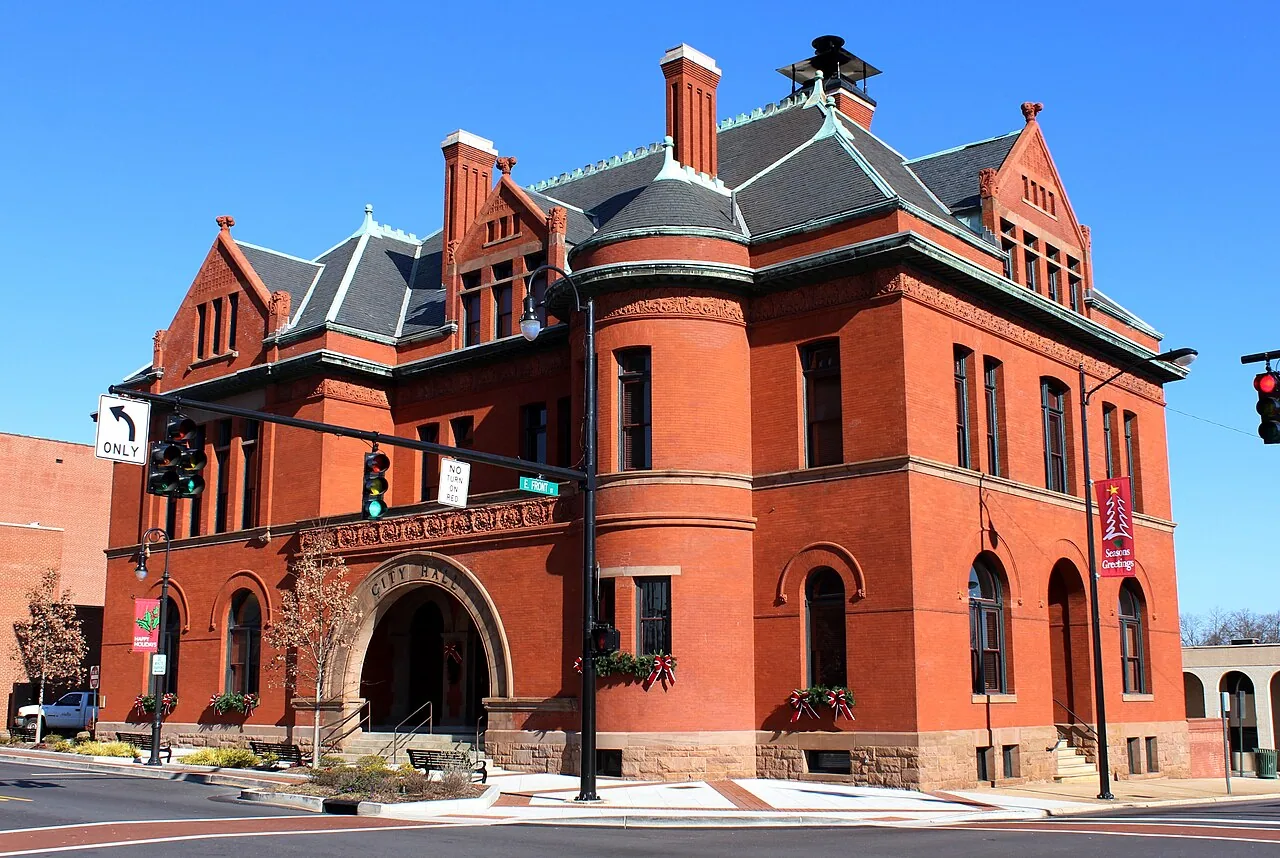
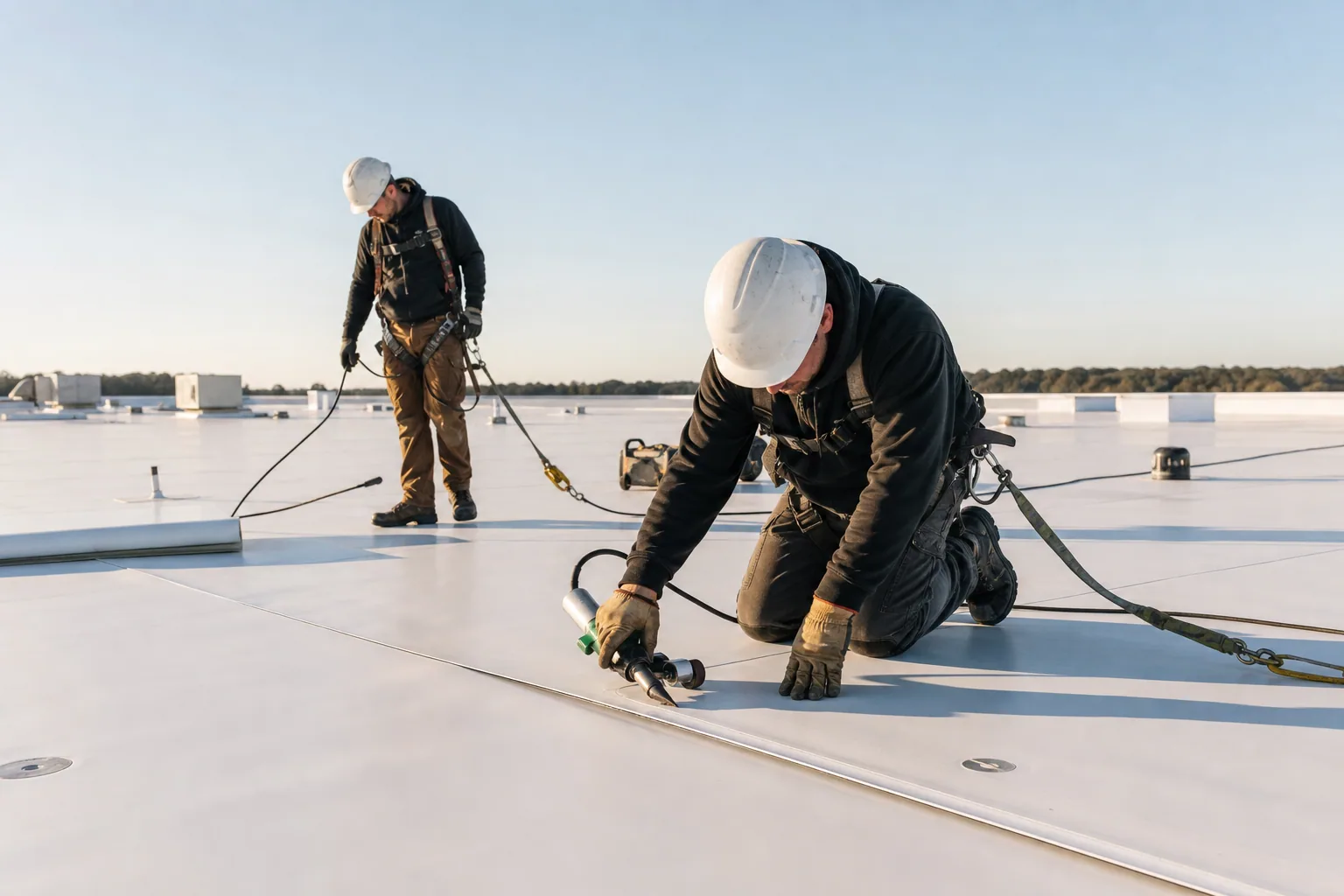
Commercial roofing in Statesville, NC starts with the roof assembly and the operation below it. Statesville is in Iredell County, within the Charlotte-Concord-Gastonia metropolitan area, where I-77 meets I-40. That context helps with regional access, but it does not describe a particular roof. We confirm the property, access plan, membrane or metal system, and reported leak area first. A documented commercial roof inspection ties visible symptoms to conditions we can verify.
We help property representatives separate an active leak from a maintenance or replacement decision. Every facility has its own hours, drainage, equipment, and tolerance for noise or odor. Before recommending a patch, coating, recover, or tear-off, we ask how work below the roof must continue. The scope should show what inspection confirmed, where the work stops, and which conditions need owner approval.
Start with access and the space below
A roof visit must account for the people and operations underneath. We ask who can open the hatch, whether a ladder or lift is required, and which entrances or loading areas need to stay available. For a leak above inventory, equipment, or public space, we discuss interior protection before opening the assembly. The building representative identifies sensitive rooms and work windows; the crew marks the travel route and inspection area.
I-77 and I-40 provide regional access context, while the property's gate, delivery hours, and staging rules determine the final approach. We confirm the actual entrance and turning clearance. The same planning applies to neighbors: notice, barricades, and short closures should be explicit. An occupied-building work sequence makes that handoff reviewable.
Trace water before naming the repair
A ceiling stain shows where water appeared, not where it entered. Water may travel along a deck flute, insulation joint, conduit, or framing member before it reaches a room. We compare the report with roof conditions above, inspect seams and transitions, and check nearby penetrations, curbs, parapets, and drains. Testing or a limited confirmation opening may help define concealed moisture when safe and appropriate.
We record the layers we can verify and any prior repairs that affect a tie-in. If the roof contains multiple systems, we map each separately. Photographs and marked limits help an owner understand confirmed damage versus areas that need more investigation. A targeted repair scope states the suspected source, work area, compatible materials, and conditions that could change the limit after removal begins.
Choose a repair that can hold its boundary
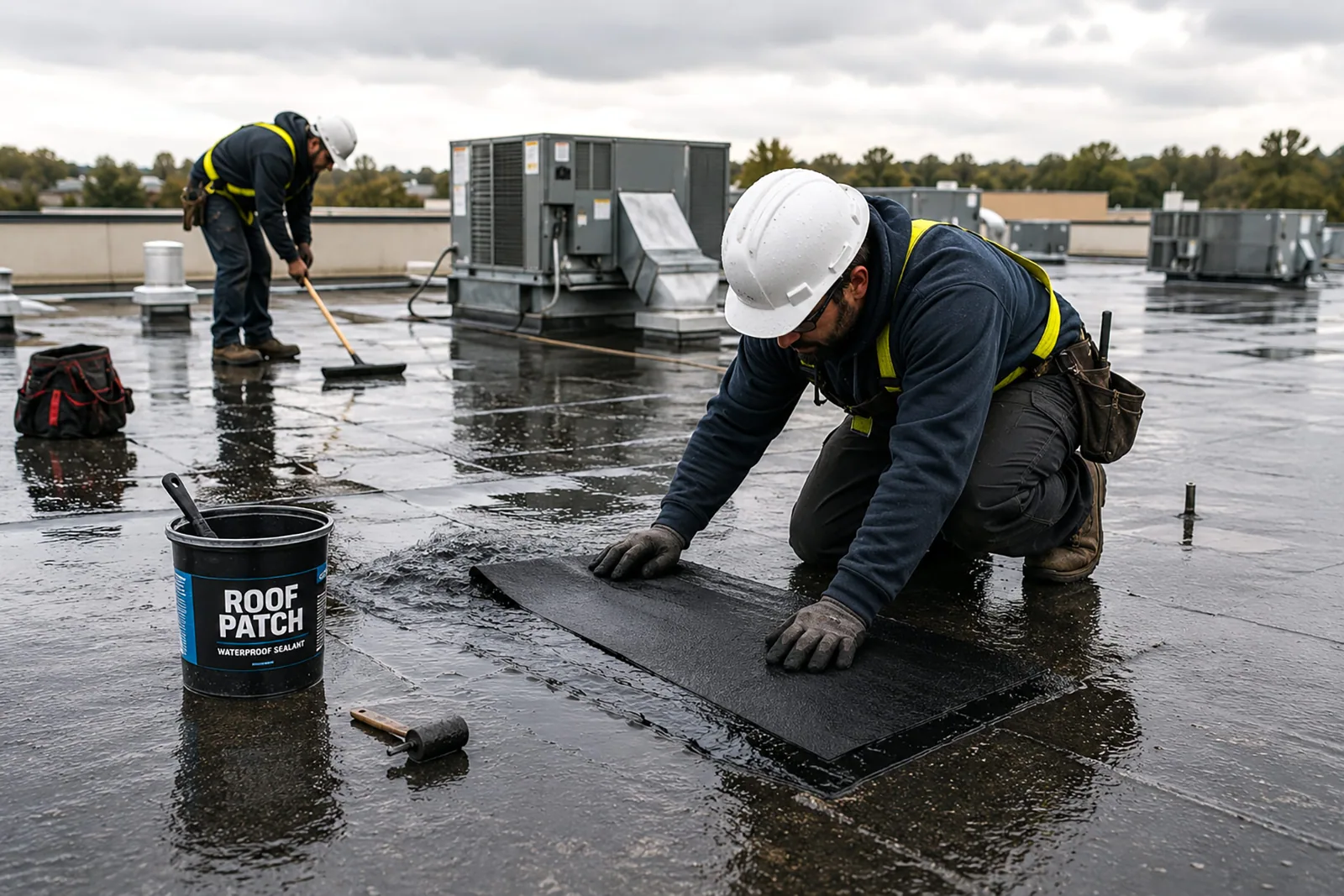
A local repair makes sense when the defect has a clear limit and the surrounding roof can accept a sound tie-in. A puncture, open seam, or damaged flashing may be repairable after checking the adjacent membrane and insulation. If moisture has spread below the surface, a small patch can hide the symptom while leaving wet material in place. We define what is included, excluded, and what evidence could justify expanding the work.
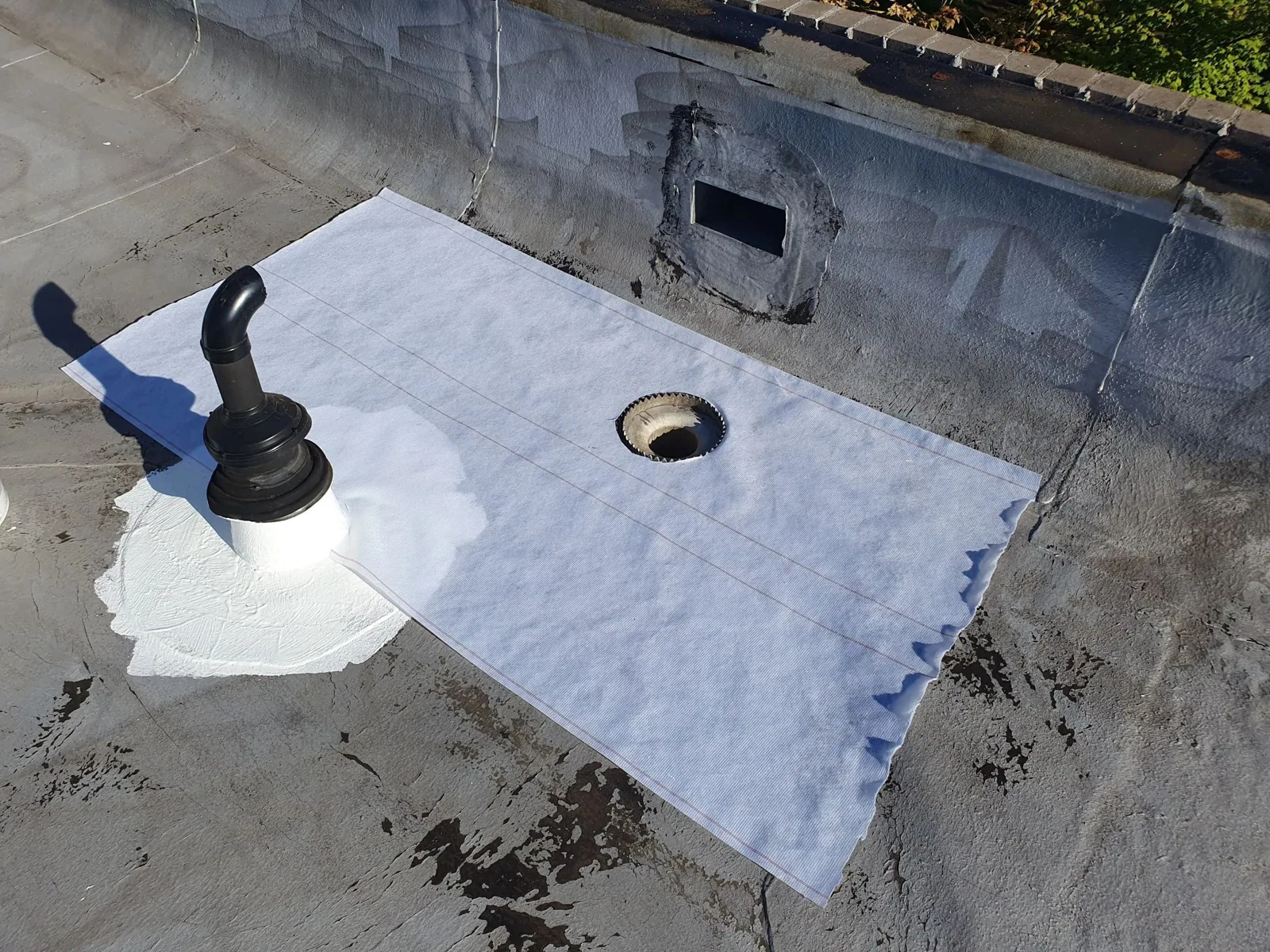
Material compatibility guides the detail: primer, reinforcement, termination, or substrate replacement may be needed. A brittle or repeatedly repaired roof may call for comparing repair with a larger project. The replacement scope should identify removal limits, deck contingencies, dry-in, and the connection to roof areas that remain. Owners can review the boundary before work starts.
Treat drainage as part of the roof assembly
We inspect drains, strainers, scuppers, leaders, and the membrane around them during a leak review. A blocked outlet can slow runoff; a failed flange or open seam can admit water even after the drain is clear. We note ponding, sediment lines, loose flashing, or visible obstruction without assuming one condition explains every leak. Roof slope and outlet arrangement guide the next step.
Before opening or modifying an outlet, we ask whether a leader crosses occupied space and how water should be controlled. A slow drain may be maintenance, or evidence of a low area that needs more evaluation. The scope identifies the outlet included and whether downstream piping was examined. Our drain and scupper review separates those observations from unrelated membrane repair.
Match restoration to the existing system
Coating is appropriate only when the roof is a suitable substrate and preparation is complete. We inspect adhesion, seams, penetrations, ponding, wet insulation, and prior coatings before proposing restoration. A sample area may be needed to check compatibility. The plan should identify preparation, reinforcement, coverage, and where coating stops. If the substrate is saturated or unstable, coating over it can preserve the problem.
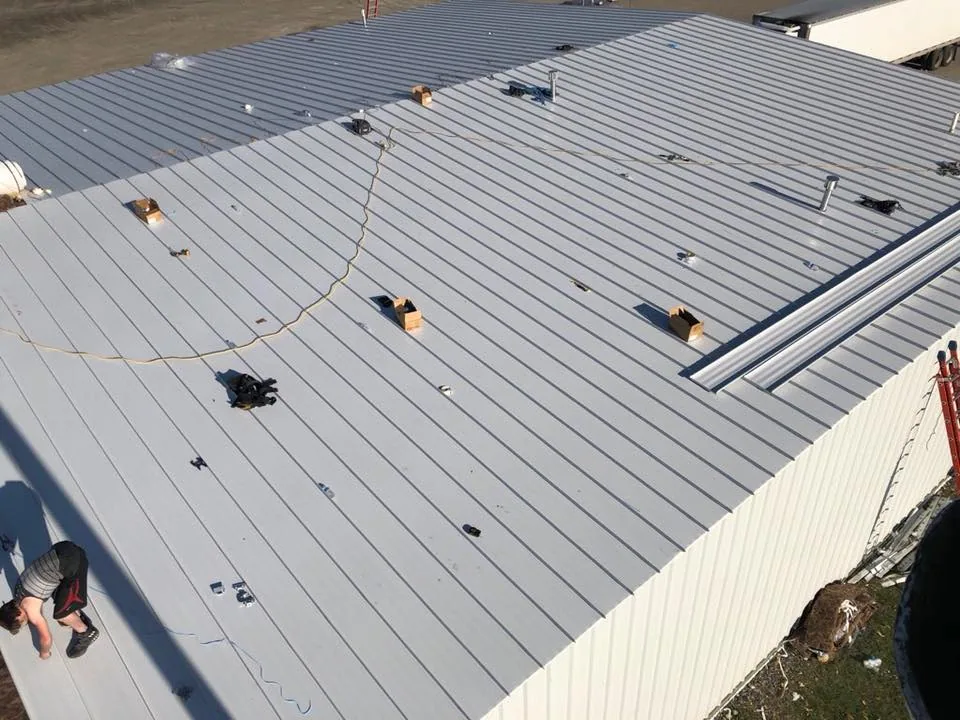
A recover has different prerequisites: the deck and existing system must support added layers, transitions need sound tie-ins, and drainage must remain functional. Replacement may suit widespread deterioration or assemblies that cannot be reliably joined. We compare disruption, access, disposal, and maintenance rather than treating any system as universal. Coating restoration is a defined assembly and scope, not a cosmetic finish.
Set a workable schedule for occupied properties
Scheduling starts with the property's calendar. We ask about deliveries, shifts, occupied rooms, and notice needed before overhead work. Retail, healthcare, schools, and manufacturing may need different access windows. Before arrival, the owner and crew should agree on staging, material movement, debris removal, and any alternate entrance. Name the person authorized to approve access or a scope change.
Weather can alter the daily sequence. We limit open areas to what can be completed or protected before conditions change, and choose the temporary dry-in method before removal. The project lead records stop points, secures transitions, and reports conditions that change the approved work. A phased reroofing plan helps occupants understand the day's limits and contact path.
Prepare the visit and document the scope
A useful proposal describes work in observable terms: roof section, area, layers removed, repair details, and material tie-in. If deck replacement is an allowance, state its unit basis and approval process. Apply the same clarity to insulation, edge metal, curbs, and penetrations. Photos, a marked roof sketch, and written assumptions help an owner compare bids without treating unlike scopes as equal.
For maintenance, separate immediate repairs from items to monitor. Record drains, seams, flashing movement, and debris instead of offering a generic pass/fail. Flag any warranty or manufacturer requirement for confirmation before installation. The building record then supports budgeting and later inspections. A roof condition report links each observation to a location and recommended next action.
Share the property address, roof-access instructions, leak location, and interior photos before the visit. Note whether water is active, whether equipment is affected, and which rooms cannot be interrupted. Previous repair dates and materials can prevent repeated investigation. We still verify the assembly in person before setting a permanent repair limit and will distinguish confirmed facts from assumptions.
After inspection, we explain what was confirmed, what remains uncertain, and which options fit the roof. Any temporary measure comes with its purpose and limits. A longer-term proposal identifies phases, tie-ins, and contingencies. Iredell County's FY2025-26 tax table lists the City of Statesville tax base at about $5.015 billion; it is local civic context, not a claim about a specific building. Owners can also compare commercial roofing in Kannapolis and commercial roofing in Davidson when reviewing how access changes by property.
Commercial Roofing Questions
Does I-77 and I-40 access determine how a roof project is scheduled?
No. The highway connection provides regional context, but we confirm the property entrance, staging limits, delivery rules, and work hours with the building representative.
Can a roof leak be repaired from the inside?
Interior collection may limit damage temporarily, but a permanent repair requires locating and correcting the entry point at the roof assembly. We inspect above the affected room before defining that work.
When should an owner compare repair with replacement?
Compare them when damage is widespread, repeated repairs no longer have a sound tie-in, or wet materials extend beyond a local area. The inspection and removal limits should support the comparison.
Can a coating correct ponding water?
A coating does not change the roof slope. We check drainage, substrate condition, compatibility, and ponding before deciding whether restoration is appropriate.
What should we send before a Statesville roof inspection?
Share the property address, roof access method, reported leak locations, operating hours, available repair records, and any equipment or occupant restrictions.
Arrange a Statesville roof assessment
Send the affected area, roof access details, and the operation below it. We will inspect the assembly, document what is confirmed, and outline practical next steps.