Home / Property Types We Roof / Commercial Military Hangar Roofing
Commercial Military Hangar Roofing in Concord, NC
Assess military hangar roofing around Concord through authorized facility coordination. We examine roof connections and plan work around maintenance space.
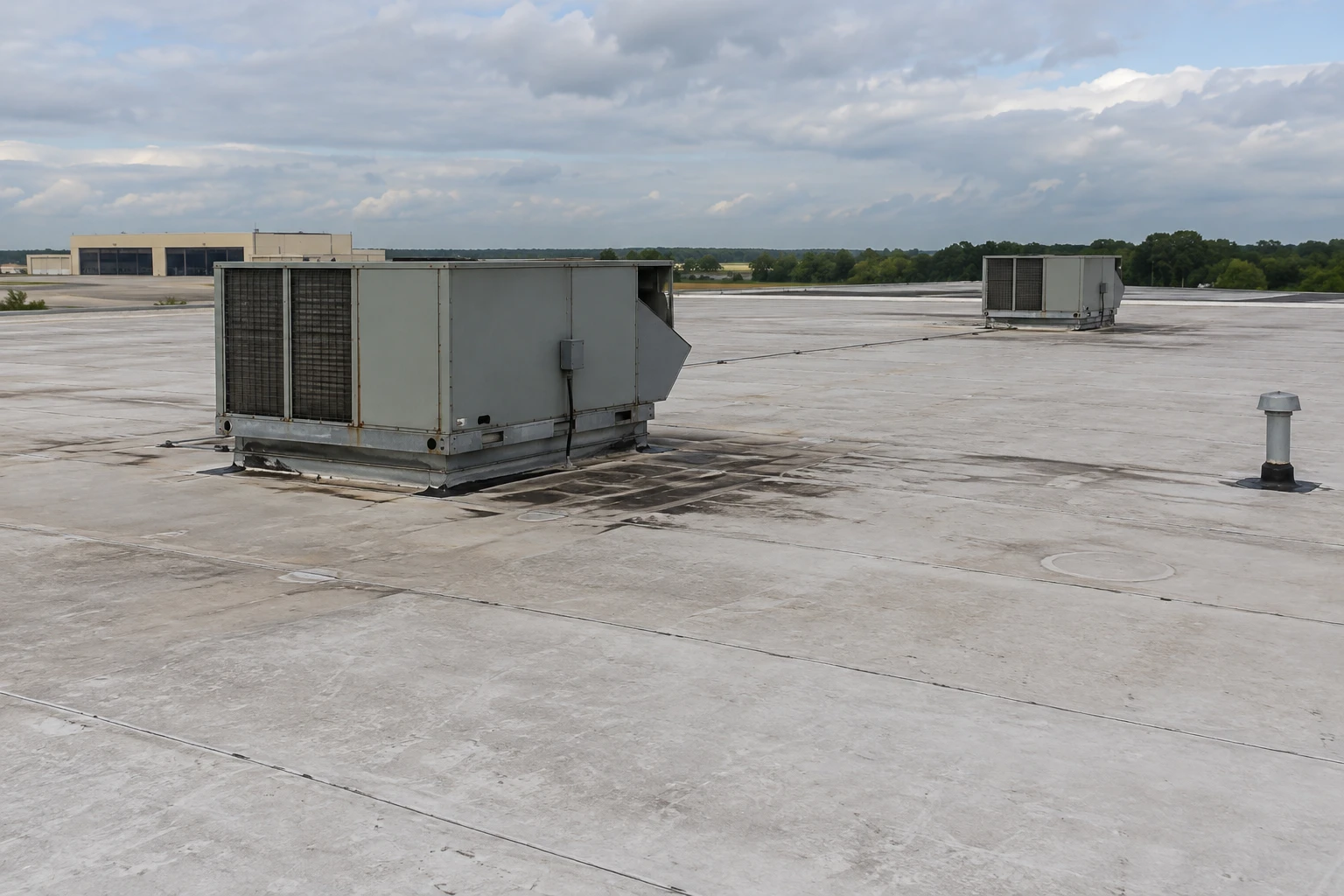
A maintenance position beneath recurring roof water needs a usable work arrangement. Its corrective scope must reach the actual entry connection. We assess military hangar and aircraft maintenance facility roofing around Concord, NC. The responsible aviation participant identifies affected space and authorized access. We inspect the installed roof system and relevant details. Interior water can originate beyond the position where it appears. The proposal should explain its physical findings and further examination. Aircraft and maintenance arrangements belong with the operator informed by that roofing task.
The 145th Airlift Wing operates at Charlotte Douglas International Airport. Its aircraft transition to the C-17 took place in 2018. Salisbury also hosted Army National Guard helicopter-rescue training in March 2022. Those regional activities provide aviation context for the Concord area. A military aviation roof condition assessment establishes the particular building's roof needs. The participant should identify relevant alterations and symptom timing. We define repair or investigation from accessible condition, with the facility coordination understood.
Establish the protected maintenance-space boundary
The aviation operator should identify aircraft, tools and equipment beneath the proposed roof task. We explain any exposure, handling and reconstruction involved. Its responsible participant establishes the required operating arrangement. Some examination can need interior observation beyond the reported position. The access plan should make that boundary clear before the visit. Temporary protection needs to suit the specific opening. It should not be mistaken for completed permanent work. The proposed sequence must provide enough access for the material and detail task selected.
A roof defect can affect more than the floor area directly below it. Water may move through concealed layers before reaching the maintenance position. We assess useful connections and the neighboring assembly. Military maintenance building water-entry investigation should identify the roof condition or a clear further examination task. Equipment and piping can introduce another water question. Their participants may need separate assessment. The roof scope should distinguish those responsibilities. The operator can then coordinate the working-space arrangement with the supported corrective boundary understood.
Investigate the installed covering and its attachments
A panel system needs examination of seams, fasteners and terminations where accessible. A membrane assembly presents other lap and detail questions. We identify the installed covering before choosing a repair method. Supporting condition and movement can affect the permanent connection. An added finish over a visible joint may leave an attachment defect unresolved. The proposal should explain what reconstruction addresses. Previous treatments also need consideration for compatible preparation. The retained boundary must receive the selected material appropriately.
Aircraft hangar roof evaluation includes examining panel connections where a metal covering is installed. At the military building, that physical examination needs the operator's authorized arrangement. We inspect the surrounding material and explain useful selected exposure. Wet insulation or damaged backing may enlarge necessary removal. The resulting opening needs appropriate reconstruction afterward. Standing seam detail work should preserve suitable panel relationships and movement allowance.
Coordinate the clearance needed at equipment details
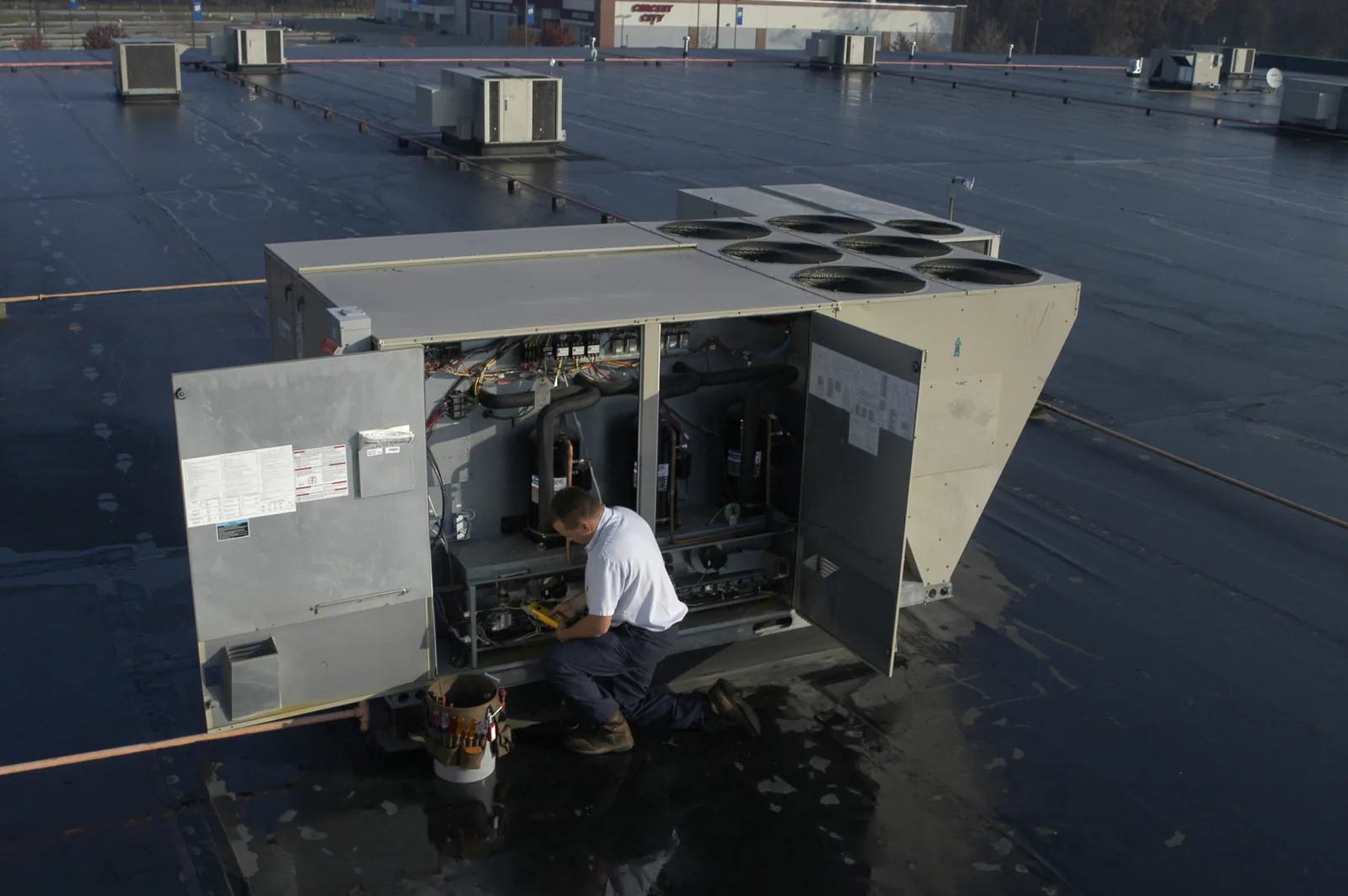
Service components can obstruct the flashing needing correction. We assess available working space and the adjoining roof material. The responsible trade may need to lift or disconnect a component. Its participant establishes the service requirements with the facility. A surface finish beside installed equipment reaches a different boundary from reconstructing underneath. We explain that distinction before the sequence is selected. The permanent task should reach the defect found. Suitable neighboring material is necessary around the finished connection.
Changed equipment can also introduce another roof opening or support position. Its installation needs compatible flashing and suitable bearing at the covering. Military aviation equipment roof coordination can describe the roofing interface involved. The operator should understand the service dependency before an alteration proceeds. New pipe arrangements may need movement accommodation. Equipment water can require separate component assessment. Later activity should preserve the renewed details. The completed roofing boundary should remain clear even when several participating tasks occur during the same service window.
Check collection points and perimeter connections
A restricted outlet can expose adjoining roof details to water backup. A loose collector joint can spill along the building approach. We inspect the accessible route associated with the report. Debris clearance and detail reconstruction address separate findings. Persistent low areas may require changes beneath the surface covering. Piping review can belong to another professional where needed. The proposal should distinguish those tasks. A patch near the indoor symptom cannot establish that the discharge route beyond it is suitable.
During September 2024 Helene, a 57 mph gust was measured at Charlotte Douglas. We distinguish that airport measurement from conditions found at the facility roof. Current edge and roof condition govern the correction. Aviation building perimeter assessment can examine accessible attachment and collector details. Report safely observed changes and affected approaches. The operator establishes access around the building for examination. The completed route should remain maintainable. Later equipment work should not leave material where it obstructs roof collection or discharge.
Review the daily task with authorized facility access
Deliveries, lifting and removed material need positions agreed with the facility. The aviation participant establishes its ground movement and working-space requirements. We explain the intended roofing method and handling boundary. Kannapolis has interstate connections within the regional road network. The property's own approach still needs review for the proposed task. For work around Salisbury, we establish useful entrance and roof access during coordination. Required building exits need an appropriate arrangement while reconstruction proceeds.
Weather and concealed deterioration can change the area suitable for removal. The daily boundary must remain protectable and achievable. The facility should understand those dependencies before the work window is fixed. If a project also includes armory roofing, each building needs its own access and corrective boundary. A shared appointment should not obscure a termination requiring additional clearance. We explain the participating roof tasks so the responsible facility can coordinate them. Temporary measures and permanent details should remain distinguishable as the work advances.
Define renewal and continuing service needs
Wider assembly deterioration may favor removal beyond a localized defect. Moisture, attachment and backing influence that decision. Added insulation can alter wall, outlet or equipment relationships. The full scope should identify those resulting tasks alongside covering selection. Permit review should address the intended insulation profile and reconstructed interfaces. Confirm the applicable North Carolina requirements with the authority and facility participants before installation, particularly during the state's move toward its 2024 codes.
Completed information should identify reconstructed areas and any continuing equipment dependency. Future supports or openings need suitable roof detail work. The operator should preserve access necessary for outlet care. A fresh indoor report deserves examination of its specific location and timing. The roof correction remains separate from interior restoration or service work handled by other participants. The installed connections need protection when equipment and maintenance arrangements change after construction is completed.
Commercial Roofing Questions
What does the aviation operator establish before military hangar roof work?
Identify the aircraft, maintenance equipment and movement requirements affected by the proposed task. We explain examination, exposure and handling needs. The responsible participant establishes authorized access and the operating arrangement. Equipment clearance can require another service participant. The agreed boundary should provide enough practical access for the selected roofing connection and appropriate protection below it.
Does the regional aircraft mission determine the building's roof repair?
Inspect the actual covering and accessible details before choosing reconstruction. Aircraft activity does not establish membrane, panel or supporting condition. We assess the material needed to receive the permanent connection. Selected exposure may be useful for concealed layers. The corrective boundary should follow those assembly findings while the operator establishes the affected working-space arrangement.
How should a roof task address equipment hiding a flashing termination?
Determine the connection needing reconstruction and available clearance first. We explain any preparation and neighboring material requirements. The responsible equipment participant may need to lift or disconnect its component. The facility coordinates that dependency within the authorized sequence. A finish beside the obstruction reaches a different boundary from repairing the concealed interface completely.
What should remain clear when several military buildings share a work window?
Each building needs a defined corrective boundary and access arrangement. We identify the roof tasks, handling positions and participating service requirements. One available appointment may not provide clearance for every detail. Weather or concealed findings can also change the achievable area. The facility should coordinate those dependencies with temporary protection distinguished from completed permanent reconstruction.
Review the military maintenance roof task
Request a Concord-area military hangar roof assessment through its aviation participant. Identify the affected maintenance position and authorized access for examination.