Home / Service Areas / Salisbury
Commercial Roofing in Salisbury, NC
Roof repair and replacement in Salisbury, NC start with the affected space, the roof materials in place, and a work sequence that protects operations.
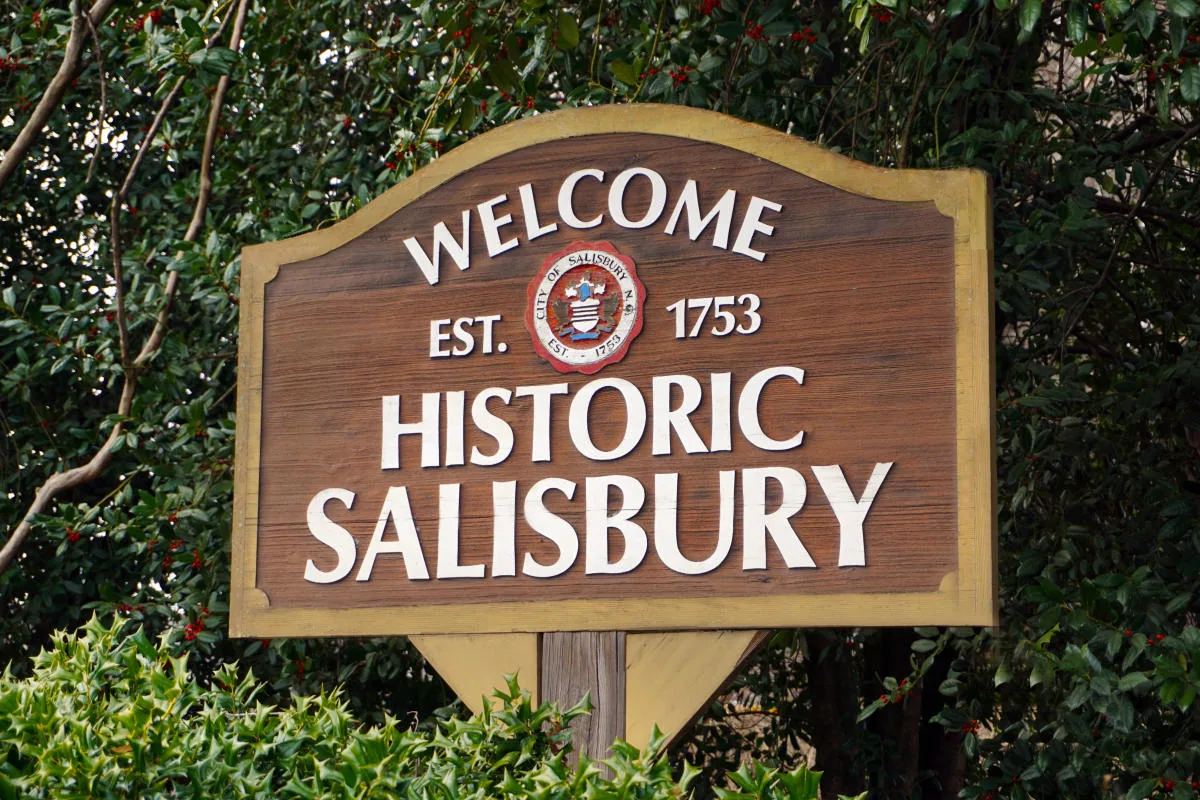
A water stain above a medical-office room can interrupt appointments before the roof opening is clear. In Salisbury, NC, we protect the affected space, inspect the roof detail above it, and set a repair limit from the material and moisture we find. Salisbury has nineteenth- and early twentieth-century commercial buildings, as well as industrial, commercial, and medical activity along I-85. Those facts describe a varied town, not the condition or age of a particular roof. We assess each assembly before recommending repair, recovery, or replacement.
Downtown Salisbury reaches near Innes Street and Main Street. That context can help an owner locate a building, while roof access and operating hours still need direct coordination. We work on commercial low-slope and metal systems, including inspections, repairs, coatings, maintenance, and replacement. A roof condition inspection starts with the room or operation affected and follows the water path through seams, drains, curbs, and edges. The finding should be useful to the person scheduling the next step.
Connect the symptom to the assembly
Water can travel through a roof assembly before becoming visible inside. We compare the mark with the roof above, inspecting seams, walls, curbs, and drains. An opening may sit away from the stain. Wet insulation can extend the repair. We document confirmed conditions and limit the scope to supported findings.
Innes Street and Main Street help orient Salisbury's downtown, while I-85 connects the town's industrial, commercial, and medical activity. They do not establish a property’s construction. We identify the roof system, note prior repairs, and inspect each connection. For an active leak, we protect the room before opening the roof. A ponding-water correction may be needed when an outlet or low area contributes to the observed path.
Protect operations before opening
We ask which room or work area must remain usable, what needs protection, and who controls access. We confirm the roof route and fragile surfaces. We schedule around medical or office hours when needed. Each building has its own access needs.
Temporary protection must fit the roof condition and weather window. We plan daily closure, water direction, and remaining permanent work. A short-term cover does not settle a failed seam or wet insulation. We record the covered area and follow-up. A roof emergency visit can protect the space while a permanent repair is scheduled, with the affected room and safe access clear to the crew.
Compare repair and replacement
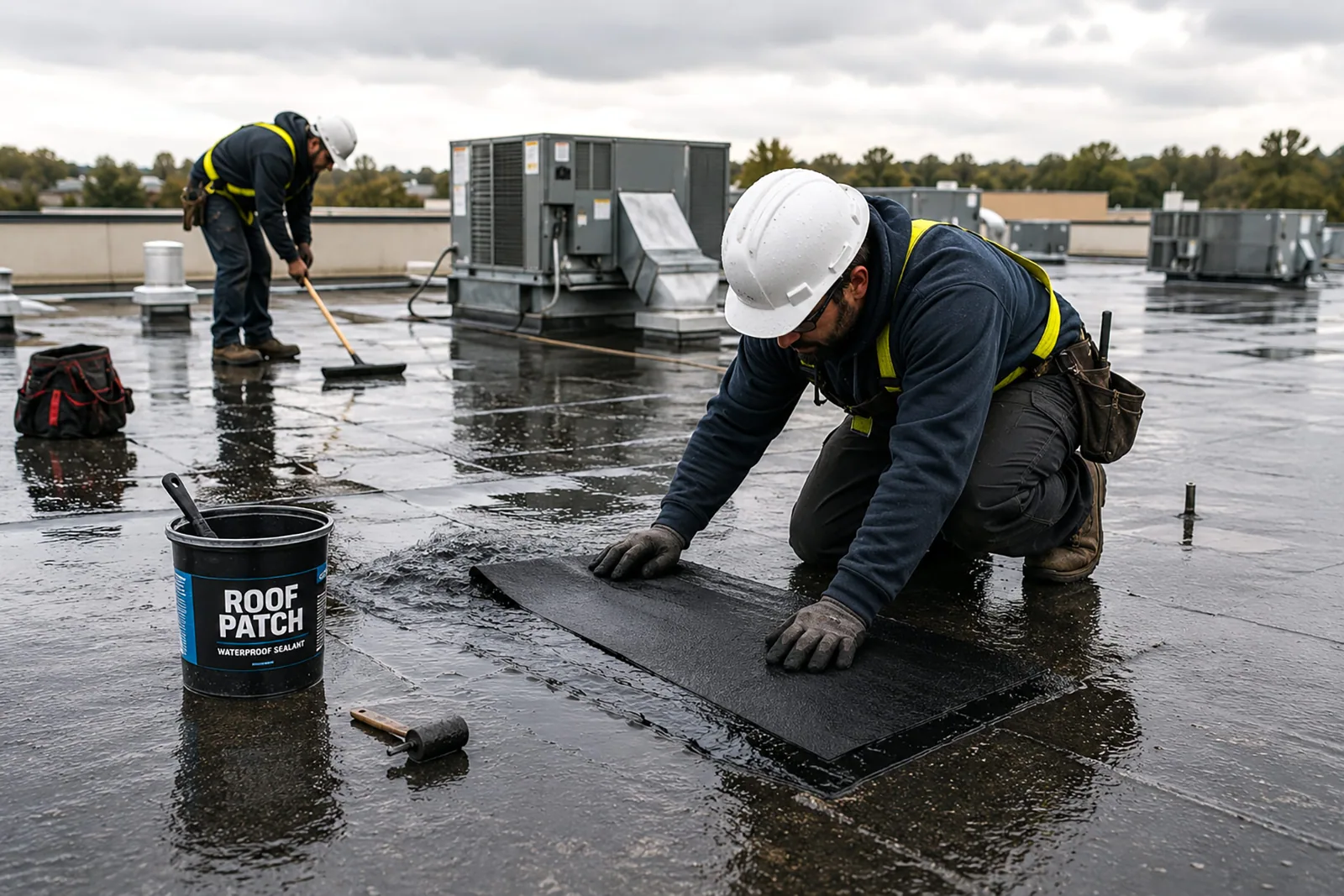
A local repair can fit a released seam or damaged flashing when surrounding membrane and insulation remain sound. We check the adjoining detail and determine whether water reached the layers below. If moisture is broader or repairs overlap, we map the extent before choosing a surface patch. The owner receives a description of the material to remove, the area to keep, and how the new work ties back into the roof. That gives the decision a boundary and a reason.
Replacement becomes a different discussion when the condition extends through several roof areas or the assembly no longer supports isolated correction. A recover may be possible where the existing roof, deck, drainage, and permitting allow it. We lay out those alternatives against access, removal, insulation, edge work, and the time a building remains exposed. An owner can compare a defined repair with a full replacement after seeing the condition record. We do not set a project scope from a building's historical appearance.
Keep outlets and transitions working
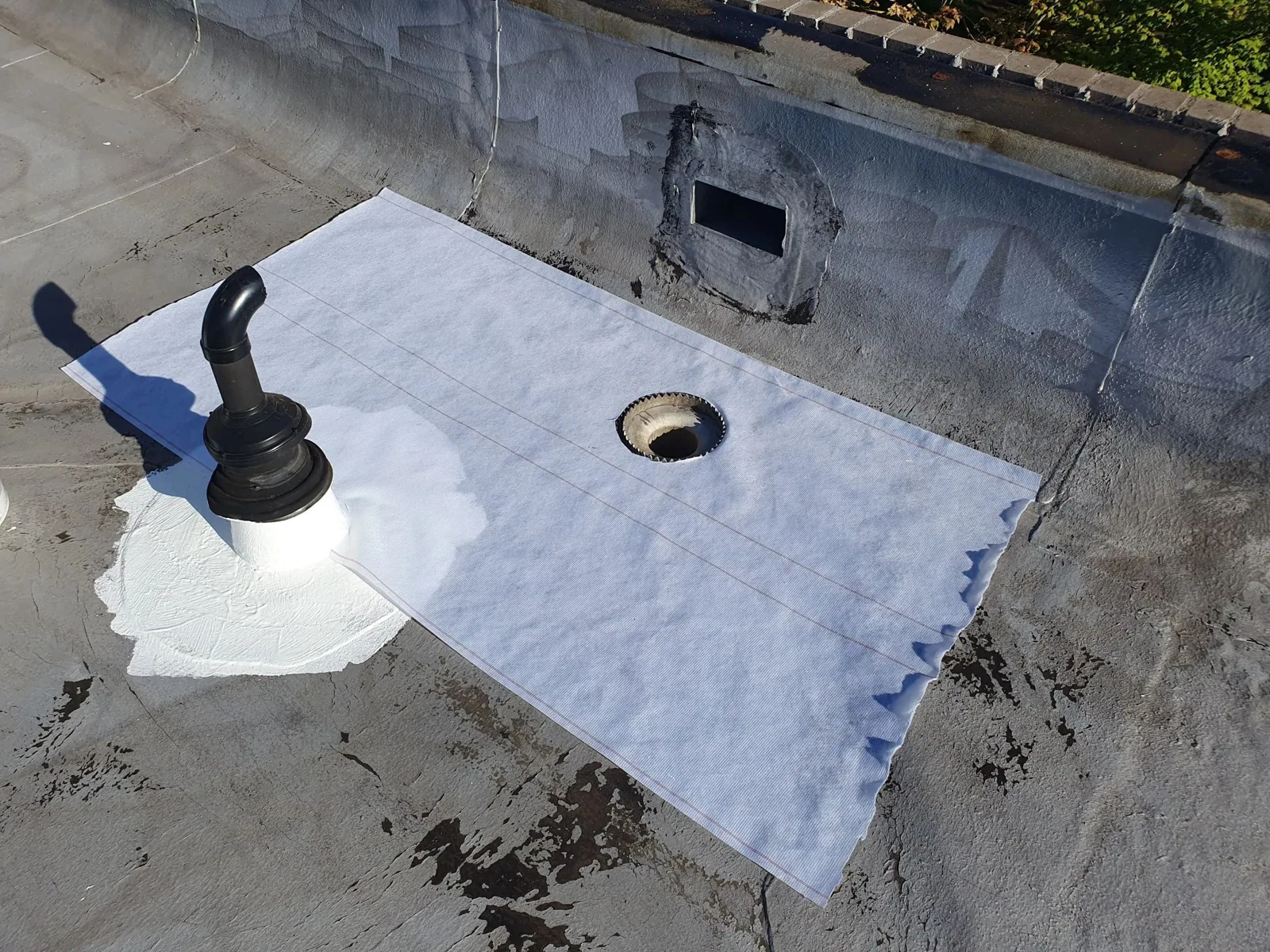
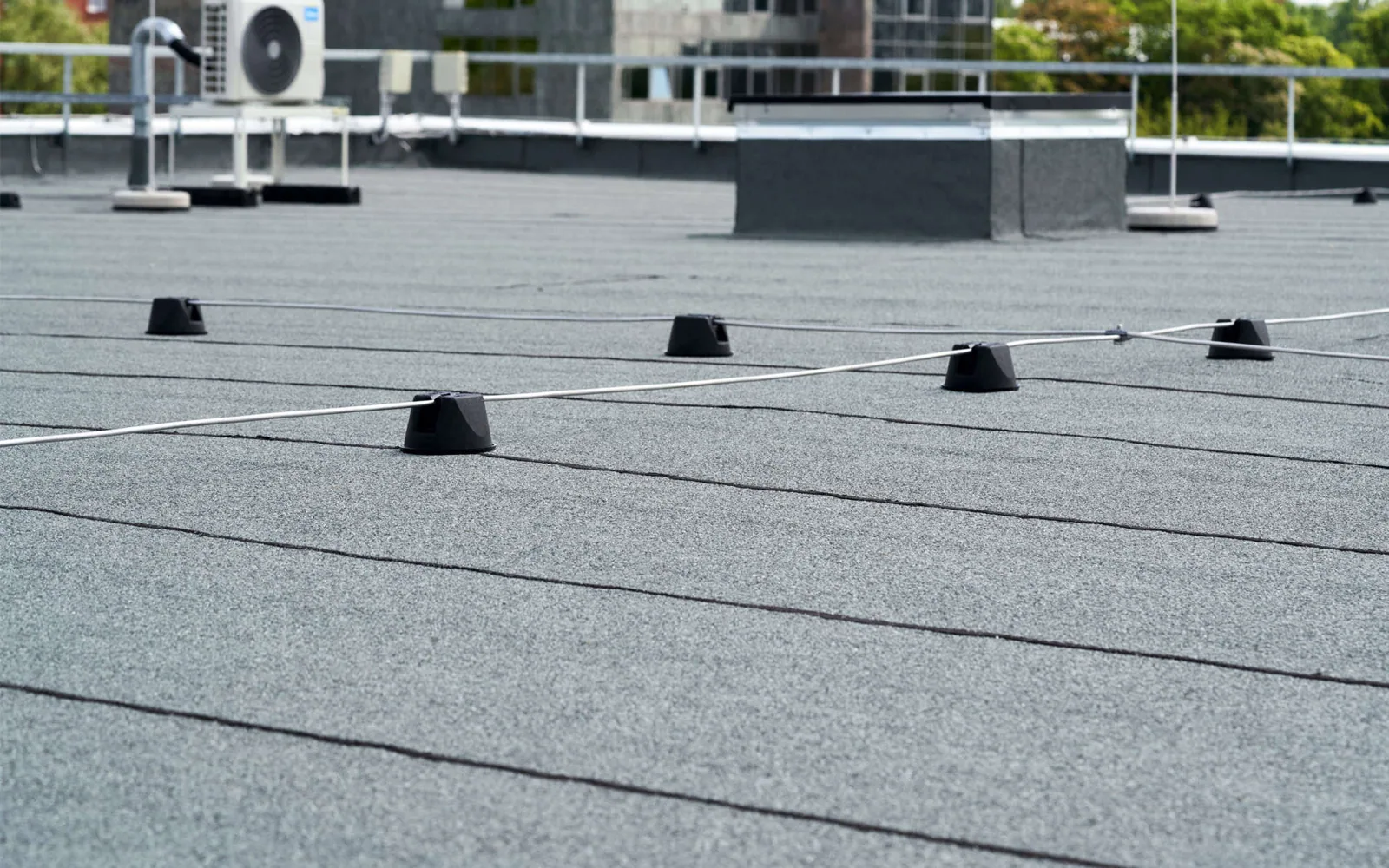
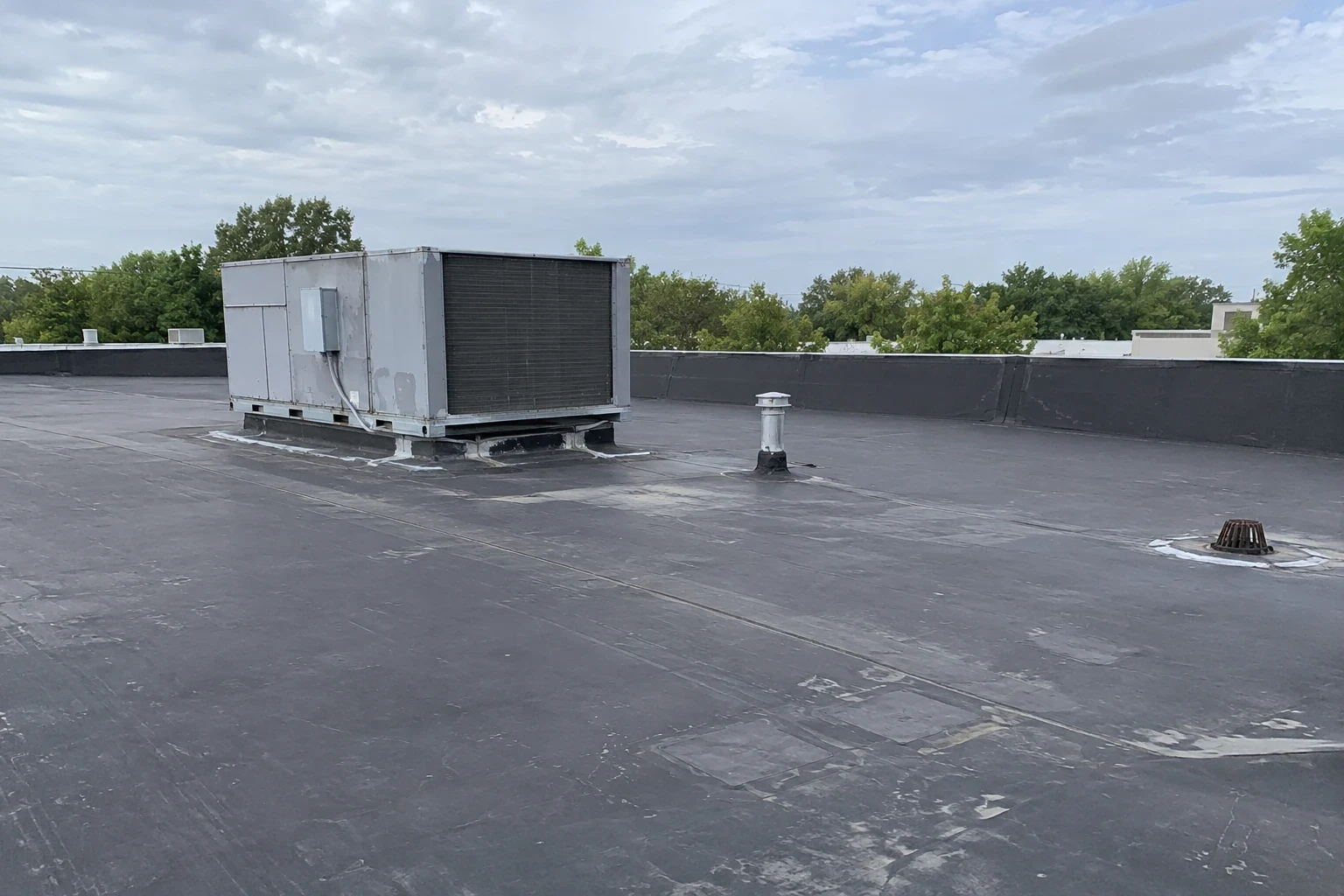
In a town with industrial and medical uses, a roof may have many mechanical penetrations, but the installed details must be checked rather than presumed. We inspect drains, scuppers, curbs, and wall transitions where water can collect or escape. A clogged strainer, loose flashing, and damaged membrane call for different work. The written scope distinguishes clearing, rebuilding a connection, and replacing saturated material, so an owner can see how each task addresses the condition.
Near the roof edge, we check metal joints, termination bars, and the membrane turn-up. At each outlet, we check for standing water and weak tie-ins. When work touches several details, we sequence it to keep completed areas weather-tight. A drain or scupper service can address the outlet, while edge-metal work handles a perimeter connection. The roof walk identifies which one the building needs.
Choose material that can join
Repair material has to match the existing system. TPO, PVC, EPDM, modified bitumen, built-up roofing, metal, and coatings use different preparation and attachment. We verify the surface before selecting a patch, seam treatment, flashing, or fastener. A coating may restore a sound roof surface, but it cannot dry wet insulation or rebuild a failed deck. At an older commercial property, appearance alone does not confirm how many layers are present or when the roof was installed.
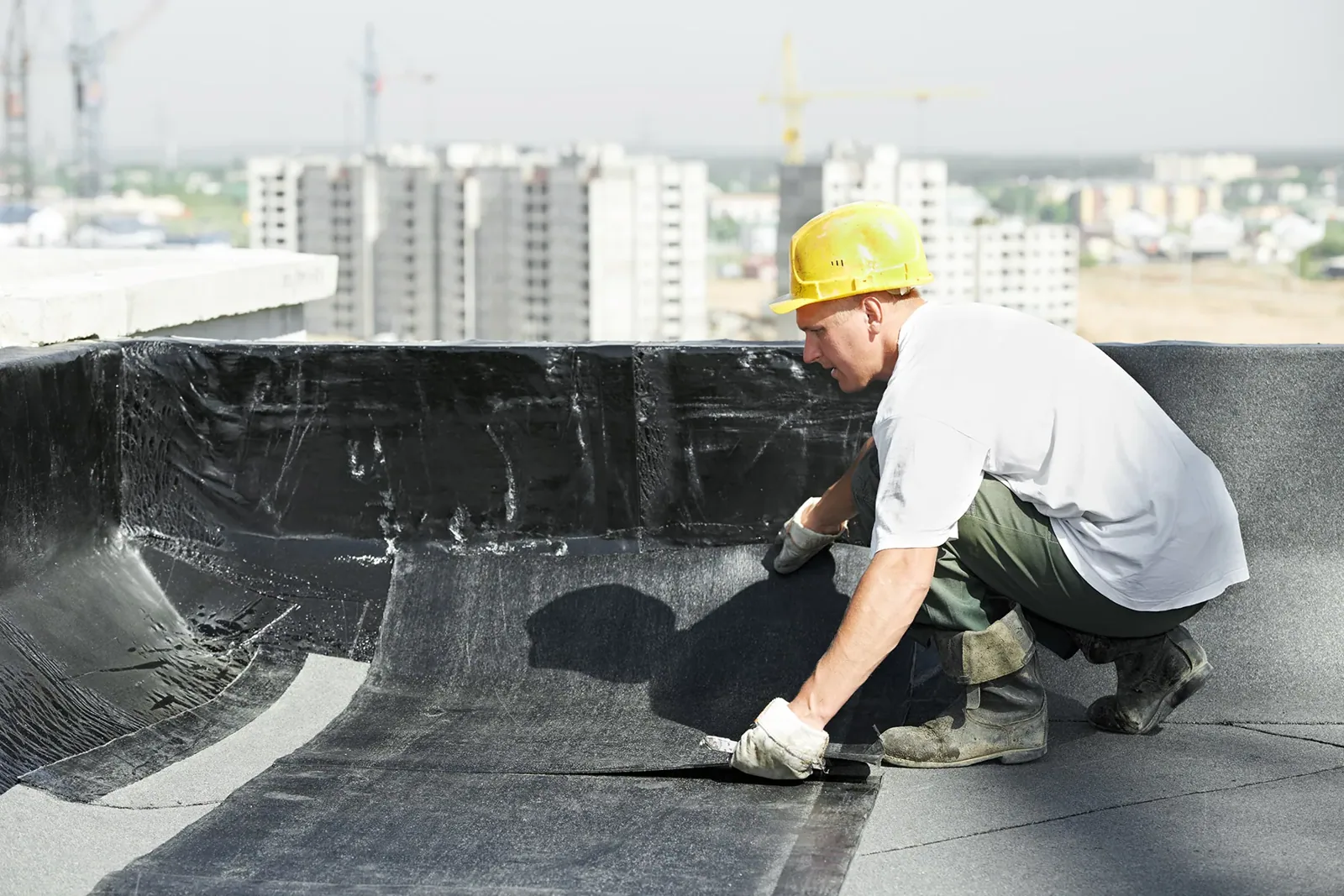
For a membrane assembly, we prepare the tie-in where the material is clean and sound. If a condition survey identifies an area to investigate, we confirm what is below before deciding how much to remove. A modified-bitumen system requires a different correction from an EPDM roof, and both need an edge that closes securely. We explain the proposed material, where it ends, and how it meets existing work before the owner approves the repair.
Set a workable sequence
Roof time depends on access, area, material, weather, and removal. A targeted drain correction may fit a short visit, while replacement near multiple curbs or walls requires staged work and daily closure. We identify temporary cover, interior access, and trade clearances. Innes Street and Main Street are downtown orientation points; the work plan uses the building's own access route and operating schedule.
Permit review can change a recovery or replacement schedule. State guidance identifies the 2018 building, existing-building, and energy codes for use during the move to a later series. A property owner may ask whether an alternate method based on the 2024 edition is available before the transition. We verify the permit path with the local official before ordering material or setting crew dates. That review is separate from the roof diagnosis. A written roof condition report can separate immediate weather protection from work that needs design, approval, or a longer capital window.
Prepare for the roof visit
Share the room where water appeared, the date or weather around it, and whether the mark changed afterward. Let us know how to reach the roof, which equipment needs clearance, and whether occupants need a notice or alternate path. Previous repair records and roof plans can focus the visit. We inspect the surface and explain whether a test opening is needed to verify hidden layers.
If water is entering now, call for emergency service and identify the affected space and safe entry route. We can protect the interior, secure temporary cover, and return for permanent correction as conditions allow. For planned work, the scope should connect each roof area with its material and observed issue. Owners coordinating projects near Salisbury can also consider commercial roofing in Mooresville and commercial roofing in Kannapolis, but each property needs its own roof assessment.
Commercial Roofing Questions
Can the building's historic age show how old its roof is?
No. A building's date does not establish roof age, material, or condition. We inspect the layers and use records where the owner has them.
How do you protect medical or office areas during a leak repair?
We agree on the affected room, interior cover, access route, and timing with the building contact. Temporary protection is secured before permanent work is planned.
When should an owner request a moisture test?
A test is useful when hidden moisture could change what stays or must be removed. We explain the question it answers before testing or opening the assembly.
Can a drain problem be solved with a membrane patch?
Only if the opening is the cause. We inspect the outlet, surrounding roof, and water path, then separate clearing, connection repair, and membrane work.
What details help before a Salisbury inspection?
Provide the affected room, building hours, roof access, repair history, equipment restrictions, and any plan showing the roof area. That makes the first visit more focused.
Request a roof assessment
Describe the affected space, the roof access, and the operating hours we should plan around. We will inspect the assembly and explain a supported repair or project path.