Home / Commercial Roofing Services / Solar-Ready Commercial Roofing
Solar-Ready Commercial Roofing in Concord, NC
Assess the roof before adding solar in Concord. We examine condition, drainage and repair access with structural and electrical coordination.
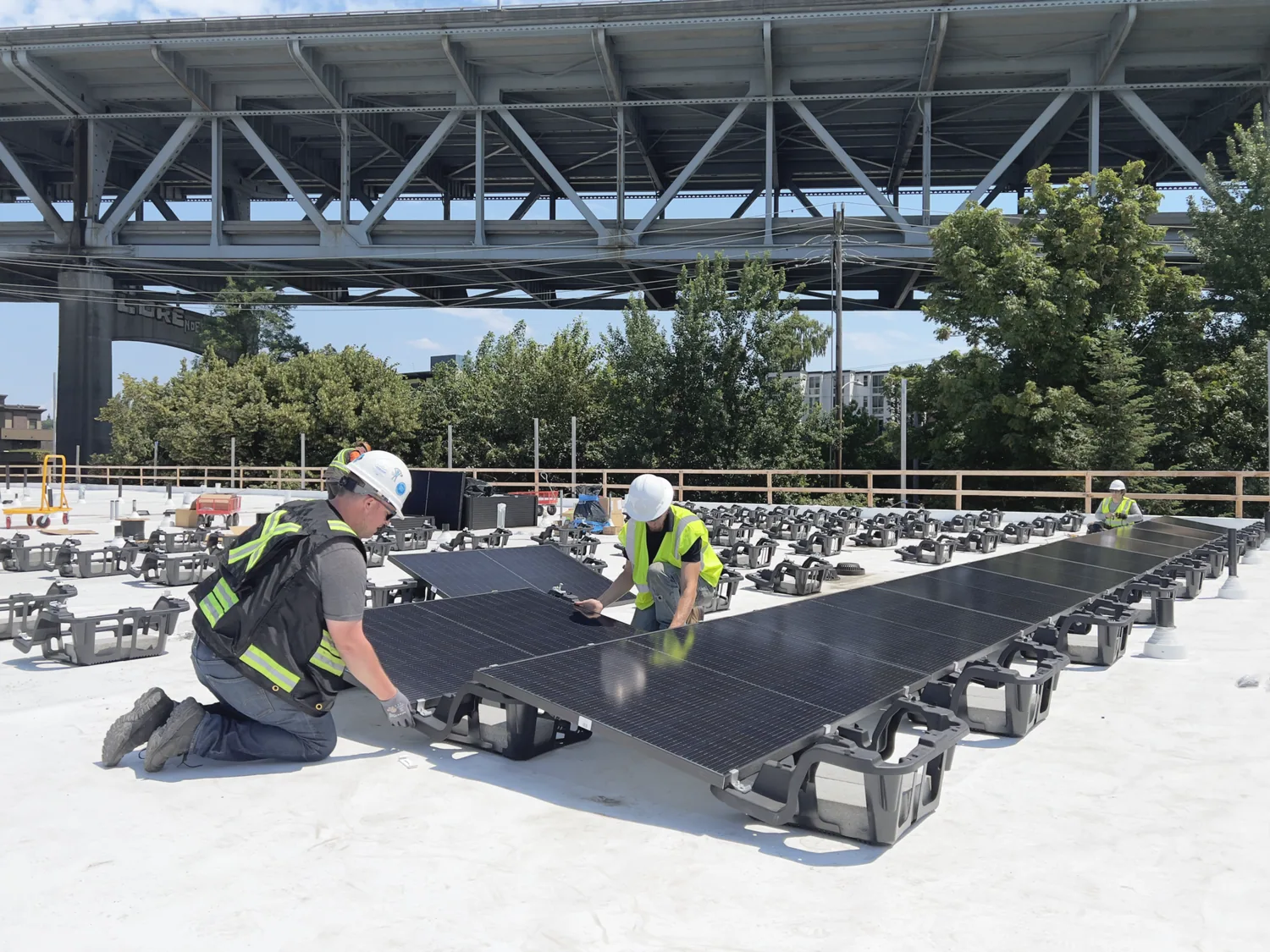
Removing a new solar array for roof repair adds another work sequence. The roof's condition deserves examination before the array occupies its surface. We assess solar-ready roofing for commercial properties in Concord, NC. Readiness involves more than a membrane beneath planned panels. Drainage, flashing access and the remaining roof condition all matter. Structural and electrical questions belong with their responsible professionals. We identify the roofing tasks that should precede the proposed installation.
International Business Park includes several companies beside I-85 Exit 55. Weddington Road Corridor planning also identifies industrial facilities and area connections. Those settings do not establish any property's suitability for solar equipment. We examine the individual building and planned array arrangement. Existing roof records can help identify previous assembly changes. A condition assessment before solar installation provides current physical findings. The roof's location is context, while its actual condition guides the work.
Resolve the existing roof questions first
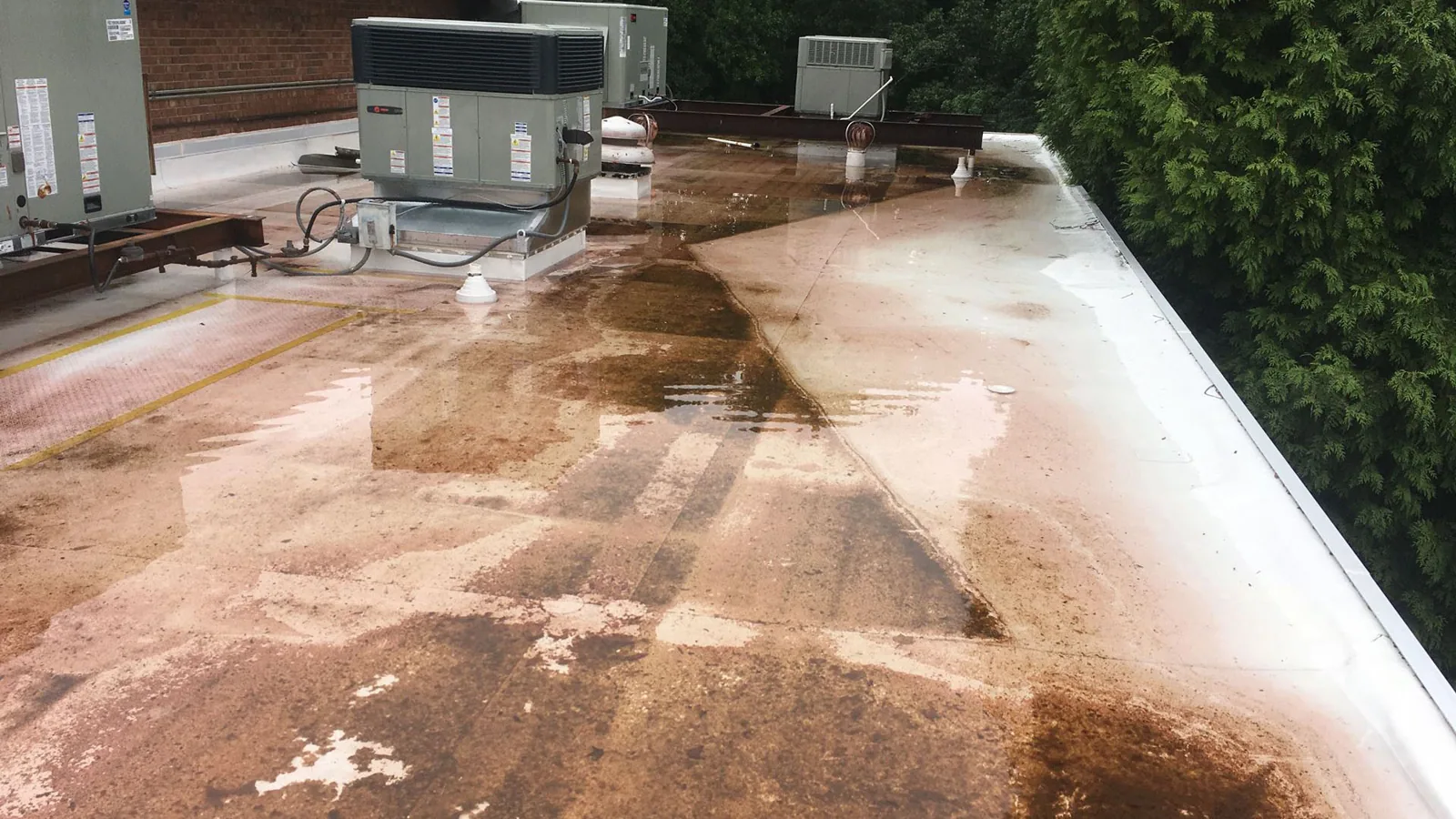
An array can make later access to roof defects more difficult. We inspect accessible seams, penetrations and perimeter connections before installation. Known water entry needs investigation rather than concealment beneath panels. Wet insulation may require selected examination and removal. Widespread deterioration can change whether the existing roof should remain. The owner should understand those findings before scheduling equipment above it. A recently installed covering still needs assessment of its actual condition.
A roof condition report for the proposed work area can identify necessary corrections. The report should distinguish confirmed defects from inaccessible or uncertain conditions. It should also describe the limits of the examination. An unexamined assembly is not established as suitable by default. We explain any further investigation needed for the roof decision. Repair access after array installation should be considered alongside those findings. That makes the assessment useful beyond the initial installation date.
Compare roof work before equipment installation
A roof approaching broader replacement may be unsuitable for a simple preparation task. The owner needs to compare the complete work sequences. Replacement before the array can avoid removing equipment for that planned roof project. That does not establish when every component will need future work. We assess the existing assembly and explain the supported options. Roof replacement planning should include the intended solar interfaces. The comparison needs actual scope rather than an unsupported remaining-life promise.
Some suitable roofs may need only focused repairs before installation. Others need a different covering or revised details. We identify those tasks with the proposed array arrangement in view. The roof and solar contractors should agree on installation dependencies. Equipment delivery should not force unresolved roof work into a shortened window. The owner should know which corrections must be complete first. Any later equipment removal arrangement also deserves discussion. The full sequence matters more than treating the roof as an available platform.
Coordinate the mounting connection
Solar mounting can involve penetrations or other support arrangements. Its design requires appropriate structural assessment for the actual building. The roof membrane does not establish load capacity. We review the specified connection for its roofing implications. Penetrations need compatible flashing and accessible terminations. A nonpenetrating arrangement still needs consideration for contact and protection. We identify the roof requirements without substituting for the support designer's work.
Any proposed mounting detail should account for movement and service access. Crowded connections can prevent suitable flashing preparation. The responsible contractors need to resolve that arrangement before installation. Roof support and curb coordination can address relevant roof interfaces. Electrical routing has separate requirements and responsible participants. We discuss the exposed roof connections involved in that route. The complete proposal should identify who installs and checks each boundary. Unassigned connection work can leave a defect between otherwise separate tasks.
Keep the outlets and runoff routes accessible
Panels and supports should not prevent necessary drain inspection or cleaning. Their arrangement can also affect how debris gathers on the surface. We review the proposed layout against accessible drainage routes. Low areas need assessment before being covered by equipment. A support that obstructs flow may require a changed position or detail. The correction should provide a usable path to the outlet. Moving a problem beneath another row of equipment leaves it unresolved.
Warm-season thunderstorms in Cabarrus County make usable drainage an ongoing concern. Drainage access therefore remains a practical concern after installation. Investigation of persistent roof water may identify work needed before the array proceeds. Downstream restrictions can require separate plumbing attention. We distinguish those conditions from the roof surface's geometry. The solar layout should preserve access to completed drainage details. The operator needs to know how that access will be maintained. An outlet hidden behind equipment can be difficult to care for later.
Provide a workable route for later repairs
The roof will still need inspection after solar equipment is installed. Its service route should reach flashings, outlets and other vulnerable details. We discuss access with the solar installer and building operator. Electrical safety and equipment isolation need their authorized arrangements. Roof staff should not move or disconnect panels informally. The layout and service plan need to acknowledge that boundary. Necessary roof repairs may require qualified equipment assistance.
For a property in the International Business Park area, the actual roof access governs that arrangement. A roof hatch, outside access or crowded equipment route can affect repair staging. We examine those conditions at the building involved. Required clearances should follow the applicable design and safety requirements. Protection for regular equipment traffic also needs roof-system compatibility. We explain the vulnerable connections along the intended route. The owner should understand where future access depends on another contractor. That dependency belongs in the operating plan.
Keep roof and array information connected
Existing roof documents can contain requirements for later alterations. We review available information before changing the assembly. A roof warranty review before mounting work may identify notification or approval needs. The responsible manufacturer or warranty party should address those conditions. We do not assume coverage remains unchanged after equipment installation. The owner should retain the relevant roof and array records together. Those records help identify the intended connection and responsible party later.
Completion information should describe the roof corrections and mounting interfaces actually installed. It should also distinguish unresolved questions outside the roofing scope. A new leak after installation needs investigation, not an automatic attribution to one contractor. Interior timing and location can help direct the examination. The appropriate participants may need to review both roof and equipment connections. We explain the roofing findings as they are established. Future array changes should preserve or reconstruct the affected roof detail. Readiness continues through coordinated alterations, not just the first installation.
Commercial Roofing Questions
Does solar-ready roofing mean the building can carry the array?
Structural capacity requires assessment by the appropriate design professional. Our roofing examination identifies assembly condition and connection needs. It does not establish the support design or electrical suitability. Those separate responsibilities need coordination before installation. The owner should receive the necessary information from each participant rather than treat a sound membrane as proof of complete solar readiness.
Should an older roof be replaced before panels are installed?
The roof's actual condition and proposed work sequence need comparison. Broader deterioration may make replacement useful before equipment restricts access. A suitable retained assembly may instead need focused repairs. We explain the supported roofing options without assigning an unverified remaining life. The comparison should include any equipment removal needed for future planned roof work.
Are nonpenetrating solar supports free of roofing concerns?
Contact, movement, drainage and service access still need review. The selected support arrangement must suit the roof and approved structural design. Protection beneath it should be compatible with the covering. We examine those roof interfaces with the responsible installer. Avoiding a penetration does not remove the need to consider how the equipment affects the assembly.
Who should attend when a roof leak appears beneath an array?
The roofing and solar participants may both need access to the affected area. Equipment isolation or movement belongs with qualified personnel. We investigate the roof connections while coordinating that access. A leak's interior location does not establish which installation caused it. The examination should identify supported findings before the permanent repair and responsible tasks are defined.
Assess the roof before the array
Arrange a Concord solar-readiness assessment. Share the proposed layout, known roof symptoms and installer contact so we can identify roofing work and access dependencies.