Home / Property Types We Roof / Commercial Shopping Center Roofing
Commercial Shopping Center Roofing in Concord, NC
Assess shopping center roofing in Concord with tenant units, shared roof areas and visitor access in view. We define repairs and coordinate the affected spaces.
One closed storefront can change how customers reach the neighboring business. The roof repair needs a boundary connected with both the defect and the shared property. We assess shopping center roofing in Concord, NC. A continuous roof can cover separately occupied units below it. Their room boundaries do not necessarily divide the roofing assembly. We examine the relevant connection before defining the correction. The operator should identify tenant access and service arrangements affected by that task.
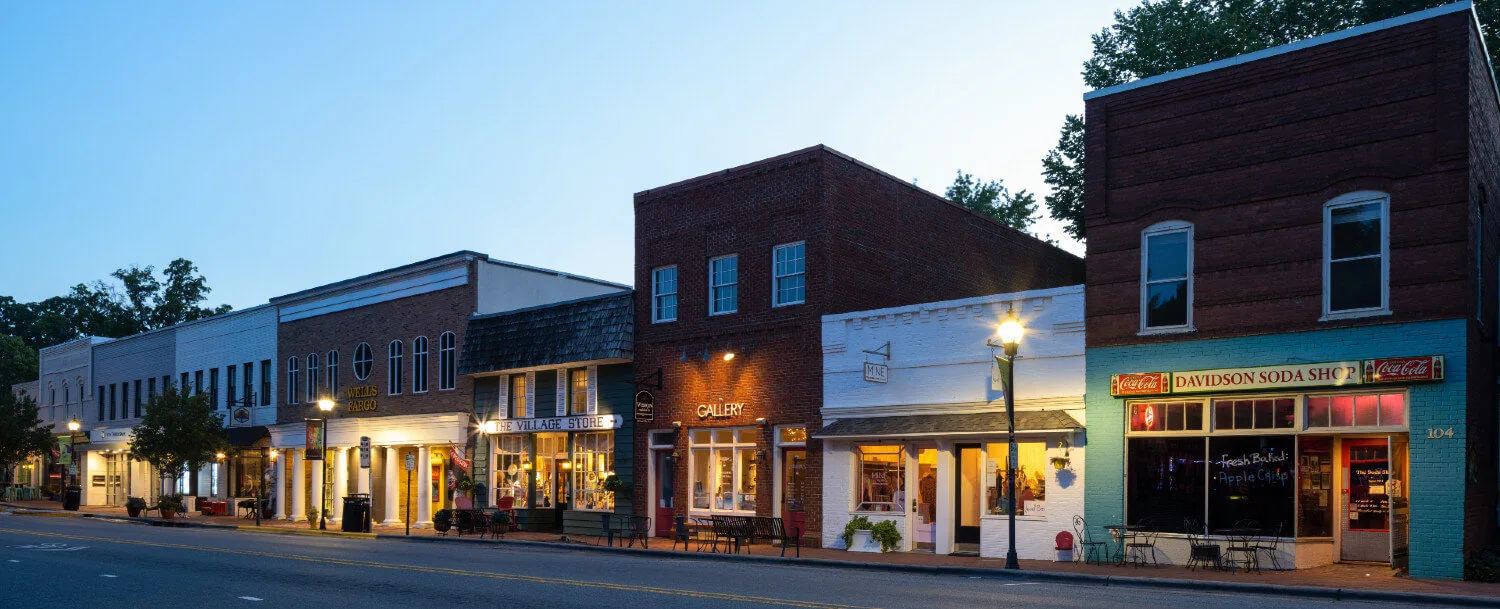
The Concord Entertainment Corridor includes retail, restaurants and hotels. Downtown Concord has commercial redevelopment and physical improvement planning. Those commercial settings make tenant and visitor access useful roofing concerns. We establish the actual property layout and occupied units before the visit. A shopping center leak investigation follows the reported symptom into the connected assembly. Its findings guide the repair scope. The property contact then coordinates the actual operating arrangements below the proposed work.
Connect the tenant layout with the roof layout
A water symptom in one unit may involve roofing beyond that unit's apparent boundary. Roof slope, equipment and wall transitions shape the water route. We discuss the affected room and relevant neighboring access with the operator. The property contact should establish who can authorize examination and work. Existing roof information can help identify previous alterations. The physical condition remains necessary when that information is incomplete. The repair should not stop at an assumed lease line if the failed connection extends beyond it.
Several tenants may use equipment on the same roof area. We identify which unit serves the connection needing attention. The responsible service participant should confirm equipment access requirements. A roof hatch inside another unit can create a separate coordination task. We explain those dependencies before attendance or material handling. The owner should know which spaces need access and why. A shared roof needs a specific work arrangement, not a general notice to every tenant. The actual task determines who is affected.
Resolve the defect before defining interior work
Water entering a ceiling can move through the roof assembly first. The visible mark helps locate the symptom but does not establish the entry point. We assess seams, penetrations and perimeter details related to that area. A blocked outlet may present another water route. The permanent correction needs a supported physical finding. Applying material around the nearest feature can leave the actual defect unresolved. We identify any further investigation needed where the condition remains concealed.
Wet insulation or damaged backing can require removal beneath the roofing repair. Suitable retained material is needed for the new connection. We explain that boundary and the preparation included. A broader retail property roof examination can identify related deterioration. Interior ceiling or finish restoration may require another participant. The roof scope should distinguish that responsibility. Stopping entry is connected with, but different from, restoring the occupied room. The owner should understand both tasks before treating the property arrangement as complete.
Coordinate the separate tenant equipment services
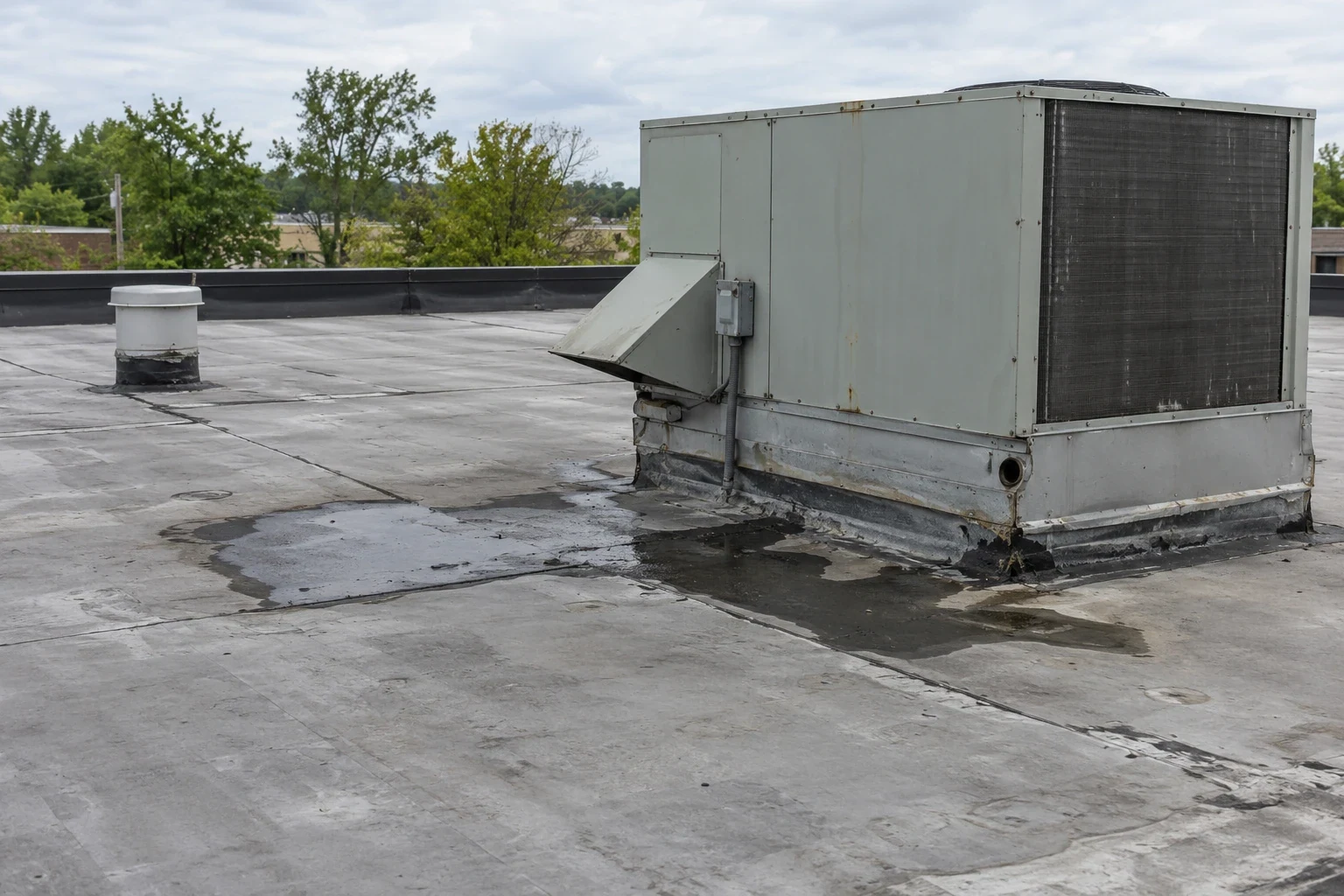
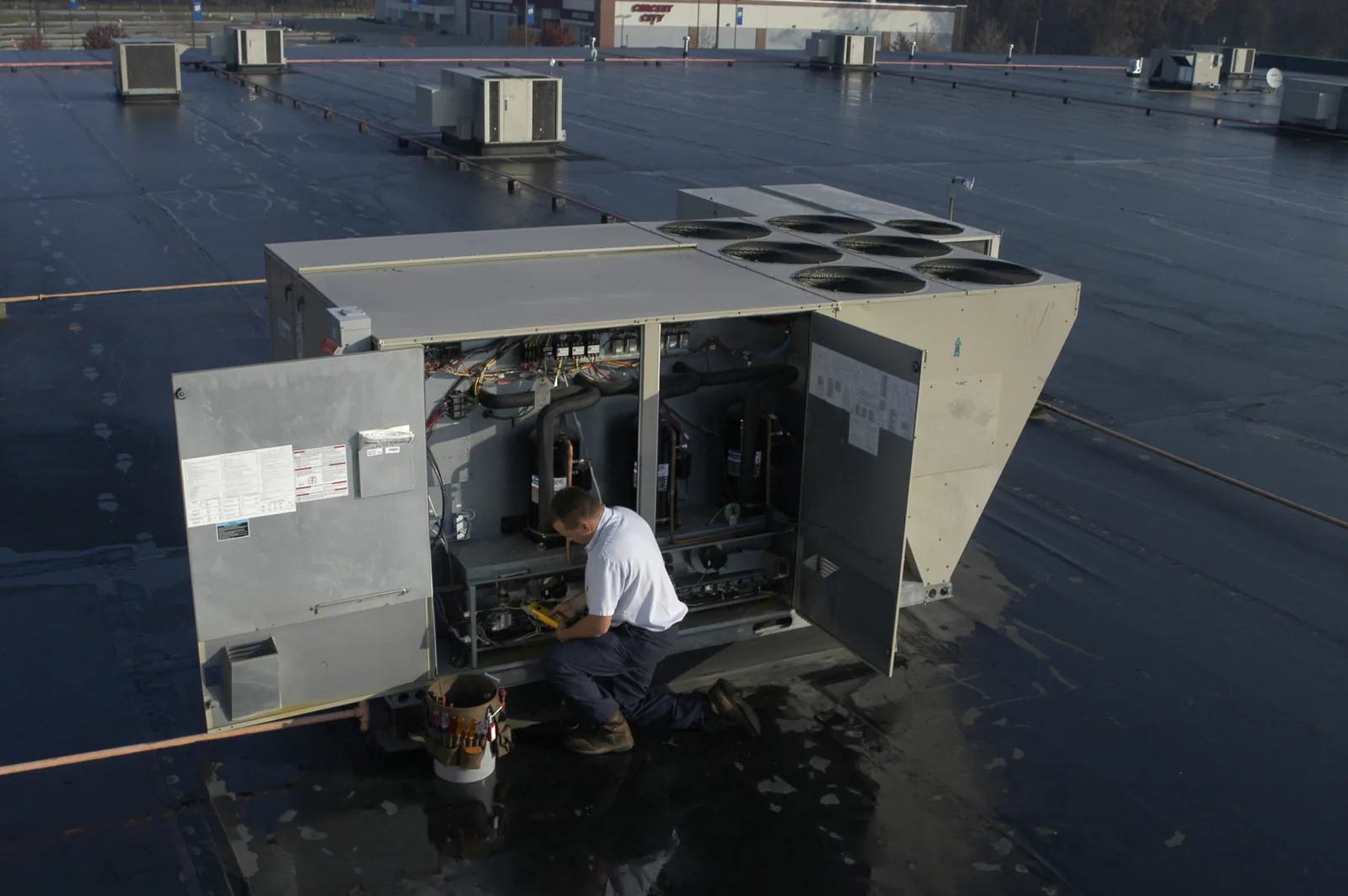
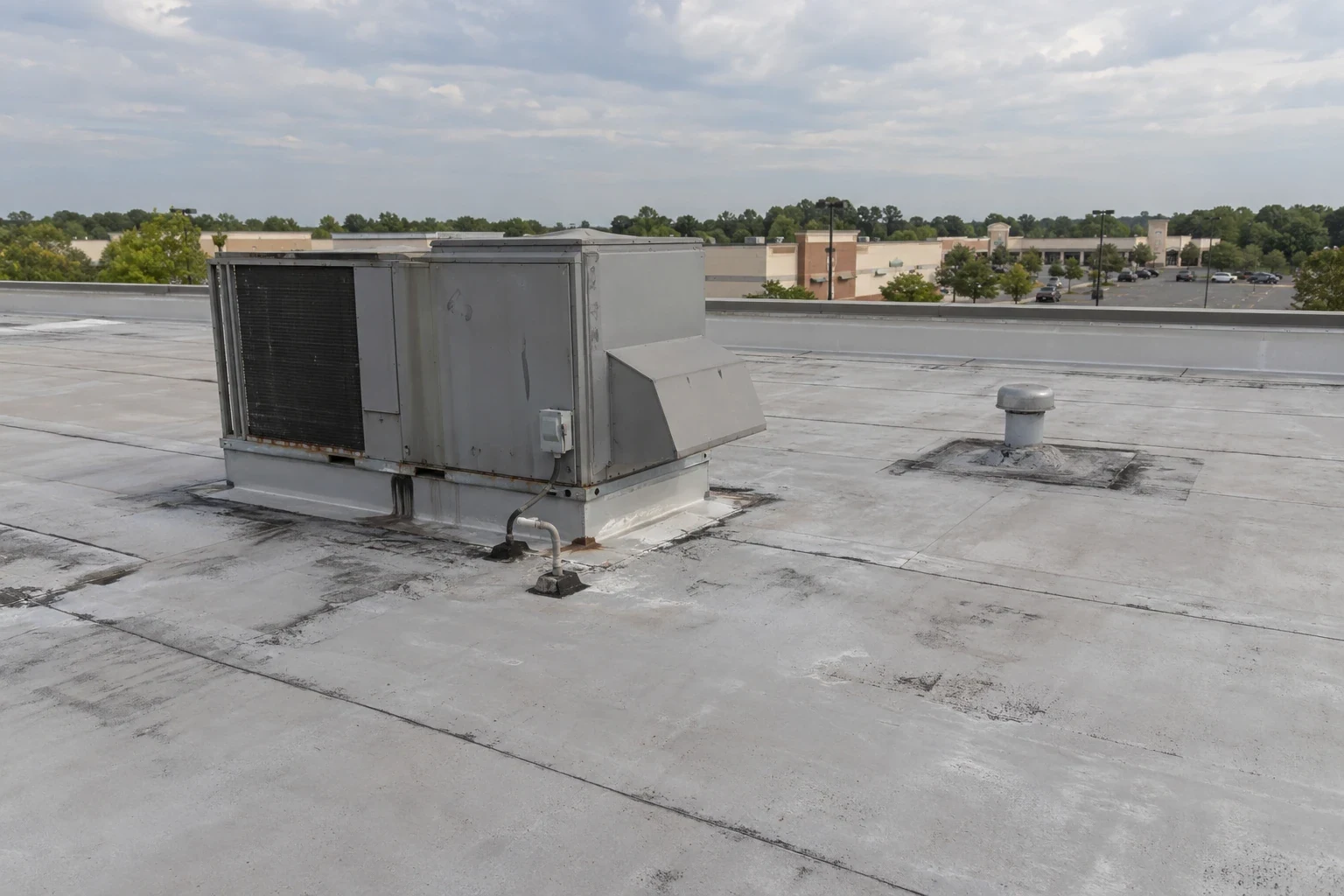
A tenant's rooftop unit can conceal a curb termination needing reconstruction. Complete roofing access may require lifting or disconnection by its responsible trade. The property contact should identify that participant before the sequence is agreed. We explain the roof task and necessary clearance. A partially accessible patch has different limits from complete detail work. Those limits should be stated through the actual connection involved. The proposed repair should not imply concealed work was completed beneath unmoved equipment.
New tenant fit-outs can also add pipes or change service routes. Supports and penetrations need compatible detailing at the roof. Unstable equipment arrangements can stress a fresh repair. We identify those conditions for coordination with the appropriate participant. Tenant equipment curb work should meet a suitable roof boundary. Water from a unit may require a separate equipment correction. We distinguish those findings during assessment. The operator should know which participant completes each necessary task at the interface.
Keep the handling zone specific to the storefront
Roofing deliveries and lifting can affect visitor access before roof removal starts. We assess the actual entrance and available staging area. The operator should identify customer, staff and service routes that must be considered. Required exits need an appropriate arrangement during the work. Adjacent businesses may require communication about a shared handling zone. We describe the practical change and timing for that discussion. An available parking position is not automatically a suitable material location.
For a property in the Concord Entertainment Corridor, busy visitor activity can influence staging. We establish the arrangement with the actual operator rather than assume a common schedule. Spray or other application work may need additional protection around nearby property. The selected method guides those precautions. Weather can change the appropriate work boundary or application window. The operator should understand any necessary adjustment. Roof handling and occupied use remain connected through that plan. The sequence should remain suitable for the actual task being undertaken.
Follow runoff to the perimeter discharge
Shopping center roof water can discharge near storefront or service access. Collectors, gutters and downspouts need assessment where overflow is reported. Debris restriction differs from a failed roof flashing connection. We examine the accessible route and identify the task needed. Persistent low areas may require slope correction within the assembly. Piping questions can require an appropriate professional beyond roof repair. The scope should separate those responsibilities. A renewed membrane does not resolve every discharge problem by itself.
Warm-season thunderstorm activity in Cabarrus County makes reported roof backup useful to examine. Report where runoff backs up and which tenant space becomes affected. We inspect the outlet and useful adjoining surface. A big-box retail roof sharing the discharge may require access above merchandise to investigate the connected area. Restaurant roof work can need clearance around exhaust equipment beside that route. We define the repair and any separate piping review from the accessible findings, with continuing outlet care included in the arrangement.
Compare broader work across the shared assembly
Widespread deterioration may make replacement useful instead of repeated local corrections. The complete roof condition needs assessment before that choice is made. Wet layers, attachment and supporting material affect suitable retention. Shopping center reroofing should include necessary detail and drainage changes. Added insulation can alter curb heights at tenant equipment. We identify detail work in the complete roof scope. Removal boundaries must remain suitable for temporary protection above occupied units.
A shared-property roof condition plan can identify useful priorities before broader work. It should distinguish corrected areas from remaining investigation or equipment tasks. Later tenant changes need compatible roof detailing rather than improvised openings. We provide relevant assembly information at completion. The operator can then coordinate future participants at the protected boundary. New indoor water entry still deserves focused assessment. Report the unit, location and timing to guide that visit. Continuing care follows the actual common assembly and its changing tenant services.
Commercial Roofing Questions
Can a leak in one tenant unit require access through another?
The roof layout or hatch arrangement can create that need. Water may also travel through the assembly before appearing below. We identify the relevant access and physical connection during assessment. The property contact should arrange permission for affected units. The repair boundary needs to follow the supported defect rather than an assumed interior tenant line.
Who should coordinate tenant equipment during a roof repair?
The property contact should identify the equipment owner and responsible service participant. We explain the roofing clearance and connection work needed. Lifting or disconnection belongs with the appropriate trade's arrangement. Suitable protection may be required between tasks. The sequence should connect those responsibilities so concealed flashing is not left outside an otherwise completed repair.
What should tenants know about a roof handling zone?
Identify the affected entrance, route and practical timing change. We describe the delivery or work method so the operator can prepare suitable communication. Shared customer or service access may require more than one tenant's arrangement. The plan should remain specific to the actual task. A general project announcement alone may not explain the effect on a neighboring business.
How should a center compare local repairs with reroofing?
Assess the shared assembly, necessary removal and related detail changes. Suitable local corrections may remain useful where the surrounding roof is sound. Wider deterioration or wet material can enlarge the scope. We explain those findings with the available physical evidence. The comparison should include tenant equipment, protection and drainage tasks alongside the selected covering.
Assess the shared retail roof
Arrange a Concord shopping center visit. Identify the affected unit, property contact and shared roof access so we can define the correction and tenant arrangement.