Home / Roofing Manufacturers / Sika Sarnafil Commercial Roofing
Sika Sarnafil Commercial Roofing in Concord, NC
Review Sika Sarnafil PVC roofing in Concord, NC, by checking welded seams, attachment, flashing, substrate and the building’s operating limits.
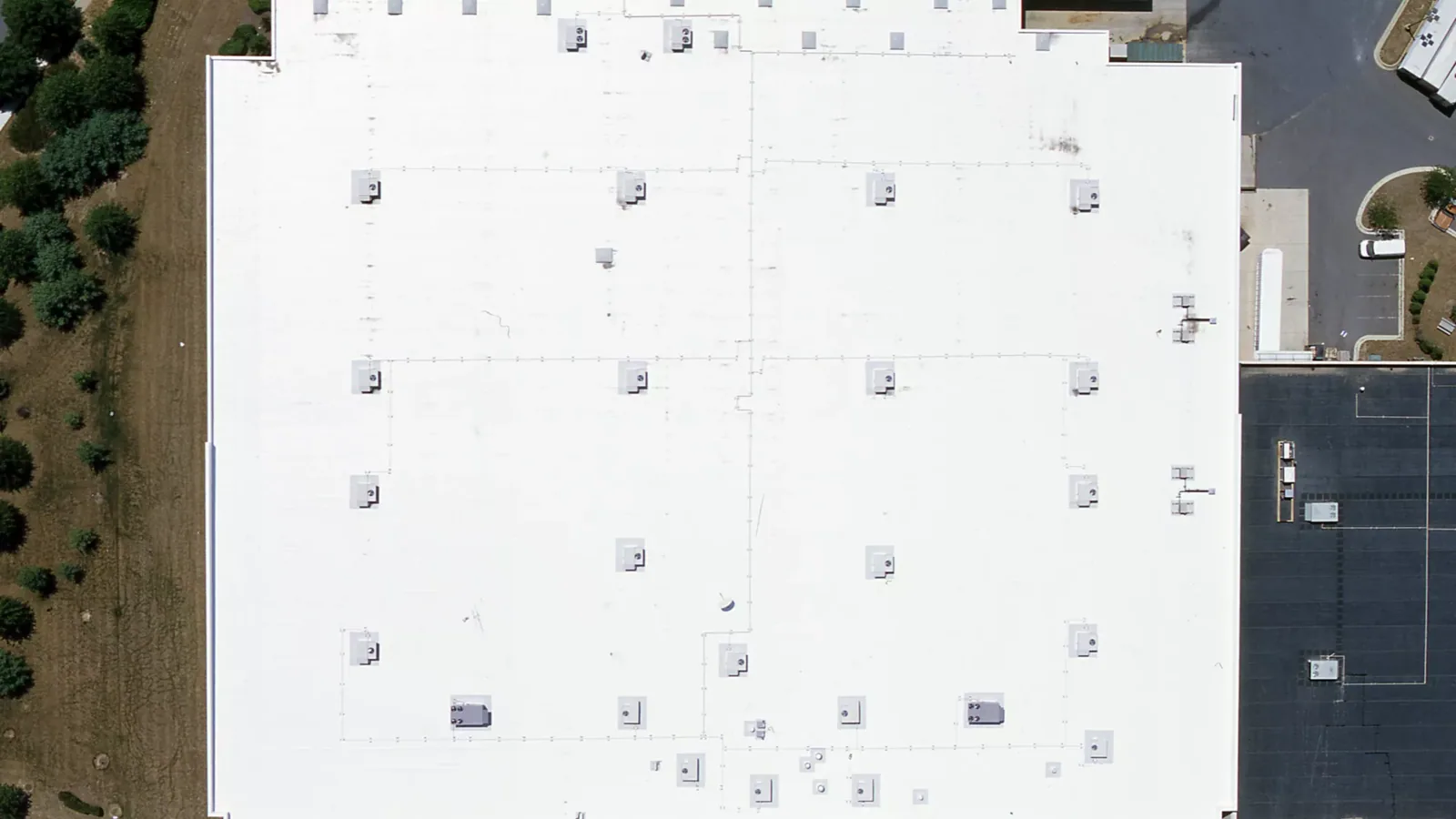
A wet ceiling over a work area can interrupt a shift before anyone knows which roof detail failed. We trace the water path and identify the installed membrane before choosing a repair. Sika Sarnafil offers PVC roofing membranes in adhered and mechanically attached assemblies, with heat-welded seams and system-specific flashing. Those choices still depend on the deck, insulation, edge and condition of the roof already in place. In Concord, NC, the owner also needs a sequence that protects rooms below. Versico membranes provide another manufacturer comparison when the assembly decision remains open.
Read the membrane and seam
Sarnafil is a reinforced PVC membrane. The manufacturer describes G-series membranes for adhered applications and S-series membranes for mechanically attached systems. That distinction affects how the sheet is secured and how a repair should meet the existing field. We inspect seams, corners, curb flashings, terminations and previous patches. A new membrane cannot be selected from color or brand alone. We confirm the actual layer, attachment and substrate before outlining work. PVC membrane construction depends on a compatible detail through the entire assembly.
At Concord’s mixed-use International Business Park, several companies share the broader business park setting. A roof survey still needs its own entry and access plan. If a roof section above a shared loading or work area needs service, we identify the room and access route before opening the membrane. The inspection separates a field seam concern from wet insulation or a loose edge. That boundary helps set temporary protection and keeps the repair from expanding without evidence.
Check each welded connection
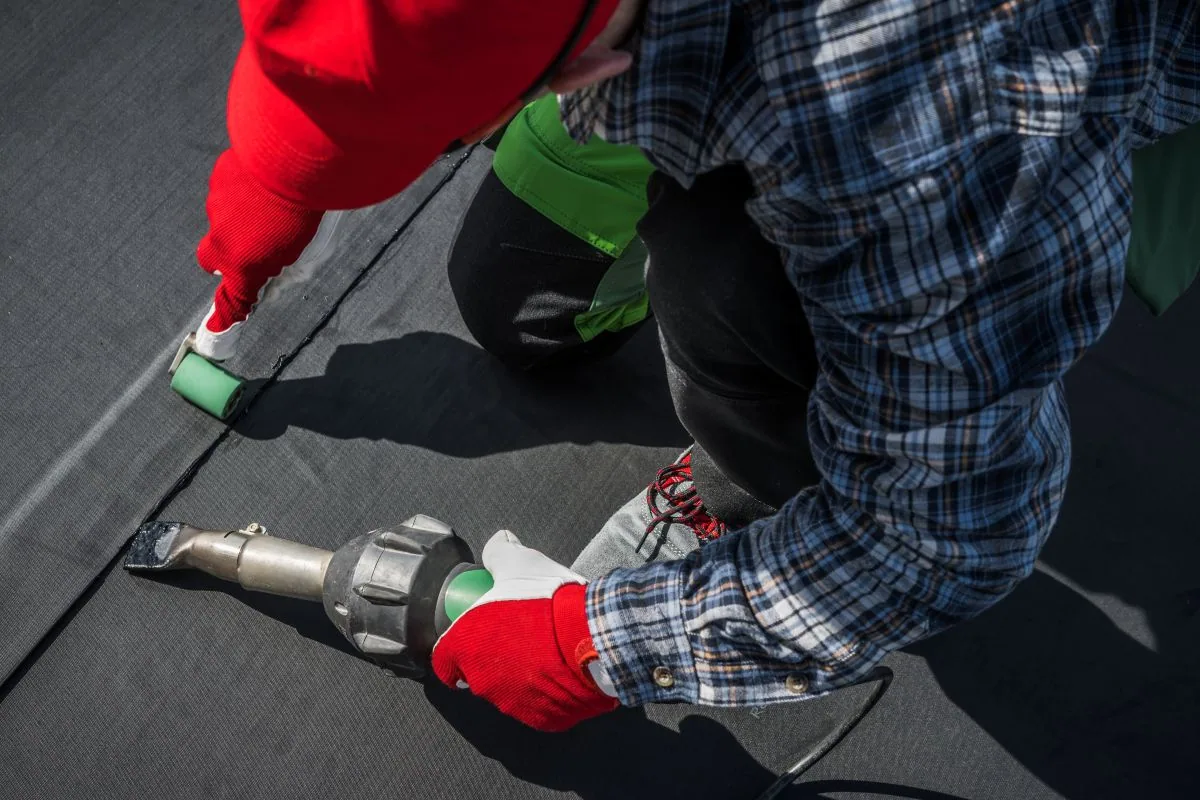
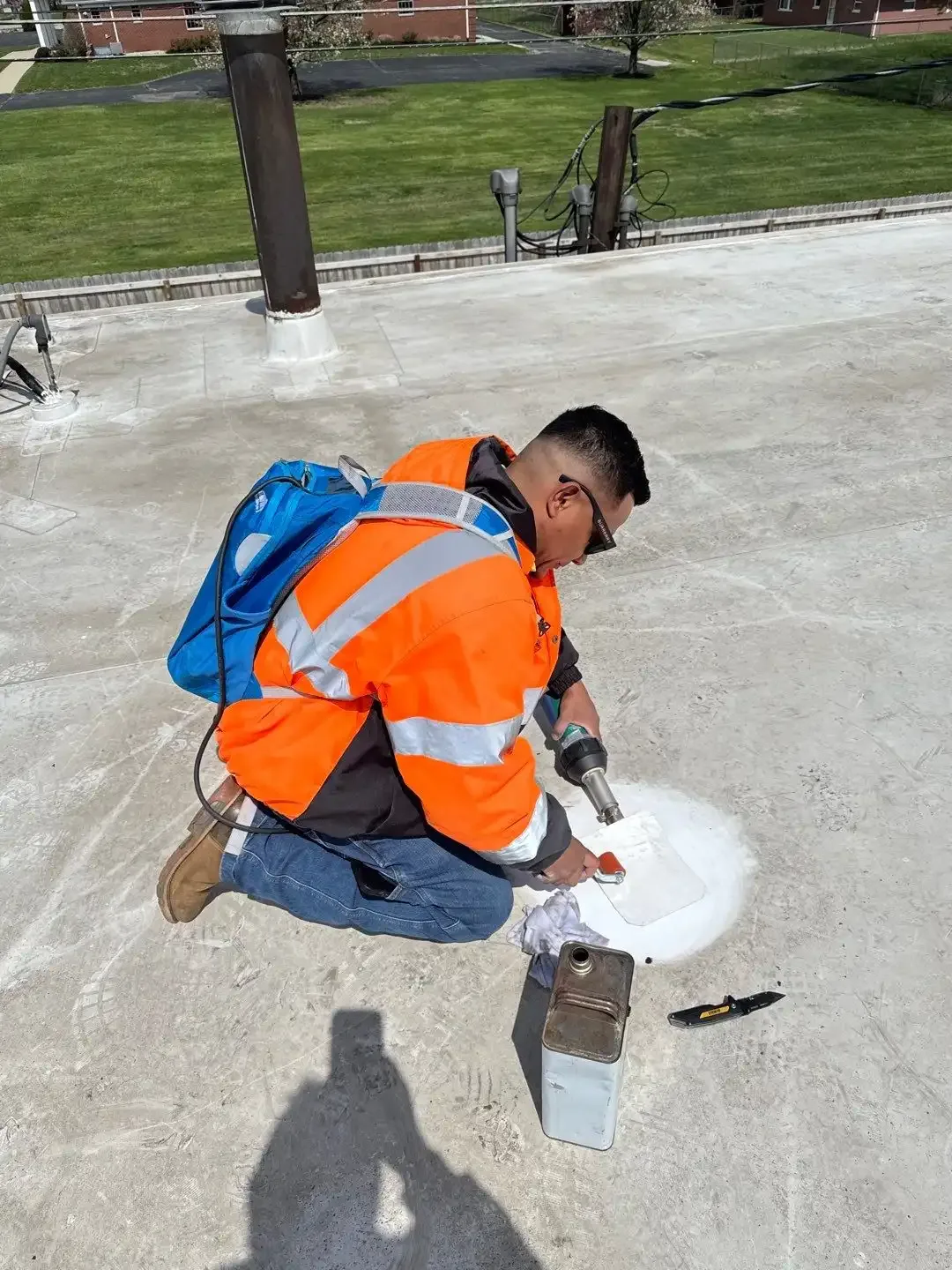
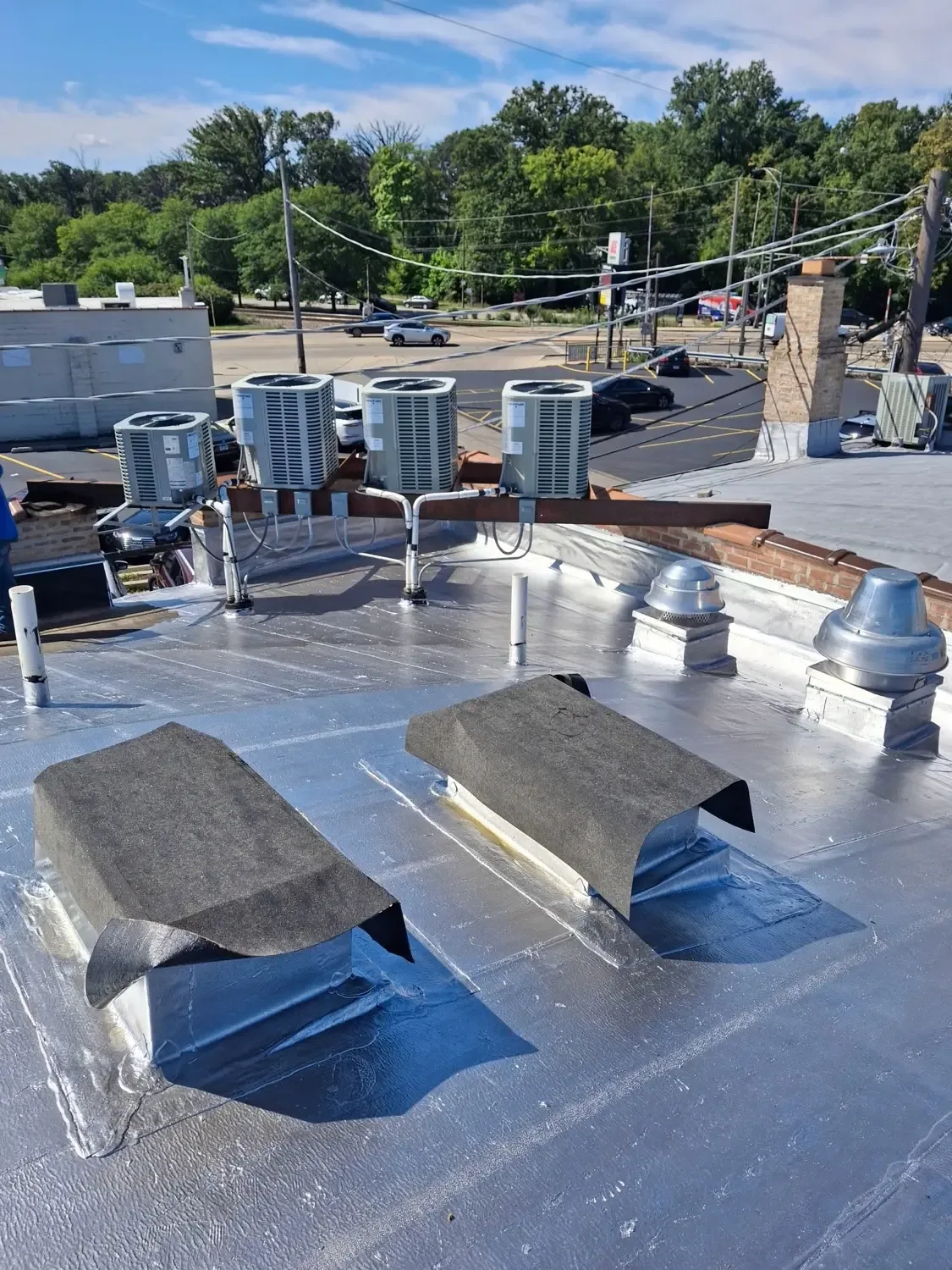
Heat-welded seams need clean surfaces, suitable conditions and a controlled weld. We inspect the field lap, probe accessible seam edges and examine corners where geometry changes. A seam that appears closed from the roof hatch may still have a weak section at a curb or T-joint. Flashing and metal transitions need material-compatible connections. If an earlier coating or repair affects the surface, we identify it before preparing the new work. Flashing failure repair can address the transition as part of the same roof scope.
Concord’s Entertainment Corridor includes restaurants, hotels, retail and auto dealerships. Rooftop equipment and service visits can add punctures or traffic at seams. We note those paths and coordinate any mechanical work before final welding. A completed repair should leave the next service technician with clear access and a record of where the membrane was modified.
Confirm the fastening approach
Adhered and mechanically attached systems behave differently at the deck and perimeter. We confirm the deck type, insulation attachment, edge conditions and available records before recommending one. The Sarnafil assembly may use a specific membrane configuration and compatible accessories. Changing the attachment can alter the perimeter design and wind resistance. We do not treat a reroof as a surface swap; the full assembly has to be considered. A TPO assembly offers a useful contrast, but it uses a different membrane family and system details. For another material family, SOPREMA membranes can be compared against the same roof conditions.
Weather exposure needs a secure daily stopping point. A roof opened for replacement needs a stable dry-in point before the crew leaves. We divide work into sections, check forecast conditions and preserve a drainage path while the membrane is being installed. If weather shifts, the sequence pauses at a boundary that can be secured rather than leaving a long open area.
Protect occupied operations
A roofing method can affect room noise, odors, rooftop access and equipment service. We set the work area around rooms that need to stay open and identify where interior protection is needed. The property contact can flag tenant notice, delivery windows and shutdown limits. We stage rolls and accessories along the approved access path. The schedule lists when a section is opened, inspected, closed and available for other trades. That sequence helps prevent a finished seam from being disturbed by a late curb or pipe change.
The Concord plan identifies US 29 beside Concord Parkway and US 601 at Warren C. Coleman Boulevard. We treat that road network as context for delivery questions, while the property itself determines where a lift or staging area can fit. Buildings in the Entertainment Corridor may have customer traffic and service access to coordinate. We verify the specific entry and roof hatch rather than assuming the corridor has one operating pattern.
Price the system, not a label
Removal quantity, moisture, deck repairs, edge metal and insulation can shift cost and timing. We identify which layers can remain and where test openings may be needed. A recover is only appropriate when the existing assembly and code requirements support another layer. Tear-off can expose concealed damage and change the scope. The written proposal lists the membrane, attachment, flashing, insulation and protection that are included. It also states what remains an allowance until the roof is opened.
Sika’s current product details and assembly requirements should be checked for the exact membrane and substrate before installation. We verify the material and scope rather than rely on assumptions from a past project. North Carolina’s building code transition also makes permit review part of planning. The state lists the 2018 series as effective while moving toward 2024 codes; the applicable edition is confirmed for the specific job.
Leave clear inspection points
At completion, we check welds, flashing, perimeter and drainage against the agreed work. Photos record the details most likely to need future service. The closeout identifies membrane type, attachment and the repaired areas. We note any equipment path or access rule that could affect a future visit. A maintenance plan can then focus on seams, transitions, drains and puncture risks instead of repeating a broad survey. A condition report can help facilities staff carry those findings forward.
On buildings near Weddington Road or Concord Parkway, access still depends on the property’s actual schedule. We review any planned equipment changes, note the roof system and explain whether repair or replacement remains appropriate. A commercial roof inspection can establish the current condition before the next budget decision. The owner gets a clear boundary, a material choice and the next maintenance item.
Commercial Roofing Questions
What is the difference between Sarnafil G and S membranes?
Sika describes G-series PVC membranes for adhered systems and S-series membranes for mechanically attached applications. We confirm the exact product and roof assembly before using that distinction in a project scope. Deck, insulation, edge and wind design affect the final configuration.
Can a Sarnafil seam be repaired without replacing the roof?
A localized defect may be repaired when the surrounding membrane and substrate remain sound. We inspect the seam, adjoining flashing and area below it. If moisture, movement or failed attachment extends past the visible opening, the work boundary needs to include that condition.
Does a PVC roof need special curb details?
Every curb needs flashing that fits the membrane system and the equipment base. We check curb height, metal, movement, penetrations and the space available for a continuous weld. A mechanical change should have a final flashing assignment before the unit returns to service.
What can cause a welded seam to open?
Poor preparation, movement, contamination or an incomplete weld can affect the connection. Traffic and later equipment work may also damage a seam. We examine the failure pattern and surrounding details, then identify the repair that reaches sound material.
How do we plan Sarnafil work around an occupied building?
We map roof access, rooms below, delivery windows and equipment that cannot be shut down. Each work zone receives a start and dry-in point. The owner gets notice of noise, staging and temporary protection so daily operations can be coordinated before materials arrive.
Inspect the seam before selecting a repair
Arrange a Concord roof visit and identify the wet area, installed membrane and roof access route.