Home / Roofing Manufacturers / Duro-Last Commercial Roofing
Duro-Last Commercial Roofing in Concord, NC
Compare Duro-Last PVC roof options in Concord, NC, by checking field seams, drains, curbs, access and the condition of the existing assembly.
A roof hatch that opens beside a production schedule leaves little room for a misplaced seam. We inspect the existing surface, drainage and equipment transitions before comparing Duro-Last PVC with the roof already in place. Duro-Last describes its commercial membrane as custom-fabricated, with field seams joined by hot-air welding. That changes how field sheets and details are planned, but it does not establish that a recover is suitable. We check the deck, insulation, edge height and water entry first. In Concord, NC, a workable scope also keeps the occupied room and material route in view. Versico membrane assemblies provide another single-ply comparison when attachment and seam details drive the decision.
Plan the sheet layout
Custom fabrication can reduce the number of field seams, but the roof still has corners, penetrations and changes in plane. We measure the areas, identify obstacles and map where the field membrane will meet a curb, drain or parapet. A drawing must reflect the building as it exists, including equipment added after the last roof project. We verify dimensions before materials are ordered and note any area that needs a field adjustment. PVC roof assemblies depend on compatible flashing and sound seam preparation. A large prefabricated sheet does not resolve wet insulation or an unstable deck beneath it. We separate those conditions in the scope so the owner can see what needs removal and what may remain. That is especially useful when the roof has several sections installed at different times. Sheet dimensions are checked at corners, offsets and mechanical screens, where a simplified field measurement can leave too little material for a clean turn. We review the detail drawings alongside the measured conditions and flag locations that need a field adjustment. The foreman can then compare the delivered layout with the roof before the first sheet is set. If an equipment curb has changed since the last plan, we resolve that difference before welding the surrounding flashing.
Check each welded connection
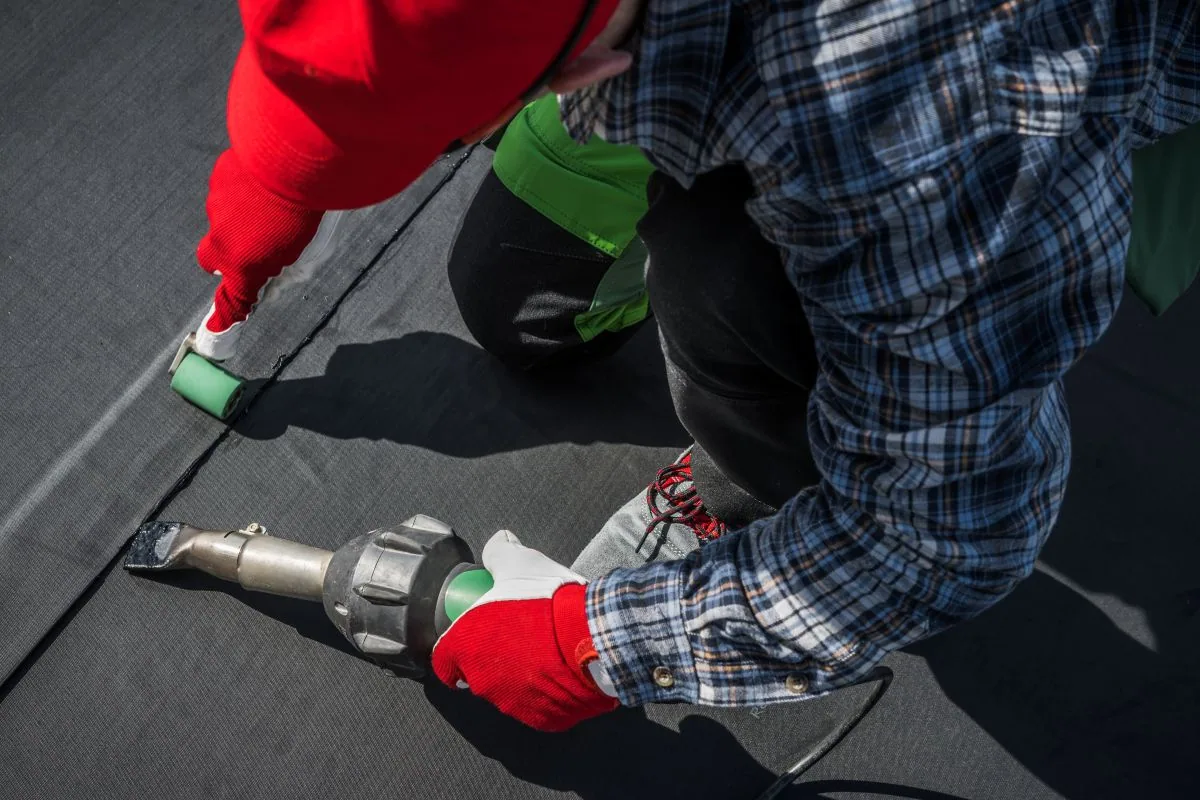
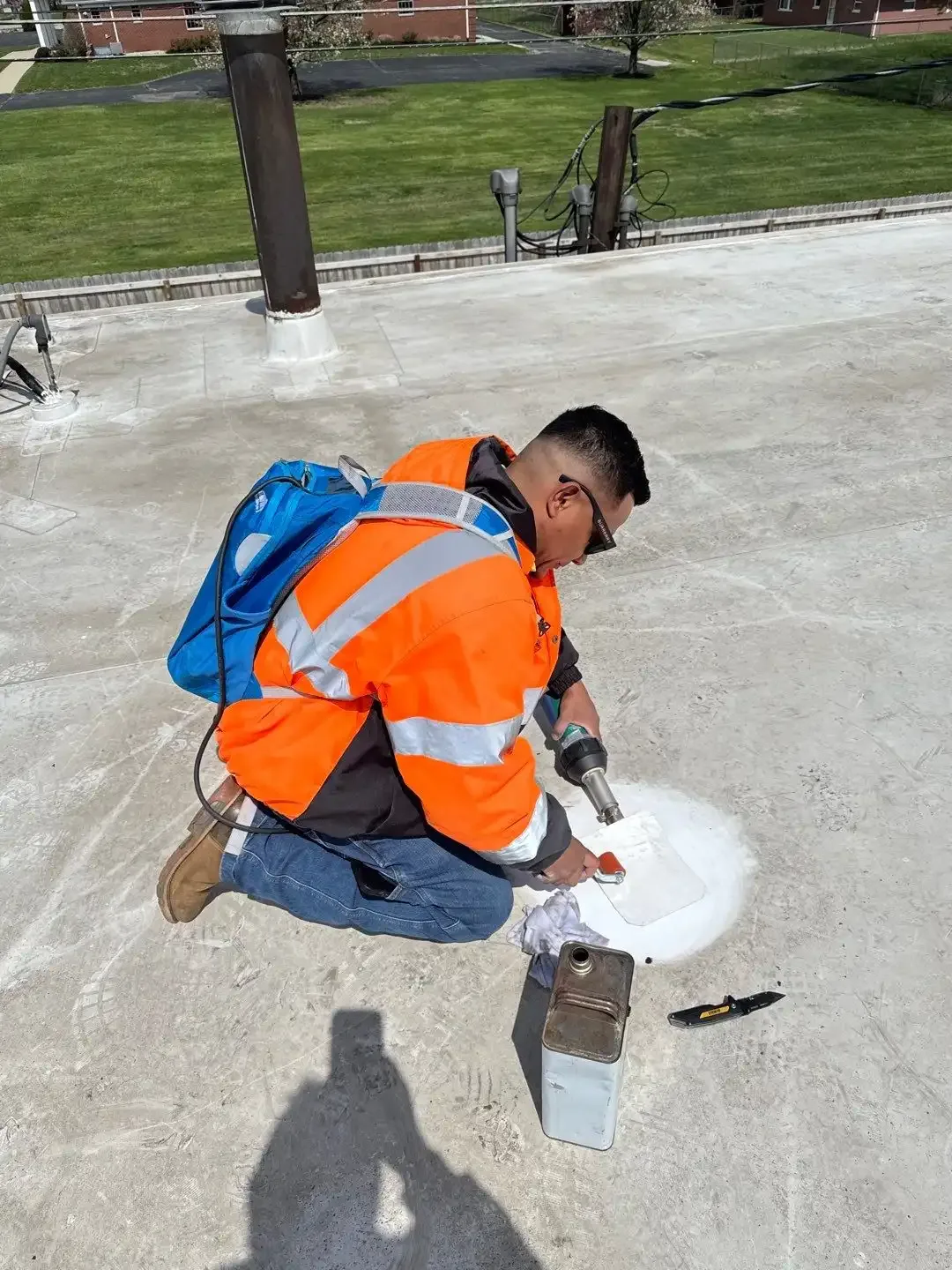
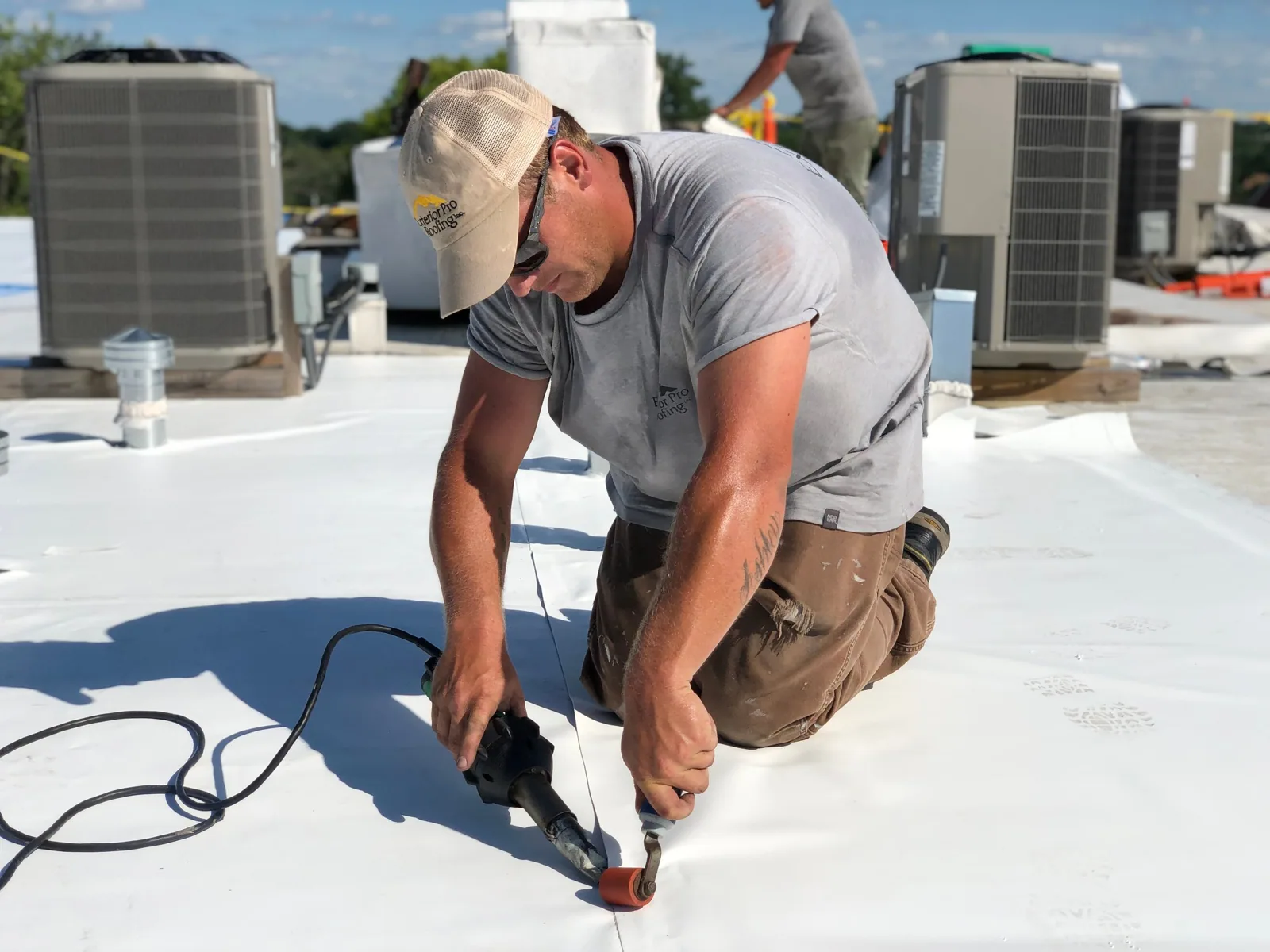
Hot-air welding fuses the membrane surfaces at a seam, and the finished lap needs consistent heat, pressure and preparation. We inspect representative seams and probe the completed weld after it cools. A change in speed or surface condition can leave a narrow opening that is hard to see from standing height. At corners, curb wraps and drains, the field sheet has to meet a properly formed flashing detail. SOPREMA roofing systems offer a different membrane mix for a separate product comparison, while the installed roof remains the starting point for either choice. We record the seam locations that need attention and distinguish an isolated repair from a pattern that points to broader installation or substrate trouble.
Trace the water path
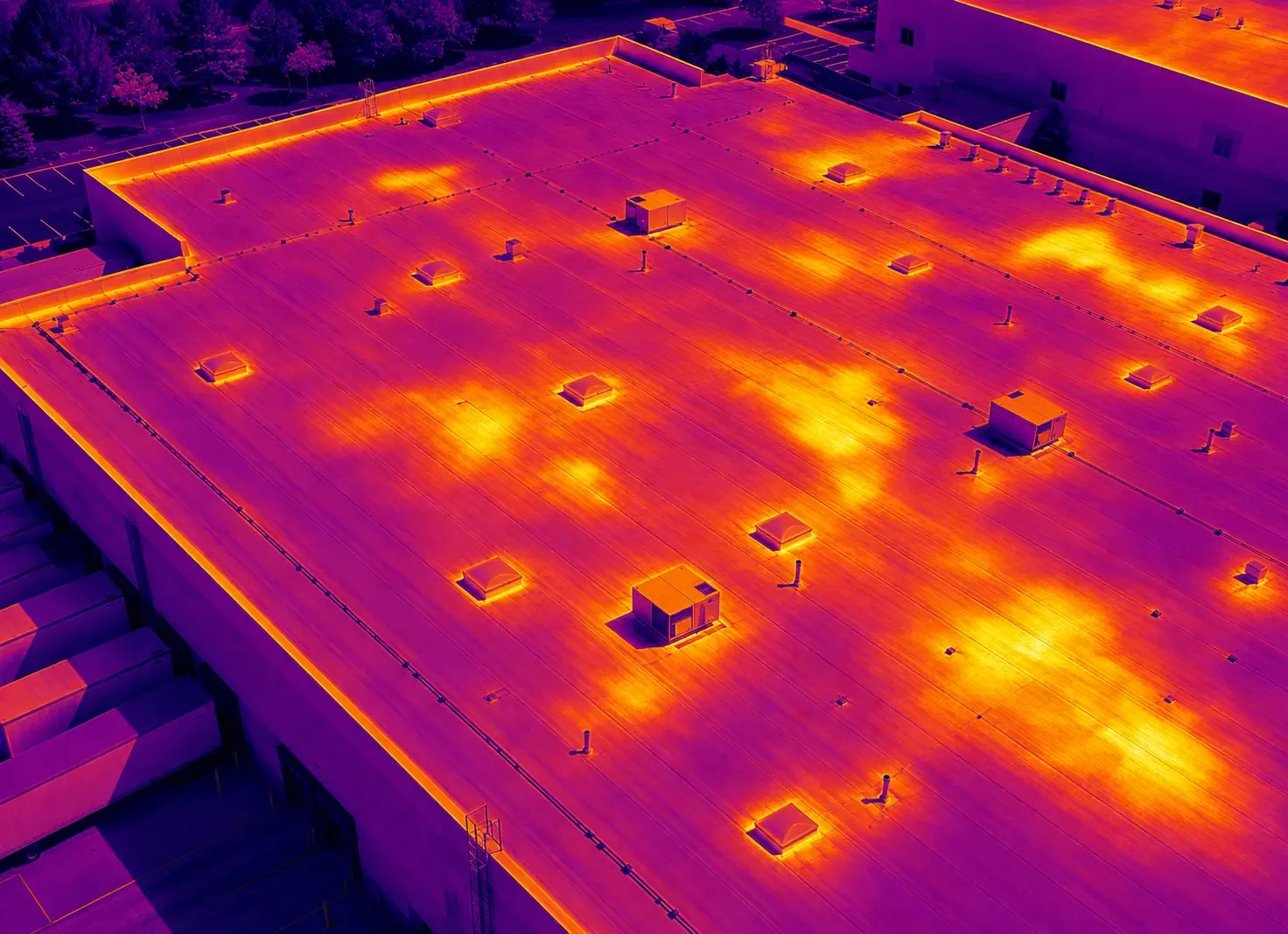
A ceiling mark may appear at a drain line even when water entered at a curb. We inspect the roof above the affected room, follow the slope, and check the transitions where water can move below the sheet. The proposal identifies the entry point we can support and any concealed area that needs an opening or moisture survey. If wet insulation reaches beyond the visible damage, a patch may leave the underlying condition in place. An infrared moisture survey can help map suspect areas when surface observations do not show the full extent. Concord’s International Business Park sits along I-85 near Exit 55, where deliveries and operating activity may affect roof access. We plan staging with the property contact and keep the repair zone separate from active loading routes. We also follow water toward the drain rather than assume the nearest penetration caused the leak. A low point, blocked outlet or damaged curb can change the repair boundary. The inspection notes which condition is visible and what would require a small opening before the owner approves added work.
Set a practical work boundary
Removal, wet insulation, deck repairs, new edge metal and flashing all affect the replacement scope. We list the conditions seen, identify assumptions and show where concealed layers may change the work. A recover is considered only after moisture, attachment, drains and perimeter height are checked. If the assembly is too wet or the edge cannot accept another layer, replacement may provide the clearer correction. Occupied-building reroofing is sequenced by roof zone so the owner can see when a room, entrance or equipment route may be affected. Downtown Concord has a planning district that considers commercial, industrial and residential uses. Concord’s Entertainment Corridor includes retail, hotels, restaurants and dealerships along Concord Mills Boulevard and Bruton Smith Boulevard. That district’s mix of active uses makes delivery timing and temporary protection practical parts of a roof plan, not details left until the crew arrives. We confirm each property’s actual route rather than assume that neighboring operations match.
Leave the roof ready for service
After installation, we review the completed field seams, corners, drains and terminations against the scope. Photos should show the detail and its location, not only a broad roof view. The closeout record notes the membrane, attachment, transitions addressed and any item that needs maintenance. If rooftop equipment is moved later, that record gives the facilities contact a point of comparison for the curb and welded flashing. A commercial roof inspection can revisit those areas when the property is planning service or capital work. A written roof condition report keeps observations tied to a specific section and decision. We also review drain outlets, paths used by maintenance staff and signs that another trade has disturbed the roof. If the owner keeps service records, we can list the seam or curb area for the next inspection and describe what change would warrant a repair call. That gives a facilities contact a clear comparison point after roof access, equipment work or a severe weather event. That follow-up helps the owner separate a new puncture from a seam that needs correction.
Commercial Roofing Questions
What does custom fabrication change on a Duro-Last roof?
It can change field-sheet layout and reduce some field seams, but it does not remove the need for sound flashing, drains and transitions. We verify roof dimensions, equipment locations and the condition below before the final layout is approved for the project.
How do you check a hot-air welded seam?
We look for a continuous weld, then probe the cooled seam at the field and at detail transitions. A narrow open lap can admit water even when most of the joint looks complete. We mark the location, identify how far the defect extends and repair it with the compatible method.
Can a Duro-Last membrane cover an older roof?
The current assembly must be suitable to remain. We inspect attachment, moisture, deck condition, drainage and edge height before considering a recover. If testing finds wet insulation or an unstable base, we show the removal area and the replacement work separately.
What should a Concord facility provide before a roof visit?
Tell us which room or equipment is affected, how roof access is controlled and whether prior roof records are available. At an active property, we also coordinate the delivery route and any periods when a hatch, dock or entrance cannot be blocked.
How do you keep roof work clear of the daily schedule?
We divide the roof into work zones, set a dry-in point and confirm who needs notice below. The sequence identifies material staging, equipment access and the condition that closes each shift. If weather or an unexpected layer changes the plan, the open area is secured before work moves on.
Check the roof before choosing a membrane
Arrange a Concord roof visit and identify the affected area, access route and existing roof records.