Home / Commercial Roofing Services / Commercial Cool Roof Installation
Commercial Cool Roof Installation in Concord, NC
Compare reflective roof options in Concord with assembly condition and drainage in view. We qualify energy expectations for the actual building.
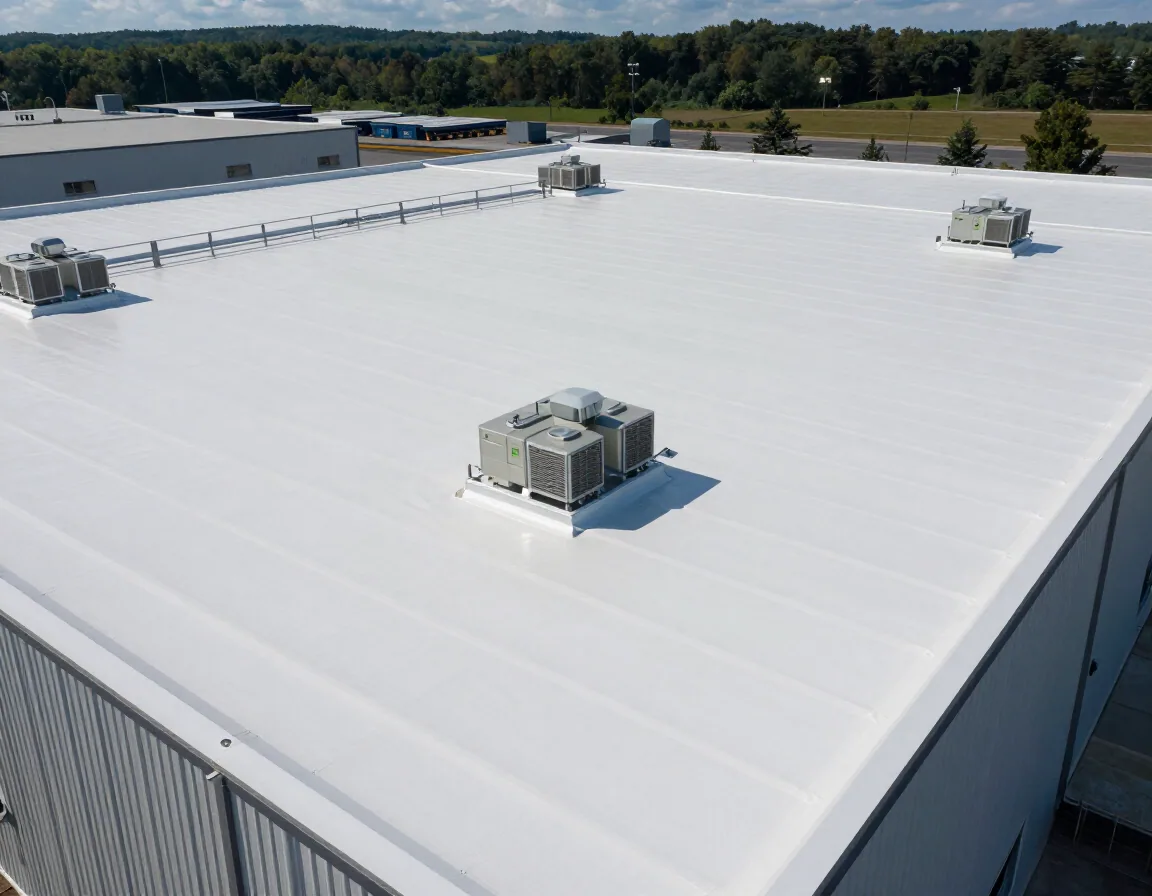
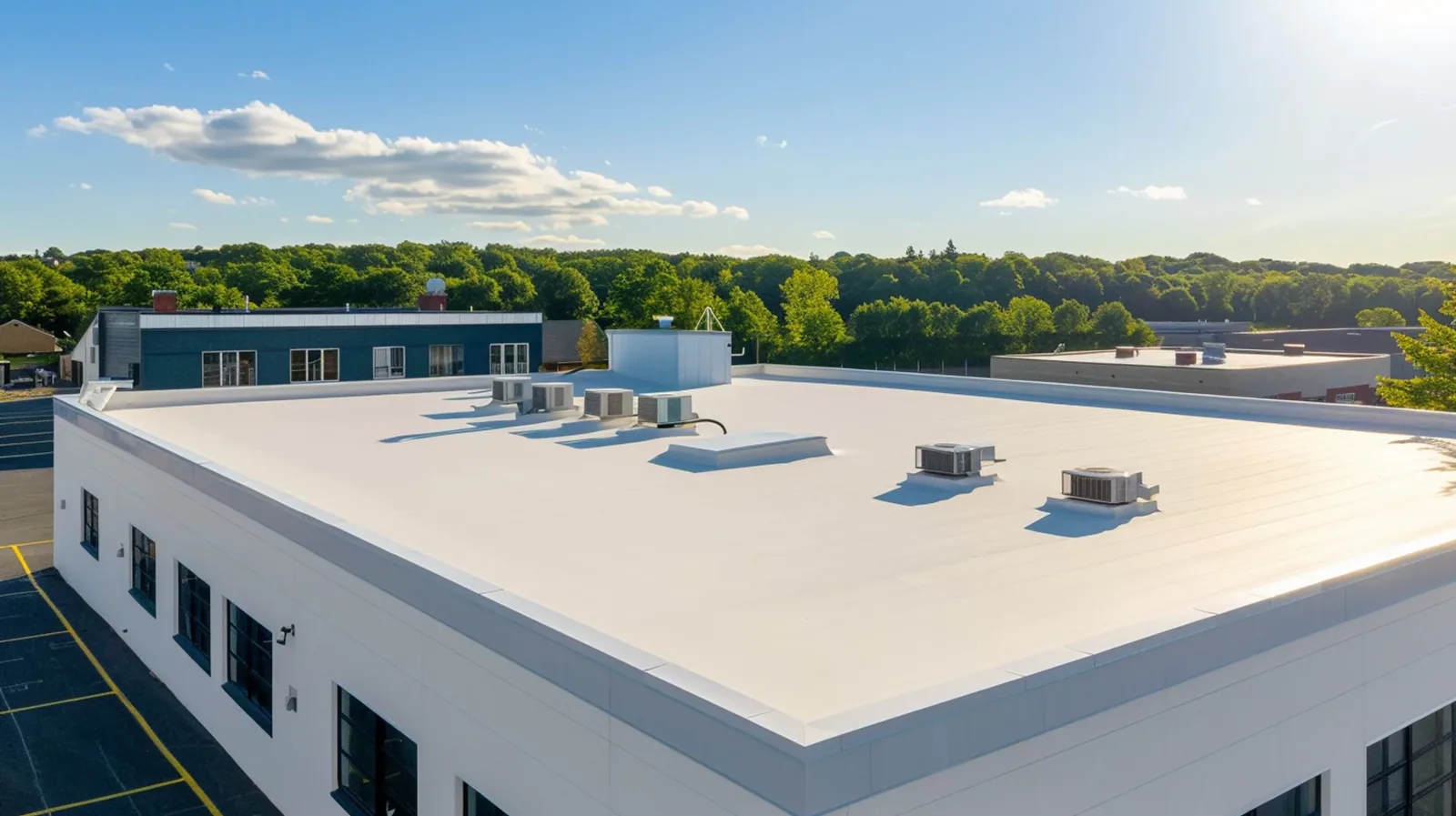
A warm occupied suite can prompt a roof change before its cause is understood. Reflective roofing may address one part of the building's heat exposure. We assess cool roof options in Concord, NC. Surface reflectance differs from insulation and mechanical system performance. The complete assembly and building use still matter. We explain the proposed covering without assigning unsupported energy savings. A useful choice needs suitable connections and drainage as well as its reflective finish.
Cabarrus County has hot summers. That regional fact does not establish one building's roof temperature. The Concord Entertainment Corridor contains hotels, restaurants and retail activity. Each property's cooling demand follows its own envelope and operation. We discuss the actual occupied space and existing roof condition. A roof assessment before material selection establishes the physical work needed. Mechanical or energy questions may require separate analysis beyond that examination.
Set a useful boundary around energy claims
A reflective surface can reduce the solar energy absorbed by that surface. Its effect inside depends on more than roof color. Insulation, air leakage and the cooling system influence building conditions. Occupancy and operating schedules also affect energy use. We do not assign a savings percentage without supporting building analysis. The proposed roofing work should be evaluated on its complete purpose. That includes weather protection and suitability for the retained assembly.
Persistent discomfort deserves attention from the appropriate building services professional. A roof material change alone may not address an equipment fault. We identify what the roof examination can establish directly. A separate analysis can compare relevant energy and comfort scenarios. The owner should distinguish those findings from product performance information. A rated property describes the product under its stated conditions. It does not establish the outcome for every occupied room. We keep that distinction clear when discussing a reflective option.
Compare the complete reflective assemblies
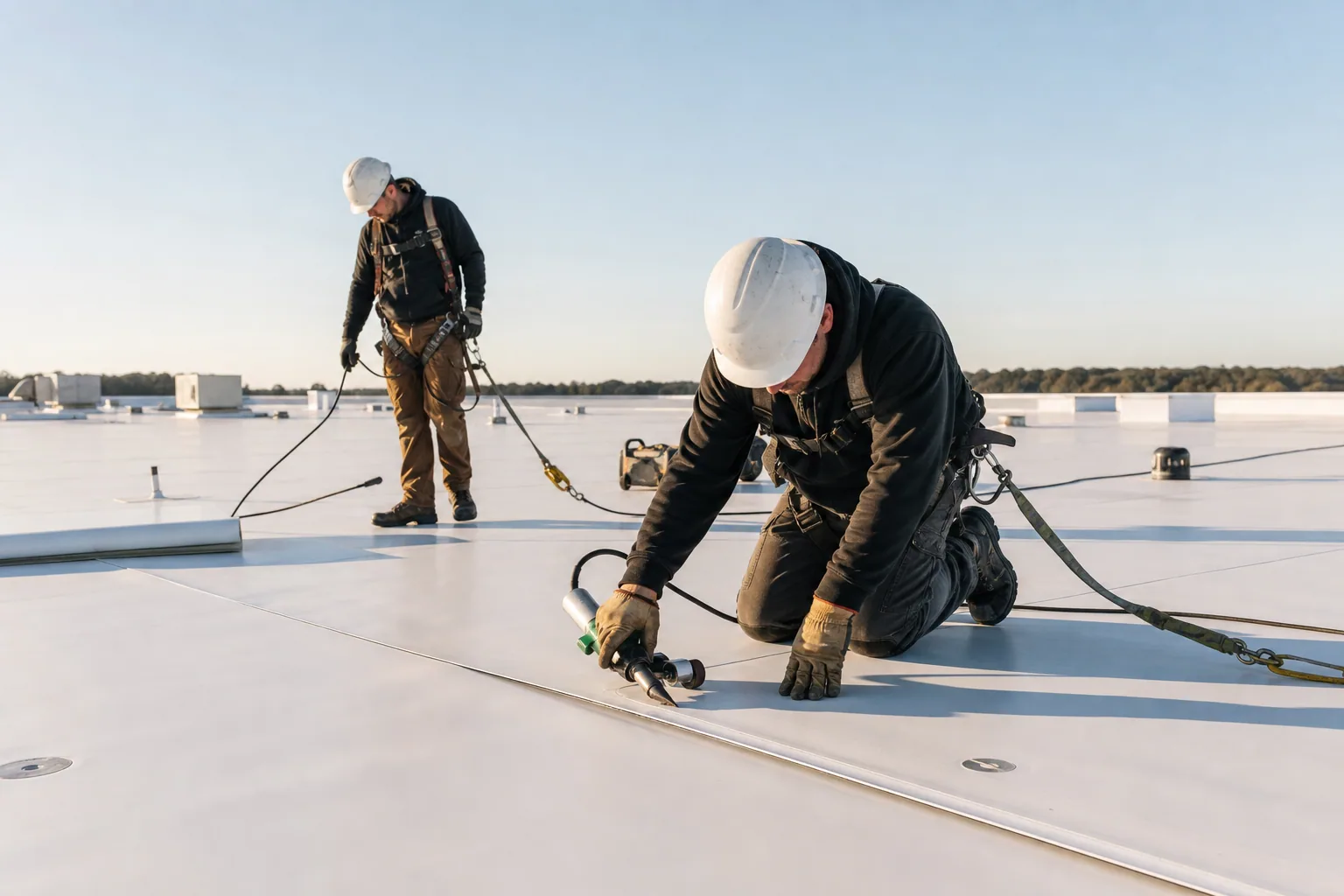
Reflective roofing can be part of several different roof systems. The suitable choice follows the building's condition and proposed installation. A TPO roof system needs its specified seams, attachment and details. A PVC roof assembly has its own compatibility and application requirements. Neither selection should be made from color alone. We consider the roof layout and exposure alongside material properties. The resulting proposal needs to identify the full system being installed.
A restoration coating can offer another approach on a suitable existing assembly. That option requires sound material, appropriate preparation and compatible detail repairs. It cannot correct wet insulation simply by changing the exposed finish. Coating restoration assessment should therefore precede an application decision. Some roofs require removal or replacement instead. We explain the condition that limits retention. The comparison should include necessary preparation and reconstruction. A surface treatment without those tasks is a different scope from complete restoration.
Keep thermal layers in the comparison
Insulation remains a separate part of the roof's thermal performance. Its condition and proposed thickness need appropriate review. Wet material can require removal before another layer is installed. The selected assembly also needs suitable support and attachment. We assess those physical conditions rather than infer them from the exposed membrane. The insulation proposal should follow applicable design and energy requirements. A reflective covering does not eliminate those questions.
North Carolina's code transition requires confirmation of the governing requirements for proposed work. The permitting authority should address the applicable edition and scope. We identify any needed design information before presenting a complete installation plan. Added insulation can change curb and wall flashing heights. Those connections may need reconstruction to suit the new surface. The owner should see those tasks in the proposal. A thermally considered assembly still needs a suitable perimeter. Omitting the detail changes can make competing scopes difficult to compare.
Resolve the roof defects beneath the finish
Open seams, unsuitable backing and failed flashing need physical correction. A reflective replacement does not automatically resolve every adjacent defect. We examine the intended installation boundary and connections. Drainage needs particular attention where retained water is present. The surface must provide a suitable route to usable outlets. Changes to slope or drain connections may require additional work. We describe those tasks separately from choosing the exposed covering.
Roof equipment can also limit preparation and attachment access. Some connections require another trade before reconstruction can proceed. We identify those locations during the assessment. A retained area should not conceal an unresolved wet assembly. The removal boundary needs evidence appropriate to the actual condition. A broader roof replacement scope may be necessary where retention is unsuitable. The owner can then compare complete roof options. Reflectance remains one relevant property within that larger decision.
Plan for the surface after installation
Dirt and exposure can change a roof surface's appearance over time. Cleaning should follow the selected system's requirements. An unsuitable chemical or cleaning method can damage the covering. We explain appropriate maintenance considerations for the installed material. Drainage and equipment damage remain concerns regardless of visible brightness. Repairs also need compatible components and preparation. The roof's continued condition should guide care rather than appearance alone.
For a property in the Concord Entertainment Corridor, service activity may share roof access with equipment visits. We discuss the actual routes and necessary protection with the operator. Tools or moved equipment can create a new puncture. That damage needs examination even if the surrounding surface remains clean. A roof asset management approach can record those condition changes. The plan should identify drainage, flashings and traffic areas. Surface care and weather protection remain connected but distinct tasks.
Make the proposal specific to the building
A useful proposal identifies the covering, underlying layers and connection work. It should also state necessary removal and preparation. We explain where equipment coordination or design review remains required. Any energy estimate should identify its supporting analysis and assumptions. The owner can then distinguish roof installation scope from projected operating effects. Material selection needs to suit both the physical assembly and approved requirements. That provides a practical basis for comparing alternatives.
International Business Park contains multiple companies by I-85 Exit 55. Those buildings should not receive an identical assembly assumption from their location. We assess the individual roof and occupied use. Existing records can help explain previous insulation and repairs. Accessible examination then tests the current physical condition. The preferred reflective option must remain workable at its actual details. We identify any condition that changes that choice. A complete installation decision addresses the building rather than the color sample alone.
Commercial Roofing Questions
Will a reflective roof resolve a warm room?
The room's condition can involve insulation, air leakage and mechanical performance as well as roof exposure. We assess the roofing assembly, while an appropriate building services professional addresses other causes. A reflective surface may form part of the solution. It should not be presented as an assured comfort outcome without building-specific support.
Can a coating turn the existing roof into a cool roof?
A suitable reflective coating may be an option where the retained assembly supports restoration. Preparation, adhesion and necessary repairs need assessment first. Wet insulation or unsuitable backing can prevent that approach. We identify those conditions before proposing application. The selected product and complete restoration method matter beyond the color of the resulting finish.
How should we compare energy savings estimates?
Ask what building information and analysis support the estimate. Insulation, operating schedules and cooling equipment can change the result. A product rating alone does not establish savings for your property. We keep the roofing scope distinct from that analysis. Qualified energy review can help compare scenarios when the operating effect is an important project objective.
Does reflective roofing need different maintenance?
Care should follow the particular roof system's requirements. Cleaning methods, repair materials and access protection need compatibility with that system. Drainage and exposed details still require examination. We explain relevant precautions for the installed covering. A changed appearance does not prove a leak, while new damage warrants assessment even on a visibly clean surface.
Compare the reflective roof scope
Arrange a Concord roof assessment. Describe the occupied space, existing covering and project objective so we can separate assembly work from energy questions.