Home / Property Types We Roof / Commercial Government Building Roofing
Commercial Government Building Roofing in Concord, NC
Assess government building roofing in Concord around public access, service rooms and project review. We inspect condition and explain the corrective scope.
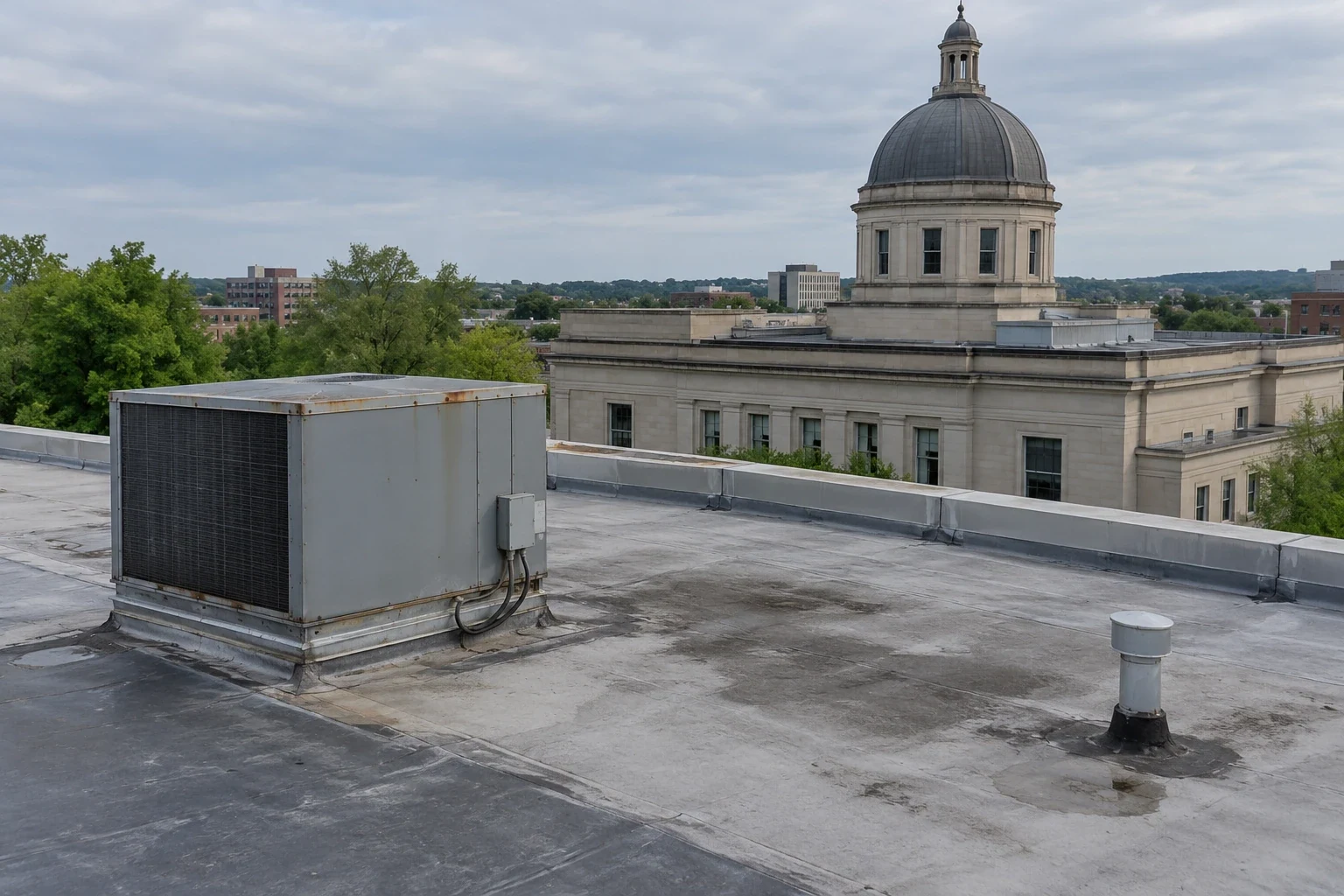
A wet public-service counter can require an alternative place to assist visitors. The roofing task should identify what needs correction above that space. We assess government and municipal building roofing in Concord, NC. The responsible facility participant identifies affected rooms and access requirements. We examine the covering and connected details rather than infer the opening from a ceiling mark. The proposed scope should describe the supported roof boundary. Useful findings help the facility coordinate public service and participating building work.
Downtown Concord has a municipal service district guiding redevelopment. Rockwell contains the East Branch of the Rowan Public Library. Those civic settings provide regional context for public-facing facilities. We establish the actual building's roof and service arrangement during examination. A public facility roof inspection can identify deterioration beyond the first reported symptom. The facility participant should describe room use and relevant changes. Physical findings then guide repair, further investigation or broader renewal. Proposed access needs to reflect the property involved.
Define access where the public uses the building
Visitor entrances and staff service approaches can need separate arrangements. We discuss roof access and material handling with the facility participant. The proposed method may affect areas beyond the roof hatch. Deliveries, lifting and removed material need appropriate positions. Required exits deserve consideration throughout the work. The facility should understand any change to an ordinary visitor route. An open parking area is useful only when it suits the handling task and adjacent movement.
Some roof work can affect a room while neighboring services remain active. We explain the physical boundary and likely access needs. The facility establishes its public and staff arrangement from that information. Weather or concealed deterioration may change the area that can be reconstructed. Those adjustments require coordination before work advances. Occupied public building roofing should connect protection with the achievable task. A general statement about continued use would not explain how the particular service area is addressed.
Investigate the service-room symptom specifically
A ceiling stain near records or equipment can suggest a useful inspection position. It does not prove the exterior opening lies directly above. Water can follow layers or structural surfaces before appearing indoors. We examine relevant seams, flashings and outlets. Other building systems may also require assessment. Safe interior access can help where arranged by the facility. The corrective task should follow the established condition rather than treat every nearby detail as defective. We identify further investigation when the accessible findings remain incomplete.
A government building leak assessment should explain the connection needing work. Suitable surrounding roofing may permit localized reconstruction. Wet insulation or damaged backing can enlarge the necessary opening. Authorized exposure needs an appropriate repair afterward. The scope should distinguish roofing from interior finish or equipment tasks. Facility participants can then coordinate those responsibilities clearly. Completion information should describe what was corrected and what remains for another examination. That boundary is useful when public service arrangements are reconsidered.
Provide a scope suitable for project review
The facility may need to review repair and replacement alternatives before selecting work. We explain the physical basis for each proposed boundary. A smaller connection repair differs from removing deteriorated assembly across a wider area. Preparation, attachment and supporting material need consideration alongside covering choice. The proposal should identify any useful further examination. It should also distinguish permanent reconstruction from temporary protection. The responsible participant can assess the roof task with those practical limits understood.
Permit and code requirements need confirmation for the project involved. Confirm the proposed retention, attachment and detail reconstruction requirements before installation. We discuss the proposed scope with the relevant authority and project participants as appropriate. A building-use label does not establish every applicable requirement. Added insulation or changed connections can introduce related review questions. Those requirements should inform the approved arrangement. The facility needs a roofing description specific enough to support that review without assuming a universal code edition.
Coordinate the roof interfaces with facility equipment
Shared ventilation, pipes and service supports interrupt the covering. We examine accessible terminations and neighboring material. Installed equipment may conceal a connection needing reconstruction. Its responsible participant can need to provide clearance or disconnection. The facility should establish that sequence before the roofing boundary is fixed. A finish beside an obstructed curb has different limits from rebuilding beneath it. We explain which interface the proposed work can reach and any participation needed to complete it.
Changed equipment can also require new support positions or penetrations. Those details need suitable material and movement accommodation. The service participant should coordinate alterations with roofing before openings are made. Public facility equipment roof coordination can describe the required connection. An equipment water symptom may need separate examination of its components. We distinguish those findings from the covering condition. Later service activity should preserve reconstructed details and avoid leaving debris or damage beside the installed roofing.
Check the discharge affecting entrances and walls
Water spilling from a collector can disrupt an accessible entrance below. A blocked strainer or failed joint needs examination along the actual route. We assess the outlet and adjoining covering. Removing debris may restore one opening without correcting a low roof area. Persistent ponding can require insulation or assembly changes. Piping restrictions may need another professional's attention. The proposal should explain those distinct tasks. A surface patch cannot resolve an inaccessible obstruction farther along the discharge by itself.
Occasional winter ice or snow in Cabarrus County can complicate outlet observations. Report seasonal obstruction and the building approach affected by runoff. At a facility in Downtown Concord, we inspect the relevant discharge and accessible connection. A school roof outlet serving a shared route may require another participant's access. House-of-worship drainage work likewise needs coordination where gatherings use the approach below a collector. We identify the actual public access boundary affected here. Continuing care should remain possible after the necessary outlet correction.
Explain renewal and continuing facility care
Wider deterioration may favor renewal over repeated small patches. We assess what can remain and what requires removal. Wet layers, attachment and backing affect that decision. Municipal reroofing evaluation should identify necessary detail and drainage changes. Added insulation can alter relationships at existing walls and equipment. Those resulting tasks belong in the complete scope. The facility should see how the selected work addresses current condition rather than receive only a covering specification.
At completion, useful information should identify reconstructed areas and continuing service dependencies. Future equipment activity needs to preserve the installed connections. Alterations can require roofing participation before a new opening is introduced. The facility should understand which outlets need accessible care. New indoor moisture still deserves focused assessment. Its location and timing can guide the appropriate next visit. The finished roof task should remain distinguishable from interior restoration and equipment work handled by other participants. That clarity supports later building decisions.
Commercial Roofing Questions
What helps define a roof scope before a public facility reviews work?
Provide the affected room information and available assembly history. We inspect current condition and explain the proposed repair or removal boundary. Preparation, retained layers and equipment dependencies need identification. Any unresolved concealed condition should have a useful next examination task. The facility can then review a scope connected with physical findings rather than covering selection alone.
How should visitor access enter a municipal roofing plan?
Review the actual entrance, service counter and handling positions with the responsible participant. We describe lifting, delivery and removal needs. Required exits and adjacent movement deserve appropriate consideration. The facility establishes any public-service adjustment from that information. The agreed arrangement should remain workable when weather or the daily reconstruction boundary changes.
Does the public building's use determine its governing roof code?
Confirm requirements for the proposed scope with the relevant authority and project participants. Review proposed insulation, retained material and altered equipment connections during that confirmation. We explain assembly changes, detail heights and any useful further examination. Those tasks can affect applicable requirements. A public-use description alone does not establish the edition or every condition governing the work.
What should facility staff understand after roof reconstruction?
Identify the connections corrected and any continuing equipment or interior task. We explain useful outlet access and roofing interfaces affected by later service. New supports or openings may require coordinated detail work. A fresh moisture report needs its own focused examination. The completed scope should provide practical information for that care without implying every building system was renewed.
Assess the public facility roof scope
Arrange a Concord government building roof visit. Identify the affected service space, facility contact and public access requirements so we can examine the roof.